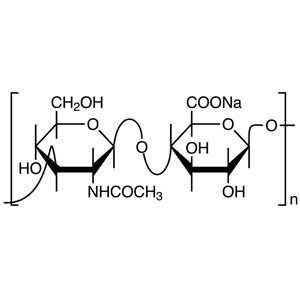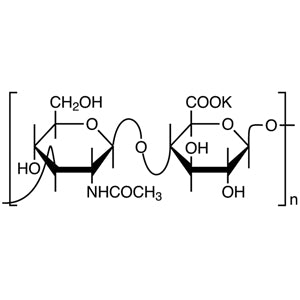
Potassium Hyaluronate from TCI is a chemical compound widely used in biochemical and biomedical experiments. As a glycosaminoglycan, it plays a crucial role in various biological processes, including the formation of connective tissue and regulation of body fluids. Its presence in the extracellular matrix makes it essential for maintaining tissue structure and hydration. In the laboratory, this compound is a key component for studying molecular interactions and therapeutic applications. Due to its stability and ease of manipulation, it is a preferred choice for researchers in multiple scientific fields.
The unique properties of Potassium Hyaluronate make it a preferred choice in laboratory settings. It has a high capacity for water absorption, which is beneficial for experiments requiring controlled humidity or viscosity. Its complex molecular structure allows for interactions with various proteins and enzymes, making it ideal for studying biological interactions. Additionally, its availability in solid form and ease of dissolution simplify its use in experimental protocols. These characteristics contribute to its popularity among researchers working in biochemistry and related disciplines.
In Indonesian laboratories, Potassium Hyaluronate is commonly used in research related to skin health, degenerative diseases, and cosmetic product development. Its role in mimicking the natural properties of hyaluronic acid makes it a valuable tool for studying skin hydration and tissue repair. It is also utilized in biomedical research to explore its potential in therapeutic applications. The compound’s versatility and reliability make it a staple in many laboratory workflows across Indonesia.
TCI brochures (PDF)
- Sulfated Hyaluronic Acids 2023-06-08 · p. 2
- Anti-Glycosaminoglycan Antibodies 2023-07-28 · p. 2
- Polysaccharides 2025-02-13 · p. 2
- Drug Delivery System (DDS) Research Reagents 2025-01-29 · p. 1
- Reagents for Glyco Chemistry & Biology 5th Edition · p. 119
- Biomaterials Research Reagents 2025-02-19 · p. 4
Related TCI products
- TCI H0603 9067-32-7 Sodium Hyaluronate from Cockscomb
- TCI H1808 31799-91-4 Potassium Hyaluronate from Bacteria
- TCI H0595 9004-61-9 Hyaluronic Acid from Cockscomb
- TCI H1791 9067-32-7 Hyaluronic Acid Sodium Salt from Bacteria
- TCI H1807 9004-61-9 Hyaluronic Acid from Bacteria
- TCI C2395 9012-76-4 Chitosan (5-20mPa.s, 0.5% in 0.5% Acetic Acid at 20deg C)
- Skin Health Research: Potassium Hyaluronate is used to study skin hydration and wound healing due to its ability to retain moisture.
- Degenerative Disease Studies: Its role in connective tissue maintenance makes it ideal for investigating joint and cartilage-related conditions.
- Cosmetic Product Development: The compound is widely used in formulating skincare products due to its high water-binding capacity.
- Molecular Interaction Studies: Its complex structure allows for interactions with proteins and enzymes, making it useful in biochemical assays.
- Therapeutic Application Research: Potassium Hyaluronate is explored for its potential in regenerative medicine and drug delivery systems.
| Brand | TCI |
|---|---|
| CAS number | 31799-91-4 |
| Molecular formula | — |
| Purity | — |
| Category | Chemistry > Chemical Biology > Glycoscience |
| Pack sizes | Available in various quantities as per supplier specifications |
| Physical form | Solid powder |
| Storage | Store in a cool, dry place away from moisture and direct sunlight |
Potassium Hyaluronate should be stored in a cool, dry environment to maintain its stability and prevent degradation. It is recommended to use airtight containers to protect it from moisture and humidity. Due to its hygroscopic nature, exposure to high humidity can affect its quality. Always handle the compound in a well-ventilated area to minimize inhalation risks. Proper personal protective equipment, such as gloves and safety goggles, should be worn when handling this material. It is important to ensure that the storage area is secure and inaccessible to unauthorized personnel to maintain laboratory safety standards.
—
Product Categories
- Chemical BiologyGlycoscienceApplications Using Glyco-materials
- Chemical BiologyGlycoscienceEnzyme, Lectin, Antibody [Glycoscience]
- Chemical BiologyGlycoscienceFunctional Oligosaccharides
- Chemical BiologyGlycoscienceOligosaccharides by Component Sugar
- Chemical BiologyGlycosciencePolysaccharides [Glycoscience]
- Pharmaceutical Development and Drug Discovery Research ReagentsDrug Delivery Systems (DDS)Natural Polymers (for DDS)
- GlycoscienceApplications Using Glyco-materialsGlyco-engeneering [Applications Using Glyco-materials]
- GlycoscienceApplications Using Glyco-materialsGlyco-utilization [Applications Using Glyco-materials]
- GlycoscienceEnzyme, Lectin, Antibody [Glycoscience]Glycohydrases and Related Reagents [Glycoscience]
- GlycoscienceFunctional OligosaccharidesGlycosaminoglycan [Functional Oligosaccharides]
- GlycoscienceFunctional OligosaccharidesPolysaccharides [Functional Oligosaccharides]
- GlycoscienceOligosaccharides by Component SugarGlucosamine [Oligosaccharides by Component Sugar]
- GlycoscienceOligosaccharides by Component SugarGlucuronic Acids [Oligosaccharides by Component Sugar]
- GlycosciencePolysaccharides [Glycoscience]
- Biochemicals and ReagentsCarbohydrates
- Pharmaceutical Development and Drug Discovery ResearchDrug Delivery Systems (DDS)Natural Polymers (for DDS)
Produk Terkait
-
SodiumHyaluronatefromCockscomb TCI H0603
Regular price From Rp 2.411.850,00Regular priceRp 1.702.050,00Sale price From Rp 2.411.850,00 -
PotassiumHyaluronatefromBacteria TCI H1808
Regular price Rp 7.287.000,00Regular priceRp 5.111.400,00Sale price Rp 7.287.000,00 -
HyaluronicAcidfromCockscomb TCI H0595
Regular price Rp 8.745.450,00Regular priceRp 6.130.950,00Sale price Rp 8.745.450,00 -
HyaluronicAcidSodiumSaltfromBacteria TCI H1791
Regular price From Rp 1.988.700,00Regular priceRp 1.405.950,00Sale price From Rp 1.988.700,00 -
HyaluronicAcidfromBacteria TCI H1807
Regular price Rp 6.095.250,00Regular priceRp 4.277.700,00Sale price Rp 6.095.250,00 -
Chitosan(5-20mPa.s,0.5%in0.5%AceticAcidat20degC) TCI C2395
Regular price Rp 717.150,00Regular priceRp 516.600,00Sale price Rp 717.150,00 -
ChondroitinSulfateSodiumSalt TCI C0335
Regular price From Rp 2.121.000,00Regular priceRp 1.498.350,00Sale price From Rp 2.121.000,00 -
PectinfromCitrus TCI P0024
Regular price From Rp 637.350,00Regular priceRp 460.950,00Sale price From Rp 637.350,00