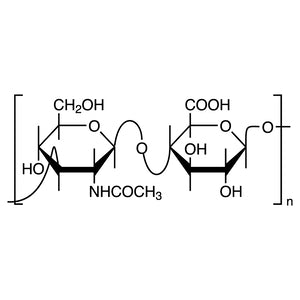
Tci H1807 9004-61-9 Hyaluronic Acid from Bacteria is a biochemical compound widely used in laboratory settings for molecular biology and organic chemistry experiments. This material is derived from bacterial sources and is known for its unique polymer structure composed of glucosamine and glucuronic acid units. Its hydrophilic nature allows it to absorb significant amounts of water, making it a versatile reagent in various chemical processes. In the lab, it serves as a key component in the synthesis of other compounds and is integral to the development of pharmaceutical and cosmetic products.
The properties of Tci H1807 9004-61-9 Hyaluronic Acid from Bacteria make it a preferred choice for researchers. It exhibits high solubility in water, which simplifies dissolution and usage in chemical reactions. Its chemical stability ensures consistent performance across different experimental conditions. Additionally, it is non-toxic and safe to handle, reducing the risk of unwanted side reactions or contamination. These characteristics make it ideal for use in sensitive and complex biochemical applications.
In Indonesian laboratories, Tci H1807 9004-61-9 Hyaluronic Acid from Bacteria is commonly used in biomedical, pharmacological, and cosmetic research. It plays a vital role in projects focused on developing skincare products, drug formulations, and therapeutic applications. Its availability and reliability make it a go-to material for researchers seeking a safe and effective reagent for their experiments.
- Molecular Biology Research: This compound is ideal for studying extracellular matrix interactions due to its structural similarity to native hyaluronic acid found in tissues.
- Pharmaceutical Development: It is used as a raw material in the formulation of injectable and topical drugs due to its biocompatibility and solubility.
- Cosmetic Formulation: Its high water retention capacity makes it a valuable ingredient in skincare products aimed at hydration and skin rejuvenation.
- Biochemical Synthesis: The compound serves as a building block for the synthesis of other glycosaminoglycans and related derivatives.
- Biomedical Applications: It is utilized in tissue engineering and regenerative medicine due to its ability to support cell growth and matrix formation.
| Brand | TCI |
|---|---|
| CAS number | 9004-61-9 |
| Molecular formula | — |
| Purity | — |
| Category | Chemistry > Chemical Biology > Glycoscience |
| Pack sizes | Available in various quantities as per standard laboratory supply |
| Physical form | Powder |
| Storage | Store in a cool, dry place away from direct sunlight |
This product should be stored in a cool, dry environment, away from direct sunlight and sources of heat. It is recommended to use airtight containers to prevent moisture absorption and contamination. Due to its high water solubility, it should be handled in a well-ventilated area to avoid inhalation of fine particles. Always wear appropriate personal protective equipment, such as gloves and safety goggles, when handling. The compound is non-toxic but should be treated with care to ensure safe laboratory practices. Proper labeling and storage conditions help maintain its integrity and effectiveness for research applications.
—
Produk Terkait
-
TCI B5774 5,10-Bis(4,4,5,5-tetramethyl-1,3,2-dioxaborolan-2-yl)naphtho[1,2-c:5,6-c']bis([1,2,5]oxadiazole)
Regular price Rp 10.255.350,00Regular price -
Dihydroiodide TCI B6569
Regular price From Rp 1.936.200,00Regular price -
Trifluoromethanesulfonate TCI B7003
Regular price From Rp 1.936.200,00Regular price
![5,10-Bis(4,4,5,5-tetramethyl-1,3,2-dioxaborolan-2-yl)naphtho[1,2-c:5,6-c']bis([1,2,5]oxadiazole) - TCI B5774 - AMI Scientific](http://amiscientific.com/cdn/shop/files/TCI2510B5774.jpg?v=1769180228&width=533)