Pyromellitic Acid (TCI B0039), with CAS number 89-05-4, is a chemical compound widely used in laboratory settings for its versatility and reactivity. It serves as a fundamental building block in organic chemistry, particularly in the synthesis of heterocyclic compounds and multifunctional molecules. Its complex molecular structure allows it to participate in a variety of chemical reactions, making it an essential tool for researchers working on advanced chemical synthesis. This compound is commonly found in both academic and industrial laboratories, where it is used to develop new materials and pharmaceutical compounds.
Pyromellitic Acid is known for its chemical stability and high reactivity, which make it a preferred choice for oxidation, reduction, and complex molecule synthesis. Its ability to react with a wide range of chemical substances enables researchers to create novel compounds with diverse applications. The compound’s reactivity is particularly valuable in the development of pharmaceuticals and specialty materials. Its chemical properties allow it to be used in a variety of synthetic pathways, supporting innovation in both research and industrial settings.
In Indonesian laboratories, Pyromellitic Acid is a key component in chemical research and development. It is frequently used in pharmaceutical and material science studies, where its reactivity and structural versatility are highly valued. Its availability in various packaging options makes it accessible for different laboratory needs, supporting both small-scale research and large-scale production. This compound plays a crucial role in advancing scientific discovery and industrial applications in Indonesia.
TCI brochures (PDF)
- Organic Linker Molecules for Metal Organic Frameworks (MOFs) 2026-05-11 · p. 4
Related TCI products
- TCI P1153 2550-73-4 Pyromellitic Diimide
- TCI D4947 24848-78-0 Dibromopyromellitic Dianhydride
- TCI A0088 142-45-0 Acetylenedicarboxylic Acid
- TCI T3896 160248-28-2 Tetrakis(4-carboxyphenyl)methane
- TCI T3894 1078153-58-8 1,2,4,5-Tetrakis(4-carboxyphenyl)benzene
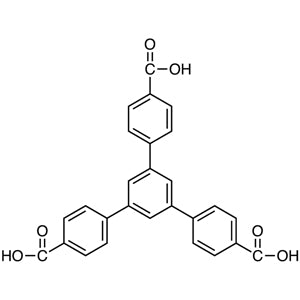
- TCI T2647 50446-44-1 1,3,5-Tris(4-carboxyphenyl)benzene
- Used in pharmaceutical research for synthesizing complex organic compounds due to its reactivity and structural versatility.
- Applied in material science for creating multifunctional polymers and advanced chemical structures.
- Utilized in organic synthesis to develop heterocyclic compounds and functionalized molecules.
- Employed in analytical chemistry for its role in oxidation and reduction reactions.
- Integrated into industrial chemical processes for the production of specialty chemicals and dyes.
| Brand | TCI |
|---|---|
| CAS number | 89-05-4 |
| Molecular formula | — |
| Purity | — |
| Category | Chemistry > Building Blocks > Non-Heterocyclic Building Blocks |
| Pack sizes | Available in various sizes to suit different laboratory needs |
| Physical form | Solid, crystalline appearance |
| Storage | Store in a cool, dry place away from moisture and direct sunlight |
Pyromellitic Acid should be stored in a cool, dry environment to maintain its chemical stability. It is recommended to keep it in airtight containers to prevent moisture absorption, which can affect its reactivity. Due to its high reactivity, it should be handled with care, using appropriate personal protective equipment such as gloves and safety goggles. It is important to store it away from incompatible substances to avoid any chemical interactions. Proper labeling of storage containers is essential for safety and identification. Regular inspection of storage conditions ensures that the compound remains in optimal condition for laboratory use.
—
Product Categories
- Organic-Inorganic Hybrid MaterialsMetal Organic Frameworks (MOF) and Their Raw MaterialsOrganic Linker Molecules [Metal Organic Frameworks (MOFs) Precursors]
- Polymer/Macromolecule ReagentsMetal Organic Frameworks (MOF) and Their Raw MaterialsOrganic Linker Molecules [Metal Organic Frameworks (MOFs) Precursors]
Produk Terkait
-
PyromelliticDiimide TCI P1153
Regular price From Rp 1.643.250,00Regular priceRp 1.164.450,00Sale price From Rp 1.643.250,00 -
DibromopyromelliticDianhydride TCI D4947
Regular price Rp 5.169.150,00Regular priceRp 3.614.100,00Sale price Rp 5.169.150,00 -
AcetylenedicarboxylicAcid TCI A0088
Regular price From Rp 1.220.100,00Regular priceRp 868.350,00Sale price From Rp 1.220.100,00 -
Tetrakis(4-carboxyphenyl)methane TCI T3896
Regular price Rp 6.863.850,00Regular priceRp 4.799.550,00Sale price Rp 6.863.850,00 -
1,2,4,5-Tetrakis(4-carboxyphenyl)benzene TCI T3894
Regular price From Rp 2.837.100,00Regular priceRp 1.983.450,00Sale price From Rp 2.837.100,00 -
1,3,5-Tris(4-carboxyphenyl)benzene TCI T2647
Regular price From Rp 3.683.400,00Regular priceRp 2.575.650,00Sale price From Rp 3.683.400,00 -
5-BromoisophthalicAcid TCI B4232
Regular price From Rp 1.193.850,00Regular priceRp 834.750,00Sale price From Rp 1.193.850,00 -
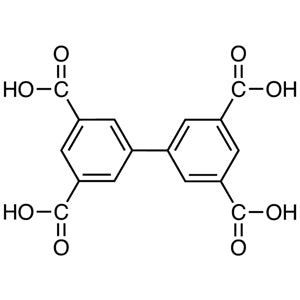
Biphenyl-3,3',5,5'-tetracarboxylicAcid TCI B3792
Regular price Rp 3.949.050,00Regular priceRp 2.761.500,00Sale price Rp 3.949.050,00