N-Benzoyl-D-glucosamine is a chemical compound widely used in chemical and biochemical experiments, particularly in carbohydrate structure studies. As a derivative of glucosamine, it plays a crucial role in glycoscience research, offering insights into molecular interactions and biological systems. This compound is essential for investigating glycosylation processes and carbohydrate metabolism, making it a valuable tool in both academic and industrial research settings. Its chemical stability and reactivity make it suitable for a variety of experimental applications.
The compound's controlled chemical properties allow for precise manipulation in laboratory settings, making it a preferred choice for experiments requiring high accuracy. Its ability to dissolve in organic solvents and exist in a solid form enhances its usability across different experimental conditions. These characteristics make it ideal for use in synthetic chemistry and molecular modification studies. Its stability and reactivity also enable it to function as a substrate or inhibitor in enzymatic reactions, supporting a wide range of biochemical investigations.
In Indonesian laboratories, N-Benzoyl-D-glucosamine is commonly utilized in organic chemistry, biochemistry, and pharmacology research. It is frequently employed in studies related to reaction mechanisms and the development of new compounds with potential medical or industrial applications. Due to its specific properties, it is a favored material for researchers aiming to explore complex molecular interactions and chemical synthesis processes.
TCI brochures (PDF)
Related TCI products
- TCI A0092 7512-17-6 N-Acetyl-D-glucosamine
- TCI V0011 63223-57-4 N-Valeryl-D-glucosamine
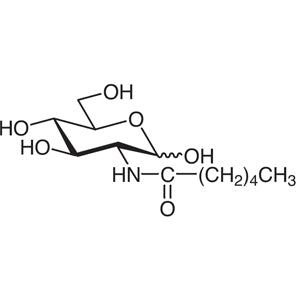
- TCI H0118 19817-88-0 N-Hexanoyl-D-glucosamine
- TCI P0130 10139-04-5 Phenyl N-Acetyl-alpha-D-glucosaminide
- TCI A1459 7772-79-4 2-Acetamido-1,3,4,6-tetra-O-acetyl-2-deoxy-beta-D-glucopyranose
- TCI M1604 1820583-64-9 4-Methoxyphenyl 3-O-Allyl-6-O-benzyl-2-deoxy-2-phthalimido-beta-D-glucopyranoside
- Glycosylation Studies: N-Benzoyl-D-glucosamine is used to investigate glycosylation mechanisms, aiding in the understanding of carbohydrate-based biological processes.
- Carbohydrate Metabolism Research: This compound supports studies on how carbohydrates are metabolized within biological systems, contributing to metabolic pathway analysis.
- Molecular Interaction Analysis: Its chemical properties make it suitable for studying molecular interactions in biological systems, enhancing understanding of biochemical networks.
- Enzymatic Reaction Studies: It functions as a substrate or inhibitor in enzymatic reactions, enabling detailed analysis of enzyme activity and specificity.
- Synthetic Chemistry Applications: N-Benzoyl-D-glucosamine is used in the synthesis of complex compounds, supporting the development of new pharmaceutical and industrial materials.
| Brand | TCI |
|---|---|
| CAS number | 655-42-5 |
| Molecular formula | — |
| Purity | — |
| Category | Chemistry > Chemical Biology > Glycoscience |
| Pack sizes | Available in various quantities as per supplier specifications |
| Physical form | Solid |
| Storage | Store in a cool, dry place away from moisture and direct sunlight |
N-Benzoyl-D-glucosamine should be stored in a cool, dry environment to maintain its chemical stability. It is recommended to keep the compound in a tightly sealed container to prevent exposure to moisture and air. Due to its potential reactivity, it should be handled in a well-ventilated laboratory setting, ideally with appropriate personal protective equipment. Avoid contact with incompatible substances to ensure safety during use and storage. Regular monitoring of storage conditions is advised to maintain the integrity of the compound for experimental use.
—
Product Categories
Produk Terkait
-
N-Acetyl-D-glucosamine TCI A0092
Regular price From Rp 980.700,00Regular priceRp 701.400,00Sale price From Rp 980.700,00 -
N-Valeryl-D-glucosamine TCI V0011
Regular price Rp 1.618.050,00Regular priceRp 1.146.600,00Sale price Rp 1.618.050,00 -
N-Hexanoyl-D-glucosamine TCI H0118
Regular price Rp 1.934.100,00Regular priceRp 1.368.150,00Sale price Rp 1.934.100,00 -
PhenylN-Acetyl-alpha-D-glucosaminide TCI P0130
Regular price Rp 3.153.150,00Regular priceRp 2.220.750,00Sale price Rp 3.153.150,00 -
2-Acetamido-1,3,4,6-tetra-O-acetyl-2-deoxy-beta-D-glucopyranose TCI A1459
Regular price From Rp 1.087.800,00Regular priceRp 775.950,00Sale price From Rp 1.087.800,00 -
4-Methoxyphenyl3-O-Allyl-6-O-benzyl-2-deoxy-2-phthalimido-beta-D-glucopyranoside TCI M1604
Regular price From Rp 2.889.600,00Regular priceRp 2.035.950,00Sale price From Rp 2.889.600,00 -
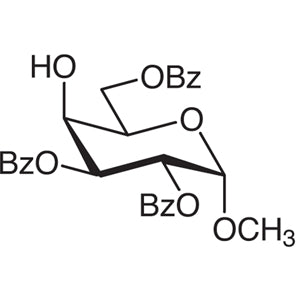
Methyl2,3,6-Tri-O-benzoyl-alpha-D-galactopyranoside TCI M1933
Regular price From Rp 1.801.800,00Regular priceRp 1.275.750,00Sale price From Rp 1.801.800,00 -
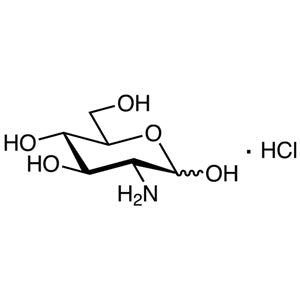
D-(+)-GlucosamineHydrochloride TCI G0044
Regular price From Rp 662.550,00Regular priceRp 478.800,00Sale price From Rp 662.550,00