Girard's Reagent T is a chemical reagent widely used in analytical chemistry for derivatization processes. It plays a crucial role in enhancing the volatility of non-volatile compounds, making them suitable for analysis through gas chromatography (GC) and high-performance liquid chromatography (HPLC). This reagent is essential in laboratories where precise and reliable data is required for complex chemical analyses. Its ability to modify functional groups allows for the detection of compounds that would otherwise be difficult to identify using standard chromatographic techniques.
The unique chemical properties of Girard's Reagent T make it a preferred choice in analytical laboratories. It exhibits stability and reactivity towards specific compounds, particularly heterocyclic substances such as amines and amides. This reagent forms detectable derivatives, which significantly improves the accuracy and consistency of analytical results. Its compatibility with various analytical techniques ensures that it remains a reliable tool for chemists working with complex mixtures. Additionally, its resistance to varying laboratory conditions ensures long-term usability and reliability.
In Indonesian laboratories, Girard's Reagent T is commonly used across multiple disciplines, including pharmaceutical research, environmental analysis, and industrial testing. Its versatility and effectiveness in enhancing compound detectability make it an essential component in the analytical toolkit of many research and quality control facilities. Its application is particularly valuable in scenarios where traditional analytical methods fall short, offering a robust alternative for accurate chemical analysis.
TCI brochures (PDF)
- Quaternary Ammonium Salts 2025-11-10 · p. 4
Related TCI products
- TCI D0727 5787-71-3 Girard's Reagent D
- TCI A0262 88-68-6 2-Aminobenzamide
- TCI A5596 664985-43-7 DAABD-Cl [=4-[2-(Dimethylamino)ethylaminosulfonyl]-7-chloro-2,1,3-benzoxadiazole] [for Proteome Analysis]
- TCI T0998 4083-64-1 p-Toluenesulfonyl Isocyanate
- TCI S0808 948995-62-8 Succinimidyl 4-[3,5-Dimethyl-4-(4-nitrobenzyloxy)phenyl]-4-oxobutyrate
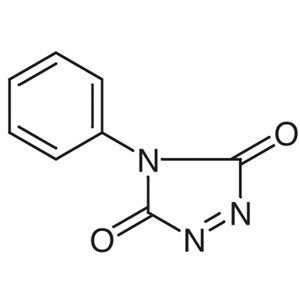
- TCI P1184 4233-33-4 4-Phenyl-1,2,4-triazoline-3,5-dione
- Pharmaceutical research utilizes Girard's Reagent T to enhance the detection of complex organic compounds in drug formulations.
- Environmental analysis benefits from its ability to derivatize non-volatile pollutants, improving their detectability in air and water samples.
- Industrial quality control relies on this reagent to analyze chemical compositions of raw materials and finished products accurately.
- Forensic laboratories use it to identify trace amounts of substances in complex mixtures, ensuring reliable evidence collection.
- Food and beverage testing employs Girard's Reagent T to analyze flavor compounds and contaminants, ensuring product safety and quality.
| Brand | TCI |
|---|---|
| CAS number | 123-46-6 |
| Molecular formula | — |
| Purity | — |
| Category | Analytical Chemistry > Analytical Reagents > Derivatization Reagents |
| Pack sizes | Available in various sizes as per standard reagent packaging |
| Physical form | Solid or powder, depending on the specific product variant |
| Storage | Store in a cool, dry place away from direct sunlight and moisture |
Girard's Reagent T should be stored in a cool, dry environment to maintain its chemical stability and effectiveness. It is recommended to keep the reagent in a tightly sealed container to prevent exposure to moisture and air, which could affect its performance. Suitable storage conditions include a controlled temperature range of 15–25°C, away from sources of heat or direct sunlight. In laboratory settings, it is important to handle the reagent with appropriate personal protective equipment, such as gloves and safety goggles, to ensure safety during use. Proper labeling of storage containers is essential to prevent accidental misuse. Regular inspection of storage conditions and container integrity is advised to maintain the reagent's quality and usability over time.
—
Produk Terkait
-
Girard'sReagentD TCI D0727
Regular price From Rp 1.246.350,00Regular priceRp 887.250,00Sale price From Rp 1.246.350,00 -
2-Aminobenzamide TCI A0262
Regular price From Rp 1.510.950,00Regular priceRp 1.072.050,00Sale price From Rp 1.510.950,00 -
DAABD-Cl[=4-[2-(Dimethylamino)ethylaminosulfonyl]-7-chloro-2,1,3-benzoxadiazole][forProteomeAnalysis] TCI A5596
Regular price Rp 5.672.100,00Regular priceRp 3.981.600,00Sale price Rp 5.672.100,00 -
p-ToluenesulfonylIsocyanate TCI T0998
Regular price Rp 582.750,00Regular priceRp 423.150,00Sale price Rp 582.750,00 -
Succinimidyl4-[3,5-Dimethyl-4-(4-nitrobenzyloxy)phenyl]-4-oxobutyrate TCI S0808
Regular price Rp 5.114.550,00Regular priceRp 3.592.050,00Sale price Rp 5.114.550,00 -
4-Phenyl-1,2,4-triazoline-3,5-dione TCI P1184
Regular price From Rp 2.491.650,00Regular priceRp 1.757.700,00Sale price From Rp 2.491.650,00 -
2-NitrophenylhydrazineHydrochloride TCI N0231
Regular price Rp 4.611.600,00Regular priceRp 3.240.300,00Sale price Rp 4.611.600,00 -
1-(5-Fluoro-2,4-dinitrophenyl)-4-methylpiperazine TCI F0650
Regular price From Rp 3.074.400,00Regular priceRp 2.165.100,00Sale price From Rp 3.074.400,00