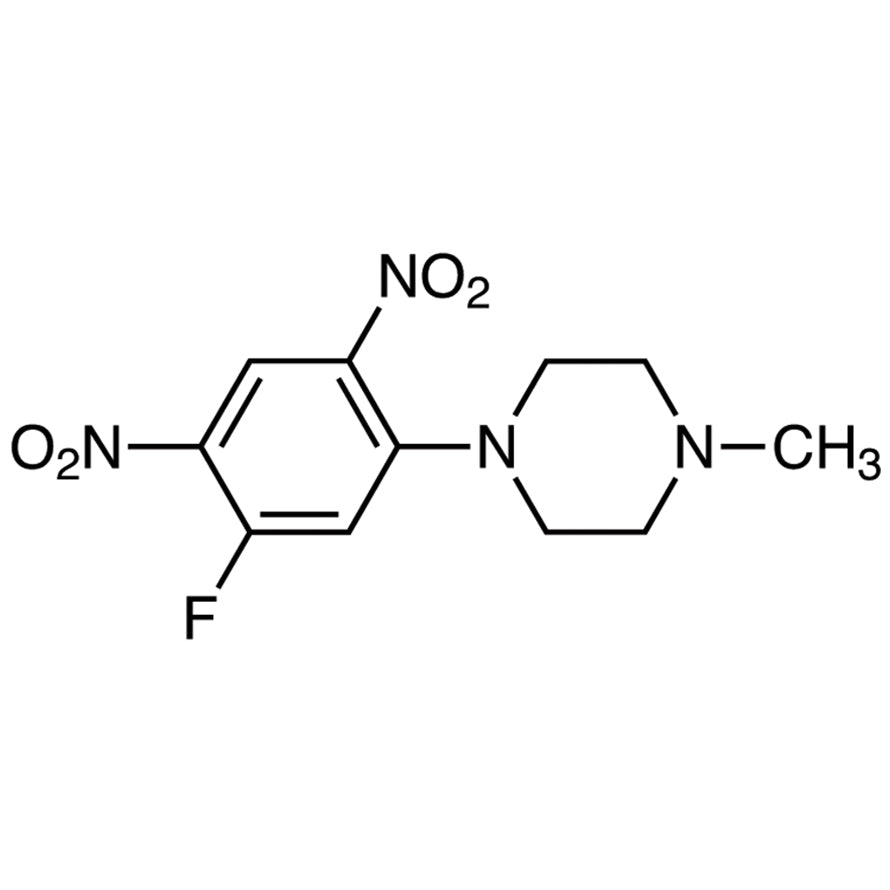
1-(5-Fluoro-2,4-dinitrophenyl)-4-methylpiperazine is a chemical compound widely used in analytical chemistry for derivatization processes. This reagent plays a crucial role in laboratories by facilitating the detection and identification of various compounds through advanced analytical techniques. Its application is essential in both qualitative and quantitative analysis, where it enhances the sensitivity and accuracy of results. As a key component in derivatization reactions, it enables the transformation of complex molecules into more detectable forms, making it indispensable in modern analytical workflows.
The compound is valued for its chemical stability and effectiveness as a derivatizing agent, particularly for nitrogen-containing compounds such as amines and amides. Its molecular structure allows it to form complexes with target analytes, which simplifies the analysis process using methods like spectroscopy and chromatography. This unique property makes it a preferred choice for laboratories requiring high precision and sensitivity. Its reliability and consistent performance contribute to its widespread use in analytical research.
In Indonesian laboratories, this compound is commonly used in chemical analysis research, especially in higher education institutions and research organizations. It is frequently found in environmental sample analysis, pharmacology, and organic chemistry studies. Its versatility and effectiveness make it a valuable tool for researchers aiming to achieve accurate and reliable analytical results.
Related TCI products
- TCI A5524 178065-30-0 Nalpha-(5-Fluoro-2,4-dinitrophenyl)-D-leucinamide [HPLC Labeling Reagent for e.e. Determination]
- TCI A5523 178065-29-7 Nalpha-(5-Fluoro-2,4-dinitrophenyl)-L-leucinamide [HPLC Labeling Reagent for e.e. Determination]
- TCI D2259 95713-52-3 Nalpha-(5-Fluoro-2,4-dinitrophenyl)-L-alaninamide [HPLC Labeling Reagent for e.e. Determination]
- TCI B4846 169447-70-5 (S)-1-(tert-Butoxycarbonyl)-2-methylpiperazine
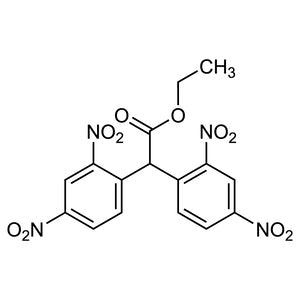
- TCI B0817 5833-18-1 Ethyl Bis(2,4-dinitrophenyl)acetate
- TCI A3772 4572-03-6 3-(4-Methylpiperazin-1-yl)propan-1-amine
- Environmental sample analysis benefits from this reagent's ability to enhance detection of complex organic compounds through derivatization.
- Pharmacological research utilizes it to improve the identification of nitrogen-containing drugs and metabolites in biological samples.
- Organic chemistry experiments rely on its capacity to form stable complexes with target molecules, facilitating chromatographic analysis.
- Analytical quality control processes use it to ensure accurate and reproducible results in routine testing procedures.
- Research institutions apply it in advanced analytical techniques to achieve high sensitivity and specificity in compound detection.
| Brand | TCI |
|---|---|
| CAS number | 928830-73-3 |
| Molecular formula | — |
| Purity | — |
| Category | Analytical Chemistry > Analytical Reagents > Derivatization Reagents |
| Pack sizes | Available in various quantities as per standard laboratory reagent packaging |
| Physical form | Solid or liquid, depending on the specific product variant |
| Storage | Store in a cool, dry place away from light and moisture |
This reagent should be stored in a cool, dry environment, away from direct sunlight and moisture to maintain its chemical stability. It is recommended to use airtight containers to prevent contamination and degradation. Proper ventilation should be ensured when handling the material to minimize exposure. Laboratory personnel should wear appropriate personal protective equipment, such as gloves and safety goggles, to ensure safe handling. The compound is not classified as hazardous under standard laboratory conditions, but standard safety protocols should still be followed. Regular inspection of storage conditions is advised to ensure the integrity of the reagent over time.
—
Produk Terkait
-
![178065-30-0 Nalpha-(5-Fluoro-2,4-dinitrophenyl)-D-leucinamide [HPLC Labeling Reagent for e.e. Determination] - AMI Scientific](//amiscientific.com/cdn/shop/files/TCI2510A5524.jpg?v=1769179464&width=533)
Nalpha-(5-Fluoro-2,4-dinitrophenyl)-D-leucinamide[HPLCLabelingReagentfore.e.Determination] TCI A5524
Regular price From Rp 3.419.850,00Regular price -
![178065-29-7 Nalpha-(5-Fluoro-2,4-dinitrophenyl)-L-leucinamide [HPLC Labeling Reagent for e.e. Determination] - AMI Scientific](//amiscientific.com/cdn/shop/files/TCI2510A5523.jpg?v=1769141519&width=533)
Nalpha-(5-Fluoro-2,4-dinitrophenyl)-L-leucinamide[HPLCLabelingReagentfore.e.Determination] TCI A5523
Regular price Rp 3.870.300,00Regular price -
![Nalpha-(5-Fluoro-2,4-dinitrophenyl)-L-alaninamide [HPLC Labeling Reagent for e.e. Determination] (CAS 95713-52-3) - TCI D2259 - AMI Scientific](//amiscientific.com/cdn/shop/files/TCI2510D2259.jpg?v=1768817622&width=533)
Nalpha-(5-Fluoro-2,4-dinitrophenyl)-L-alaninamide[HPLCLabelingReagentfore.e.Determination] TCI D2259
Regular price From Rp 2.306.850,00Regular price -
(S)-1-(tert-Butoxycarbonyl)-2-methylpiperazine TCI B4846
Regular price From Rp 1.696.800,00Regular price -
EthylBis(2,4-dinitrophenyl)acetate TCI B0817
Regular price Rp 1.458.450,00Regular price -
3-(4-Methylpiperazin-1-yl)propan-1-amine TCI A3772
Regular price From Rp 2.359.350,00Regular price -
1-Amino-4-methylpiperazine TCI A1192
Regular price From Rp 1.908.900,00Regular price -
1-Methylpiperazin-2-one TCI M3684
Regular price From Rp 1.485.750,00Regular price
![178065-30-0 Nalpha-(5-Fluoro-2,4-dinitrophenyl)-D-leucinamide [HPLC Labeling Reagent for e.e. Determination] - AMI Scientific](http://amiscientific.com/cdn/shop/files/TCI2510A5524.jpg?v=1769179464&width=533)
![178065-29-7 Nalpha-(5-Fluoro-2,4-dinitrophenyl)-L-leucinamide [HPLC Labeling Reagent for e.e. Determination] - AMI Scientific](http://amiscientific.com/cdn/shop/files/TCI2510A5523.jpg?v=1769141519&width=533)
![Nalpha-(5-Fluoro-2,4-dinitrophenyl)-L-alaninamide [HPLC Labeling Reagent for e.e. Determination] (CAS 95713-52-3) - TCI D2259 - AMI Scientific](http://amiscientific.com/cdn/shop/files/TCI2510D2259.jpg?v=1768817622&width=533)