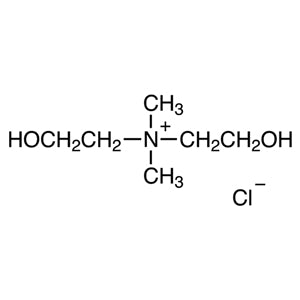
Bis(2-hydroxyethyl)dithiocarbamic Acid Zinc(II) Salt is a chemical compound widely used as a polymer additive in laboratory settings, particularly within the fields of materials science and polymer chemistry. This compound serves as a versatile reagent that interacts with various types of polymers, enabling it to act as a radical scavenger or a cross-linking agent during polymer synthesis. Its role in the laboratory is crucial for modifying the mechanical and thermal properties of polymer materials, thereby expanding their applicability in industrial and research contexts. This compound is essential for developing advanced polymer-based materials with enhanced performance characteristics.
The compound's chemical stability and controlled reactivity make it a preferred choice for high-precision laboratory applications. Its ability to maintain structural integrity under diverse chemical conditions ensures consistent performance in complex reactions. This stability, combined with its controlled reactivity, allows researchers to achieve predictable results in polymer modification processes. The compound's resistance to degradation further enhances its reliability in long-term experiments and industrial applications, making it a trusted reagent in both academic and commercial research environments.
In Indonesian laboratories, this compound is commonly used in polymer and composite material research. It plays a key role in studies aimed at improving the durability, flexibility, and thermal resistance of polymer-based materials. Its application is particularly relevant in the development of advanced materials for various industries, including automotive, construction, and electronics. The compound's consistent performance and reliability make it a valuable tool for researchers seeking to innovate in polymer science and materials engineering.
TCI brochures (PDF)
- Polymer Additives 2026-04-16 · p. 9
Related TCI products
- TCI D0717 137-30-4 Zinc Dimethyldithiocarbamate
- TCI D0492 14324-55-1 Zinc Diethyldithiocarbamate
- TCI T0851 4162-45-2 Tetrabromobisphenol A Bis(2-hydroxyethyl) Ether
- TCI D2879 14267-17-5 Nickel Diethyldithiocarbamate
- TCI D1781 13927-77-0 Nickel(II) Dibutyldithiocarbamate
- TCI T1679 3645-00-9 2-Hydroxyethyl Methyl Terephthalate
- Polymer Modification: This compound is used to alter the mechanical and thermal properties of polymers, enhancing their performance in various applications.
- Cross-Linking Agent: It serves as an effective cross-linking agent in polymer synthesis, improving the structural integrity of the final product.
- Radical Scavenger: Its ability to inhibit radical formation makes it suitable for stabilizing polymer materials during synthesis and processing.
- Composite Material Development: It is widely used in the formulation of composite materials to improve adhesion and mechanical strength.
- Thermal Stability Testing: The compound is employed in experiments assessing the thermal resistance of polymer-based materials under different conditions.
| Brand | TCI |
|---|---|
| CAS number | 19163-92-9 |
| Molecular formula | — |
| Purity | — |
| Category | Materials Science > Polymer/Macromolecule Reagents > Polymer Additives |
| Pack sizes | Available in various quantities as per standard laboratory supply |
| Physical form | Solid powder |
| Storage | Store in a cool, dry place away from moisture and direct sunlight |
This compound should be stored in a cool, dry environment to maintain its chemical stability and prevent degradation. It is recommended to use airtight containers to protect it from moisture and humidity, which can affect its performance. Due to its chemical nature, it should be handled with appropriate personal protective equipment, such as gloves and safety goggles, to ensure laboratory safety. Avoid exposure to direct sunlight and keep it away from incompatible substances. Proper storage ensures the compound remains effective for extended periods, supporting consistent results in polymer-related research and development.
—
Produk Terkait
-
ZincDimethyldithiocarbamate TCI D0717
Regular price From Rp 505.050,00Regular priceRp 352.800,00Sale price From Rp 505.050,00 -
ZincDiethyldithiocarbamate TCI D0492
Regular price From Rp 505.050,00Regular priceRp 352.800,00Sale price From Rp 505.050,00 -
TetrabromobisphenolABis(2-hydroxyethyl)Ether TCI T0851
Regular price Rp 557.550,00Regular priceRp 405.300,00Sale price Rp 557.550,00 -
NickelDiethyldithiocarbamate TCI D2879
Regular price Rp 743.400,00Regular priceRp 519.750,00Sale price Rp 743.400,00 -
Nickel(II)Dibutyldithiocarbamate TCI D1781
Regular price From Rp 584.850,00Regular priceRp 408.450,00Sale price From Rp 584.850,00 -
2-HydroxyethylMethylTerephthalate TCI T1679
Regular price From Rp 1.803.900,00Regular priceRp 1.261.050,00Sale price From Rp 1.803.900,00 -
1,4-Bis(2-hydroxyethyl)piperazine TCI B4903
Regular price From Rp 900.900,00Regular priceRp 645.750,00Sale price From Rp 900.900,00 -
Bis(2-hydroxyethyl)dimethylammoniumChloride TCI B4384
Regular price From Rp 1.618.050,00Regular priceRp 1.146.600,00Sale price From Rp 1.618.050,00