3-Bromoanisole is a versatile organic compound widely used in laboratory settings for its reactivity and structural versatility. As a brominated aromatic compound, it serves as a key building block in synthetic chemistry, particularly in electrophilic substitution reactions. Its molecular structure combines a methoxy group with a bromine atom on a benzene ring, making it highly valuable for the synthesis of complex organic molecules. This compound is essential for researchers aiming to develop new chemical entities with specific functional groups.
The chemical properties of 3-Bromoanisole, including its stability and reactivity, make it a preferred choice in laboratory applications. The presence of the bromo group enhances its ability to participate in nucleophilic substitution reactions, such as SNAr, while the methoxy group provides additional synthetic utility. These characteristics allow it to be a reliable reagent for a wide range of chemical transformations. Its consistent chemical behavior and compatibility with various reaction conditions further support its use in both academic and industrial research environments.
In Indonesian laboratories, 3-Bromoanisole is commonly used in chemical research, including the development of new compounds and molecular modifications. It is also utilized in educational settings to teach fundamental concepts of organic chemistry and reaction mechanisms. Its availability and reliability make it a staple in both research and teaching laboratories across Indonesia.
TCI brochures (PDF)
- Aryne/Heteroaryne Precursors 2025-09-16 · p. 5
- Organic synthesis: 3-Bromoanisole is ideal for creating complex organic molecules due to its reactivity and structural versatility.
- Drug development: Its bromo group facilitates the synthesis of heterocyclic compounds, which are often found in pharmaceuticals.
- Industrial chemistry: It serves as a precursor for various industrial chemicals, supporting the production of specialty materials.
- Educational research: It is widely used in academic settings to demonstrate reaction mechanisms and synthetic strategies.
- Molecular modification: Its functional groups allow for precise structural changes, making it valuable in chemical innovation.
| Brand | TCI |
|---|---|
| CAS number | 2398-37-0 |
| Molecular formula | — |
| Purity | — |
| Category | Chemistry > Building Blocks > Non-Heterocyclic Building Blocks |
| Pack sizes | Available in various quantities as per standard laboratory requirements |
| Physical form | Solid |
| Storage | Store in a cool, dry place away from light and incompatible materials |
3-Bromoanisole should be stored in a cool, dry, and well-ventilated area, away from direct sunlight and sources of heat. It is recommended to keep the compound in a sealed container made of glass or high-density polyethylene to prevent contamination and moisture absorption. Due to its brominated nature, it should be handled with care, using appropriate personal protective equipment such as gloves and safety goggles. Avoid contact with incompatible substances like strong oxidizers or acids. The compound is stable under normal storage conditions but should be kept in a secure location to prevent accidental exposure. Proper labeling and storage practices ensure the safety of laboratory personnel and the integrity of the compound.
—
Produk Terkait
-
2-Bromoanisole TCI B0546
Regular price From Rp 1.008.000,00Regular priceRp 704.550,00Sale price From Rp 1.008.000,00 -
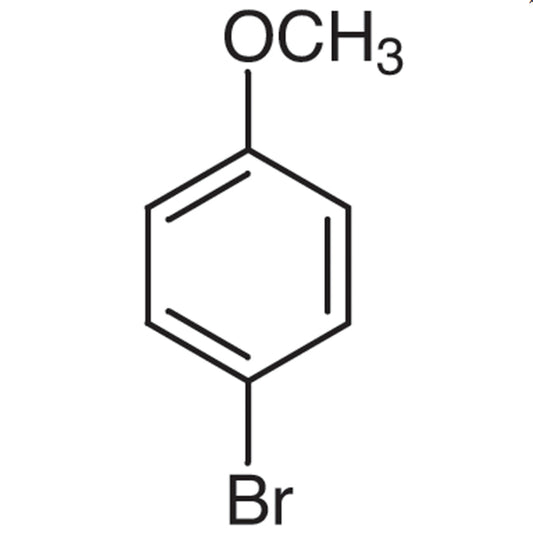
4-Bromoanisole TCI B0547
Regular price From Rp 530.250,00Regular priceRp 370.650,00Sale price From Rp 530.250,00 -
2-(1-Adamantyl)-4-bromoanisole TCI A2321
Regular price From Rp 1.326.150,00Regular priceRp 927.150,00Sale price From Rp 1.326.150,00 -
2,4,6-Tribromoanisole TCI T2301
Regular price From Rp 1.140.300,00Regular priceRp 796.950,00Sale price From Rp 1.140.300,00 -
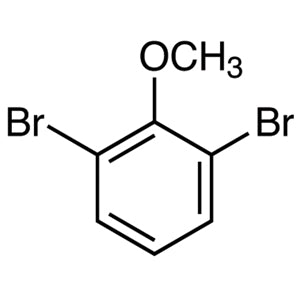
2,6-Dibromoanisole TCI D5279
Regular price From Rp 1.829.100,00Regular priceRp 1.278.900,00Sale price From Rp 1.829.100,00 -
3,5-Dibromoanisole TCI D3364
Regular price From Rp 1.510.950,00Regular priceRp 1.056.300,00Sale price From Rp 1.510.950,00 -
2,4-Dibromoanisole TCI D1863
Regular price Rp 955.500,00Regular priceRp 667.800,00Sale price Rp 955.500,00 -
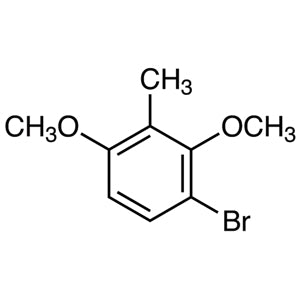
3-Bromo-2,6-dimethoxytoluene TCI B4745
Regular price From Rp 769.650,00Regular priceRp 537.600,00Sale price From Rp 769.650,00