4-Chlorophenacyl Bromide is a chemical compound widely used as a building block in organic synthesis. It serves as a versatile reagent in laboratory settings, enabling the creation of complex organic molecules through various chemical reactions. Its molecular structure features a bromide group and a chloro substituent on the phenyl ring, making it suitable for substitution, coupling, and electrophilic reactions. This compound is particularly valuable in the development of pharmaceuticals and industrial chemicals due to its reactivity and adaptability in different synthetic pathways.
The compound's reactivity and ability to participate in a wide range of chemical transformations make it a preferred choice for researchers. Its stability under specific conditions and compatibility with various reaction environments further enhance its utility. The compound is easy to handle and can be used in diverse experimental setups, making it a reliable option for both academic and industrial laboratories. Its chemical properties allow it to be a key component in the synthesis of heterocyclic compounds, which are essential in drug development and material science.
In Indonesian laboratories, 4-Chlorophenacyl Bromide is commonly used in organic chemistry research, especially in pharmaceutical and material science applications. It is a trusted reagent for experimental work that requires a high degree of chemical flexibility and reliability. Many educational and research institutions in Indonesia rely on this compound to meet their experimental needs, ensuring consistent and reproducible results in their studies.
- Synthesis of heterocyclic compounds for drug development due to its reactivity and structural versatility.
- Organic chemistry research in academic and industrial settings for creating complex molecular structures.
- Pharmaceutical development applications where precise chemical modifications are required.
- Material science experiments involving the creation of functional organic materials.
- Chemical synthesis projects requiring a reliable and flexible building block for various reaction pathways.
| Brand | TCI |
|---|---|
| CAS number | 536-38-9 |
| Molecular formula | — |
| Purity | — |
| Category | Chemistry > Building Blocks > Non-Heterocyclic Building Blocks |
| Pack sizes | Available in standard laboratory quantities |
| Physical form | Solid or liquid, depending on the specific product variant |
| Storage | Store in a cool, dry place away from light and moisture |
4-Chlorophenacyl Bromide should be stored in a cool, dry place, away from light and moisture to maintain its chemical stability. It is recommended to use airtight containers to prevent exposure to air and humidity. Due to its reactivity, it should be handled with care, using appropriate personal protective equipment such as gloves and safety goggles. It is important to ensure proper ventilation in the laboratory when working with this compound. Storage should be in a secure location, away from incompatible substances to avoid any potential chemical interactions. Regular monitoring of storage conditions will help maintain the integrity and effectiveness of the compound in laboratory applications.
—
Produk Terkait
-
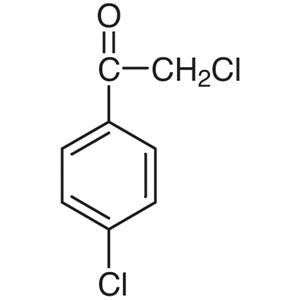
4-ChlorophenacylChloride TCI C1306
Regular price From Rp 795.900,00Regular priceRp 572.250,00Sale price From Rp 795.900,00 -
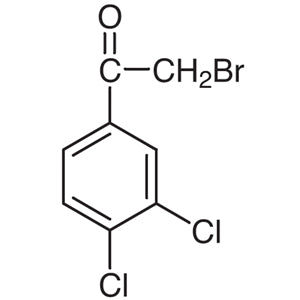
3,4-DichlorophenacylBromide TCI B2837
Regular price From Rp 1.192.800,00Regular priceRp 849.450,00Sale price From Rp 1.192.800,00 -
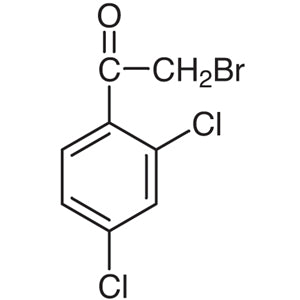
2,4-DichlorophenacylBromide TCI D3351
Regular price Rp 3.340.050,00Regular priceRp 2.350.950,00Sale price Rp 3.340.050,00 -
AcetylBromide TCI A0080
Regular price From Rp 742.350,00Regular priceRp 534.450,00Sale price From Rp 742.350,00 -
ValerylBromide TCI V0038
Regular price Rp 2.439.150,00Regular priceRp 1.720.950,00Sale price Rp 2.439.150,00 -
3-BromophenacylBromide TCI B4125
Regular price From Rp 1.167.600,00Regular priceRp 831.600,00Sale price From Rp 1.167.600,00 -
2-BromophenacylBromide TCI B4124
Regular price From Rp 1.961.400,00Regular priceRp 1.387.050,00Sale price From Rp 1.961.400,00 -
3-CyanophenacylBromide TCI B4079
Regular price Rp 7.102.200,00Regular priceRp 4.982.250,00Sale price Rp 7.102.200,00