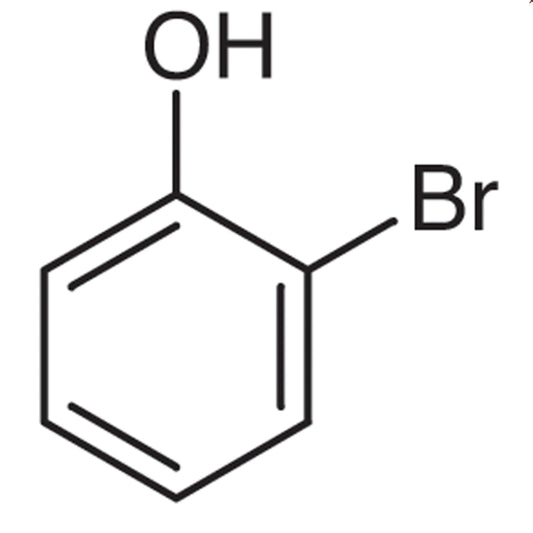
3-Bromophenol is a chemical compound widely used in various laboratory experiments across different fields of chemistry. As a fundamental building block, it plays a crucial role in the synthesis of aromatic compounds and their derivatives. Its presence in laboratory settings is essential for conducting substitution reactions, particularly electrophilic substitutions, where its reactivity at the 3-position of the phenolic ring makes it highly valuable. This compound is a key component in the development of more complex chemical structures, making it indispensable for organic chemists and researchers.
The chemical properties of 3-Bromophenol make it a preferred choice for laboratory applications. It exhibits good solubility in organic solvents such as ethyl acetate and chloroform, facilitating ease of handling and manipulation during experiments. Its stability and moderate reactivity ensure that it remains effective in a wide range of chemical processes. Additionally, its molecular structure is simple yet versatile, allowing it to be used in multiple synthetic pathways. These characteristics make it a reliable and efficient reagent for both research and educational purposes.
In Indonesian laboratories, 3-Bromophenol is commonly used in organic chemistry research, especially in studies related to aromatic reactivity and the synthesis of new compounds. It is also an integral part of academic programs at universities and research institutions, where it supports both teaching and experimental work. Its availability and reliability make it a standard material in many chemical laboratories across Indonesia.
- Organic synthesis reactions benefit from 3-Bromophenol due to its reactivity at the 3-position of the phenolic ring, enabling efficient substitution processes.
- It is widely used in electrophilic substitution studies, where its stability and solubility in organic solvents support controlled and reproducible chemical transformations.
- The compound is essential in the development of aromatic derivatives, providing a versatile starting material for the creation of more complex molecular structures.
- Educational institutions rely on 3-Bromophenol for teaching practical chemistry, allowing students to explore synthetic pathways and reaction mechanisms.
- Research laboratories in Indonesia use it for investigating the reactivity of aromatic compounds, contributing to advancements in chemical science and innovation.
| Brand | TCI |
|---|---|
| CAS number | 591-20-8 |
| Molecular formula | — |
| Purity | — |
| Category | Chemistry > Building Blocks > Non-Heterocyclic Building Blocks |
| Pack sizes | Available in various quantities as per standard laboratory supply |
| Physical form | Solid, typically in crystalline or powder form |
| Storage | Store in a cool, dry place away from direct sunlight and incompatible substances |
3-Bromophenol should be stored in a cool, dry environment to maintain its chemical stability and prevent degradation. It is recommended to keep it in airtight containers to minimize exposure to moisture and air, which could affect its reactivity. Suitable storage conditions include a controlled temperature range of 15–25°C, away from heat sources and direct sunlight. When handling, it is important to use appropriate personal protective equipment such as gloves and safety goggles to ensure safety. Due to its chemical nature, it should be stored separately from strong bases and oxidizing agents to avoid potential hazardous reactions. Proper labeling and storage practices are essential to maintain the integrity and safety of the compound in laboratory settings.
—
Produk Terkait
-
4-Bromophenol[forBiochemicalResearch] TCI B3910
Regular price From Rp 717.150,00Regular priceRp 500.850,00Sale price From Rp 717.150,00 -
4-Bromophenol TCI B0787
Regular price From Rp 664.650,00Regular priceRp 464.100,00Sale price From Rp 664.650,00 -
2-Bromophenol TCI B0630
Regular price From Rp 2.016.000,00Regular priceRp 1.409.100,00Sale price From Rp 2.016.000,00 -
2,4,6-Tribromophenol TCI T0349
Regular price From Rp 769.650,00Regular priceRp 537.600,00Sale price From Rp 769.650,00 -
3,5-Dibromophenol TCI D3820
Regular price Rp 717.150,00Regular priceRp 500.850,00Sale price Rp 717.150,00 -
2,6-Dibromophenol TCI D3384
Regular price From Rp 1.696.800,00Regular priceRp 1.186.500,00Sale price From Rp 1.696.800,00 -
2,4-Dibromophenol TCI D0265
Regular price From Rp 1.115.100,00Regular priceRp 779.100,00Sale price From Rp 1.115.100,00