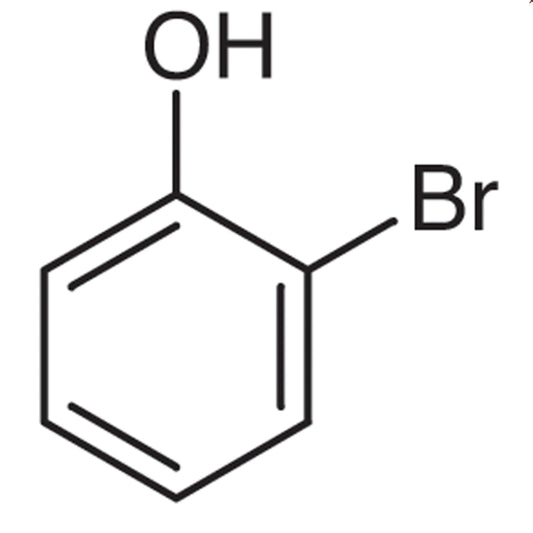
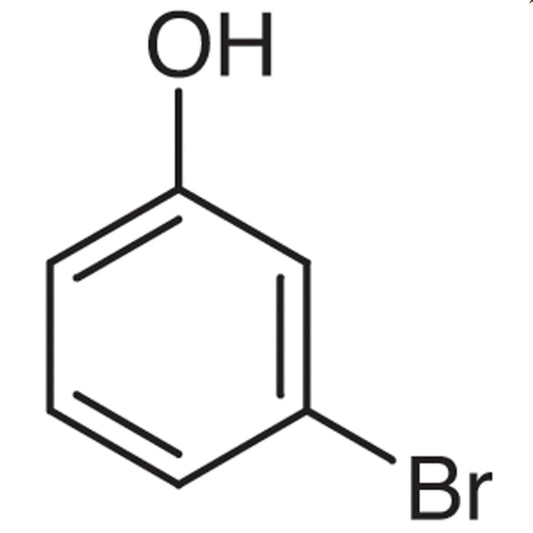
2,4-Dibromophenol from TCI is a brominated phenol with two bromine atoms at the 2- and 4-positions of the aromatic ring. In synthetic chemistry it is classed as a non-heterocyclic building block and is used to construct more complex aromatic molecules. It is also known in environmental research, because brominated phenols occur naturally in marine organisms and form as transformation products of brominated flame retardants. For this reason, 2,4-Dibromophenol serves both as a reaction starting material and as an analytical reference compound.
The compound's main appeal is its combination of functional handles. The phenolic hydroxyl group can be alkylated, acylated, or converted into an ether. The two bromine atoms can take part in palladium-catalysed cross-coupling reactions. The bromine positions differ: one is ortho and the other para to the OH group, so each sits in a different electronic and steric environment. That difference allows stepwise, selective reactions at one site and then the other. The compound is also more acidic than ordinary phenol, which affects the reaction conditions researchers choose for bases, solvents, and protecting-group strategies.
In Indonesia, 2,4-Dibromophenol is useful to synthetic organic chemistry laboratories that build substituted aromatic frameworks. It also serves environmental chemistry laboratories that monitor organohalogen compounds. University research groups, institutional laboratories, and analytical testing facilities can use it in method development, reaction studies, and comparative analysis. Supplied under the TCI brand by AMI Scientific, it suits teams that need a well-defined brominated aromatic reagent for both preparative and analytical work.
- Synthesis of complex aromatic molecules: the two bromine atoms and the phenolic hydroxyl group give several reactive sites, so chemists can build substituted aromatic structures from a single starting material.
- Palladium-catalysed cross-coupling: both aryl bromide positions can take part in cross-coupling, and their different ortho and para environments make stepwise, selective functionalisation possible.
- Ether and ester formation: the phenolic OH group can be alkylated, acylated, or converted into ethers, which lets researchers protect or modify the hydroxyl group before or after reacting the bromine sites.
- Environmental organohalogen analysis: brominated phenols occur in marine organisms and form when brominated flame retardants break down, so this compound is a relevant reference in environmental monitoring studies.
- Analytical reference and method development: laboratories can use 2,4-Dibromophenol as a reference compound when setting up or checking detection methods for brominated phenolic compounds in research samples.
| Brand | TCI (product code D0265) |
|---|---|
| CAS number | 615-58-7 |
| Molecular formula | — |
| Purity | — |
| Category | Chemistry > Building Blocks > Non-Heterocyclic Building Blocks |
| Pack sizes | offered in the pack sizes listed on the product page; please ask AMI Scientific to confirm the option you need |
| Physical form | see the manufacturer's product documentation |
| Storage | keep tightly closed in a cool, dry, well-ventilated place, following the manufacturer's safety data sheet |
Store 2,4-Dibromophenol in its original, tightly closed container, in a cool, dry, well-ventilated area away from direct sunlight, heat sources, and incompatible materials such as strong oxidising agents and strong bases. Label containers clearly and keep them in a designated chemical storage cabinet. Wear suitable personal protective equipment, including chemical-resistant gloves, safety glasses, and a laboratory coat. Weigh and transfer the material in a fume hood to avoid inhaling dust or vapour and to prevent contact with skin and eyes. Halogenated phenolic waste should be collected separately and disposed of according to institutional and local regulations. Always read the manufacturer's safety data sheet before use.
—
Produk Terkait
-
3,5-Dibromophenol TCI D3820
Regular price Rp 717.150,00Regular priceRp 500.850,00Sale price Rp 717.150,00 -
2,6-Dibromophenol TCI D3384
Regular price From Rp 1.696.800,00Regular priceRp 1.186.500,00Sale price From Rp 1.696.800,00 -
4-Bromophenol[forBiochemicalResearch] TCI B3910
Regular price From Rp 717.150,00Regular priceRp 500.850,00Sale price From Rp 717.150,00 -
4-Bromophenol TCI B0787
Regular price From Rp 664.650,00Regular priceRp 464.100,00Sale price From Rp 664.650,00 -
2-Bromophenol TCI B0630
Regular price From Rp 2.016.000,00Regular priceRp 1.409.100,00Sale price From Rp 2.016.000,00 -
3-Bromophenol TCI B0629
Regular price Rp 2.094.750,00Regular priceRp 1.464.750,00Sale price Rp 2.094.750,00 -
2,4,6-Tribromophenol TCI T0349
Regular price From Rp 769.650,00Regular priceRp 537.600,00Sale price From Rp 769.650,00 -
BromophenolRed TCI B0632
Regular price From Rp 1.140.300,00Regular priceRp 812.700,00Sale price From Rp 1.140.300,00