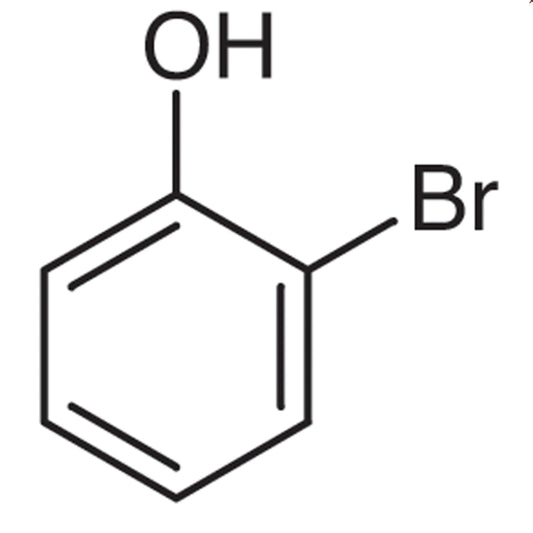
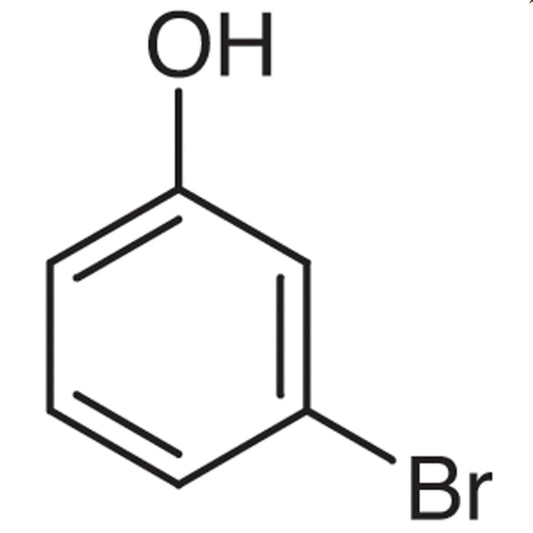
4-Bromophenol is a chemical compound widely used in organic synthesis reactions, particularly in the production of aromatic and heterocyclic compounds. It serves as a fundamental building block in laboratories, enabling the creation of complex molecular structures. This compound is commonly found in chemical laboratories as a key reagent for developing new chemical entities. Its versatility makes it an essential component in various synthetic pathways, especially those involving aromatic ring modifications.
The high reactivity of 4-Bromophenol is primarily due to the presence of a bromo group at the para position of the phenol ring. This functional group enhances its ability to undergo substitution and electrophilic reactions, making it a preferred choice for synthetic chemists. The compound’s reactivity allows it to interact with a variety of reagents, including alkali metals, acids, and oxidizing agents. Its chemical properties make it an ideal candidate for reactions requiring aromatic ring substitution.
In Indonesian laboratories, 4-Bromophenol is extensively used in both educational and research settings. It is frequently employed in chemistry practical sessions to illustrate substitution reactions and aromatic reactivity. Its availability in various packaging formats makes it convenient for diverse laboratory needs. The compound is a valuable tool for teaching and experimentation, supporting both academic and industrial chemical research.
- Organic synthesis reactions benefit from 4-Bromophenol due to its reactivity and ability to undergo substitution and electrophilic reactions.
- Aromatic ring modification is enhanced by the presence of the bromo group, making it ideal for creating complex aromatic compounds.
- Educational experiments in Indonesian universities use this compound to demonstrate substitution reactions and aromatic reactivity.
- Research in pharmaceutical and industrial chemistry relies on 4-Bromophenol for developing new chemical compounds.
- Laboratory training programs incorporate this compound to teach students about functional group reactivity and synthetic pathways.
| Brand | TCI |
|---|---|
| CAS number | 106-41-2 |
| Molecular formula | — |
| Purity | — |
| Category | Chemistry > Building Blocks > Non-Heterocyclic Building Blocks |
| Pack sizes | Available in various sizes to suit different laboratory needs |
| Physical form | Solid, typically in crystalline form |
| Storage | Store in a cool, dry place away from light and moisture |
4-Bromophenol should be stored in a cool, dry place, away from direct light and moisture to maintain its chemical integrity. It is recommended to use airtight containers to prevent exposure to air and humidity. Due to its reactivity, it should be handled with care, using appropriate personal protective equipment such as gloves and safety goggles. It is important to store it separately from incompatible materials like strong oxidizers or acids to avoid potential chemical reactions. Proper labeling and storage conditions ensure the safety of laboratory personnel and the stability of the compound. Always follow standard laboratory safety protocols when handling this compound.
—
Product Categories
Produk Terkait
-
4-Bromophenol[forBiochemicalResearch] TCI B3910
Regular price From Rp 717.150,00Regular priceRp 500.850,00Sale price From Rp 717.150,00 -
2-Bromophenol TCI B0630
Regular price From Rp 2.016.000,00Regular priceRp 1.409.100,00Sale price From Rp 2.016.000,00 -
3-Bromophenol TCI B0629
Regular price Rp 2.094.750,00Regular priceRp 1.464.750,00Sale price Rp 2.094.750,00 -
2,4,6-Tribromophenol TCI T0349
Regular price From Rp 769.650,00Regular priceRp 537.600,00Sale price From Rp 769.650,00 -
3,5-Dibromophenol TCI D3820
Regular price Rp 717.150,00Regular priceRp 500.850,00Sale price Rp 717.150,00 -
2,6-Dibromophenol TCI D3384
Regular price From Rp 1.696.800,00Regular priceRp 1.186.500,00Sale price From Rp 1.696.800,00 -
2,4-Dibromophenol TCI D0265
Regular price From Rp 1.115.100,00Regular priceRp 779.100,00Sale price From Rp 1.115.100,00 -
1-Bromo-4-hexyloxybenzene TCI B3876
Regular price From Rp 1.590.750,00Regular priceRp 1.111.950,00Sale price From Rp 1.590.750,00