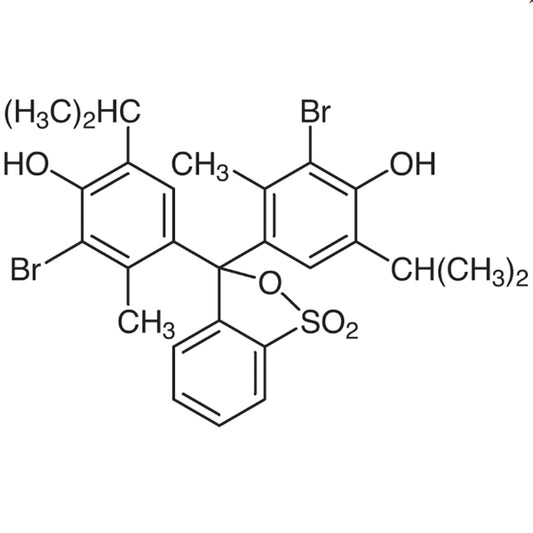
Bromothymol Blue is a widely used pH indicator in laboratories for determining the acidity or alkalinity of a solution. It is commonly employed in analytical chemistry to provide visual feedback on pH changes, making it an essential tool for both qualitative and quantitative analysis. This reagent is particularly valuable in environments where precise pH measurement is required, as it offers a reliable and consistent response to variations in solution pH. Its application spans various scientific fields, including environmental testing, biological sample analysis, and chemical process monitoring.
One of the key properties that make Bromothymol Blue a preferred choice is its high sensitivity to pH changes. It exhibits a distinct color change from blue-green in basic conditions to yellowish-blue in acidic environments, allowing for easy and accurate interpretation. Additionally, the reagent is stable under normal storage conditions and does not degrade easily, ensuring long-term reliability. Its clear and observable color transition also simplifies the process of reading results, making it user-friendly for both experienced and novice laboratory personnel.
In Indonesian laboratories, Bromothymol Blue is frequently used in educational and research settings to teach and apply pH measurement techniques. It is also employed in quality control processes for water and environmental samples, as well as in biochemical experiments. The reagent’s appropriate concentration ensures it is suitable for use in standard laboratory scales without requiring additional dilution. Its versatility and reliability make it a staple in many laboratory workflows across Indonesia.
TCI brochures (PDF)
- Titration Reagents and TLC Stains 2026-05-07 · p. 3
Related TCI products
- TCI B0579 76-60-8 Bromocresol Green (0.04% in Water) [for pH Determination]
- TCI B0117 Bromophenol Blue (0.04% in Water) [for pH Determination]
- TCI B0115 115-40-2 Bromocresol Purple (0.04% in Water) [for pH Determination]
- TCI N0161 100-02-7 4-Nitrophenol (0.25% in Water) [for pH Determination]
- TCI C0407 62625-29-0 Cresol Red (0.04% in Water) [for pH Determination]
- TCI D0754 13138-48-2 3,3'-Dimethylnaphthidine [for Colorimetric Determination of Cl in Water]
- pH Titration Analysis – Bromothymol Blue is ideal for titration experiments due to its clear color change, which helps identify the endpoint of acid-base reactions.
- Environmental Water Testing – This reagent is used to assess the pH of water samples, providing quick and accurate results for environmental monitoring.
- Biological Sample Analysis – Bromothymol Blue is commonly used in biochemistry to determine the pH of biological fluids, aiding in diagnostic and research applications.
- Educational Laboratory Work – Its visual response makes it a valuable teaching tool for students learning about pH indicators and acid-base chemistry.
- Quality Control in Industrial Processes – It is used to monitor pH levels in various industrial solutions, ensuring product consistency and safety.
| Brand | TCI |
|---|---|
| CAS number | 76-59-5 |
| Molecular formula | — |
| Purity | — |
| Category | Analytical Chemistry > Analytical Reagents > pH Measurement Reagents |
| Pack sizes | 0.04% in Water |
| Physical form | Powder |
| Storage | Store in a cool, dark place away from moisture and direct sunlight |
Bromothymol Blue should be stored in a cool, dark place, away from moisture and direct sunlight to maintain its stability and effectiveness. It is recommended to keep the reagent in a tightly sealed container to prevent exposure to air and humidity, which could affect its performance. Since it is a powder form, it should be handled with care to avoid inhalation or contact with skin. In laboratory settings, it is important to use appropriate personal protective equipment, such as gloves and safety goggles, when handling the reagent. Proper labeling of storage containers is also essential to ensure safe and efficient access. Regular inspection of storage conditions is advised to ensure the reagent remains in optimal condition for use.
—
Product Categories
Produk Terkait
-
BromocresolGreen(0.04%inWater)[forpHDetermination] TCI B0579
Regular price Rp 822.150,00Regular priceRp 590.100,00Sale price Rp 822.150,00 -
BromophenolBlue(0.04%inWater)[forpHDetermination] TCI B0117
Regular price Rp 1.378.650,00Regular priceRp 979.650,00Sale price Rp 1.378.650,00 -
BromocresolPurple(0.04%inWater)[forpHDetermination] TCI B0115
Regular price Rp 900.900,00Regular priceRp 645.750,00Sale price Rp 900.900,00 -
4-Nitrophenol(0.25%inWater)[forpHDetermination] TCI N0161
Regular price Rp 1.936.200,00Regular priceRp 1.353.450,00Sale price Rp 1.936.200,00 -
CresolRed(0.04%inWater)[forpHDetermination] TCI C0407
Regular price Rp 769.650,00Regular priceRp 553.350,00Sale price Rp 769.650,00 -
3,3'-Dimethylnaphthidine[forColorimetricDeterminationofClinWater] TCI D0754
Regular price From Rp 6.651.750,00Regular priceRp 4.667.250,00Sale price From Rp 6.651.750,00 -
BromothymolBlue TCI B0657
Regular price From Rp 530.250,00Regular priceRp 386.400,00Sale price From Rp 530.250,00 -
BromothymolBlueSodiumSalt TCI S0044
Regular price From Rp 1.087.800,00Regular priceRp 775.950,00Sale price From Rp 1.087.800,00