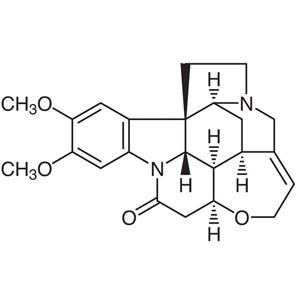
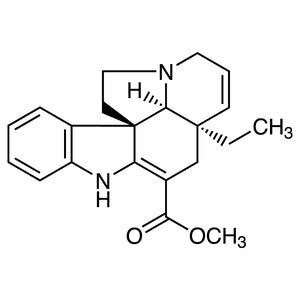
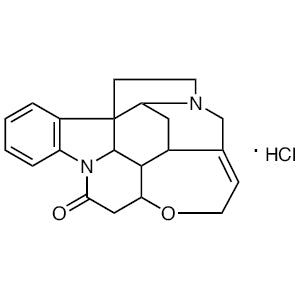
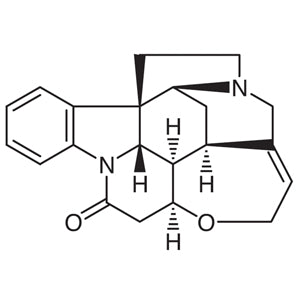
Brucine Hydrochloride Monohydrate is a chemical compound classified under the alkaloid category, commonly used in biochemical and pharmacological research. This compound plays a vital role in laboratories by serving as a reagent for testing the pharmacological activity of alkaloids. Its presence allows researchers to explore the biological effects of alkaloid compounds, contributing to the development of new therapeutic agents. In various scientific studies, it is utilized to investigate the mechanisms of action of alkaloids in biological systems.
One of the key properties that make Brucine Hydrochloride Monohydrate a preferred choice is its high purity and consistent chemical composition. These characteristics ensure reliable and reproducible results in experiments. Additionally, its basic nature enables it to react with various acidic compounds, making it versatile in chemical reactions. The compound also exhibits good stability under certain conditions, which enhances its usability in long-term research projects.
In Indonesian laboratories, Brucine Hydrochloride Monohydrate is widely used in biochemical, pharmacological, and health science research. It is frequently found in studies related to the mechanisms of action of alkaloids and their biological effects. Its solubility in certain organic solvents further facilitates its application in analytical and synthetic processes, supporting a wide range of scientific investigations.
TCI brochures (PDF)
- Alkaloids 2025-10-10 · p. 6
- Phytochemicals 2025-12-17 · p. 3
- Biochemical Research: Brucine Hydrochloride Monohydrate is used to study the biochemical properties of alkaloids, helping in the identification and characterization of alkaloid compounds.
- Pharmacological Testing: This compound is essential for evaluating the pharmacological activity of alkaloids, aiding in the development of new drugs and therapeutic agents.
- Analytical Chemistry: Due to its solubility in organic solvents, it is utilized in analytical procedures for the isolation and purification of alkaloid compounds.
- Synthetic Chemistry: It serves as a reagent in the synthesis of other alkaloid derivatives, supporting the creation of new chemical compounds for research purposes.
- Health Science Research: It is employed in studies related to the biological effects of alkaloids, contributing to advancements in medical and health-related fields.
| Brand | TCI |
|---|---|
| CAS number | 5786-96-9 |
| Molecular formula | — |
| Purity | — |
| Category | Life Science > Biochemicals and Reagents > Alkaloids |
| Pack sizes | As per supplier specifications |
| Physical form | Solid (monohydrate form) |
| Storage | Store in a cool, dry place away from moisture and light |
Brucine Hydrochloride Monohydrate should be stored in a cool, dry environment to maintain its stability and prevent degradation. It is recommended to keep the compound in a sealed container to avoid exposure to moisture and air. Due to its basic nature, it should be handled with appropriate personal protective equipment such as gloves and safety goggles. Avoid direct contact with skin and eyes, and ensure proper ventilation when working with the compound. It is important to store it away from incompatible substances such as strong acids to prevent chemical reactions. Proper labeling and storage conditions will help ensure the safety and effectiveness of the compound in laboratory settings.
—
Produk Terkait
-
BrucineAnhydrous TCI B0946
Regular price Rp 1.538.250,00Regular priceRp 1.090.950,00Sale price Rp 1.538.250,00 -
BrucineHydrate TCI B0670
Regular price Rp 4.108.650,00Regular priceRp 2.888.550,00Sale price Rp 4.108.650,00 -
BrucineSulfateHeptahydrate[forNitrateAnalysis] TCI B0672
Regular price Rp 1.801.800,00Regular priceRp 1.275.750,00Sale price Rp 1.801.800,00 -
YohimbineHydrochloride TCI Y0002
Regular price From Rp 3.392.550,00Regular priceRp 2.387.700,00Sale price From Rp 3.392.550,00 -
Vincamine TCI V0061
Regular price From Rp 2.597.700,00Regular priceRp 1.832.250,00Sale price From Rp 2.597.700,00 -
Tabersonine TCI T3500
Regular price Rp 6.042.750,00Regular priceRp 4.240.950,00Sale price Rp 6.042.750,00 -
StrychnineHydrochloride TCI S0257
Regular price Rp 8.506.050,00Regular priceRp 5.964.000,00Sale price Rp 8.506.050,00 -
Strychnine TCI S0249
Regular price Rp 2.147.250,00Regular priceRp 1.517.250,00Sale price Rp 2.147.250,00