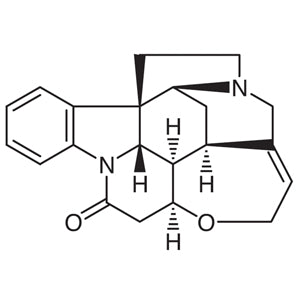
Brucine Anhydrous TCI B0946, with CAS number 357-57-3, is a chemical compound widely used in laboratory settings for asymmetric synthesis and chiral resolution. This reagent plays a crucial role in the separation of enantiomers, making it an essential tool for organic chemists. Its ability to interact selectively with chiral compounds allows for the production of optically pure substances, which is vital in pharmaceutical and biochemical research. In the laboratory, Brucine Anhydrous is particularly valued for its effectiveness in resolving complex mixtures of chiral molecules.
The compound is known for its chemical stability and good solubility in organic solvents, which makes it reliable for use in various synthetic reactions. These properties ensure that the reagent remains active and does not degrade significantly under normal laboratory conditions. Its high reactivity towards chiral compounds further enhances its utility in chiral resolution processes. The combination of stability and reactivity makes Brucine Anhydrous a preferred choice for researchers working on asymmetric synthesis and chiral separation.
In Indonesian laboratories, Brucine Anhydrous is commonly used in organic chemistry research, especially in the development of new pharmaceutical compounds and the study of chiral molecules. Its role in achieving optical purity is critical in drug development and analytical chemistry. Due to its effectiveness and reliability, it is a standard reagent in many research facilities across Indonesia, supporting both academic and industrial chemical investigations.
TCI brochures (PDF)
- Chiral Auxiliaries and Optical Resolving Agents 2025-06-17 · p. 5
- Alkaloids 2025-10-10 · p. 6
- Phytochemicals 2025-12-17 · p. 3
- Reagents for Biological Research 2025-03-11 · p. 52
- Asymmetric Synthesis: Brucine Anhydrous is ideal for asymmetric synthesis due to its ability to selectively interact with chiral compounds, enabling the production of enantiomerically pure products.
- Chiral Resolution: This reagent is widely used in chiral resolution processes to separate racemic mixtures into their individual enantiomers, which is essential for pharmaceutical research.
- Organic Chemistry Research: Brucine Anhydrous supports a variety of organic reactions, particularly those involving chiral molecules, making it a valuable tool in chemical laboratories.
- Pharmaceutical Development: Its role in producing optically active compounds makes it a key component in the development of new drugs and therapeutic agents.
- Analytical Chemistry: Brucine Anhydrous is used in analytical procedures to determine the optical purity of chiral substances, aiding in quality control and research.
| Brand | TCI |
|---|---|
| CAS number | 357-57-3 |
| Molecular formula | — |
| Purity | — |
| Category | Chemistry > Asymmetric Synthesis > Chiral Resolution Reagents |
| Pack sizes | Available in various sizes as per supplier specifications |
| Physical form | Solid (anhydrous form) |
| Storage | Store in a cool, dry place away from moisture and direct sunlight |
Brucine Anhydrous should be stored in a cool, dry environment to maintain its chemical stability. It is recommended to keep it in airtight containers to prevent exposure to moisture, which could affect its performance. Due to its reactivity with chiral compounds, it should be handled in a well-ventilated area to ensure safety. Proper labeling of containers is essential to avoid confusion with other reagents. Laboratory personnel should wear appropriate personal protective equipment when handling this compound. Regular monitoring of storage conditions is advised to ensure the reagent remains in optimal condition for use.
—
Produk Terkait
-
BrucineHydrochlorideMonohydrate TCI B0671
Regular price Rp 2.068.500,00Regular priceRp 1.461.600,00Sale price Rp 2.068.500,00 -
BrucineHydrate TCI B0670
Regular price Rp 4.108.650,00Regular priceRp 2.888.550,00Sale price Rp 4.108.650,00 -
Strychnine TCI S0249
Regular price Rp 2.147.250,00Regular priceRp 1.517.250,00Sale price Rp 2.147.250,00 -
BrucineSulfateHeptahydrate[forNitrateAnalysis] TCI B0672
Regular price Rp 1.801.800,00Regular priceRp 1.275.750,00Sale price Rp 1.801.800,00 -
Quinine TCI Q0028
Regular price From Rp 3.232.950,00Regular priceRp 2.276.400,00Sale price From Rp 3.232.950,00 -
Quinidine TCI Q0006
Regular price From Rp 1.538.250,00Regular priceRp 1.090.950,00Sale price From Rp 1.538.250,00 -
(-)-Dihydroquinine TCI D6112
Regular price From Rp 2.147.250,00Regular priceRp 1.517.250,00Sale price From Rp 2.147.250,00 -
YohimbineHydrochloride TCI Y0002
Regular price From Rp 3.392.550,00Regular priceRp 2.387.700,00Sale price From Rp 3.392.550,00