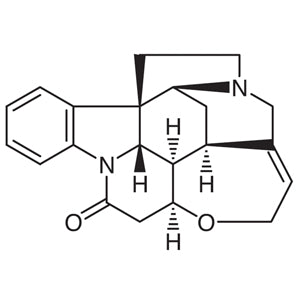
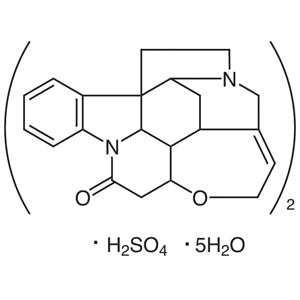
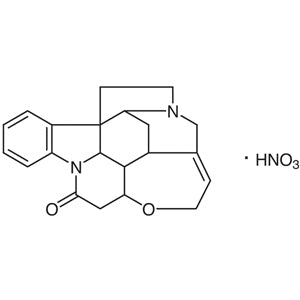
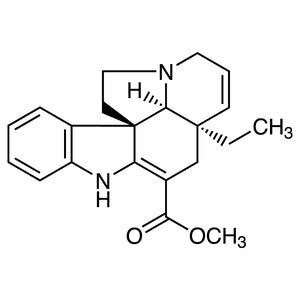
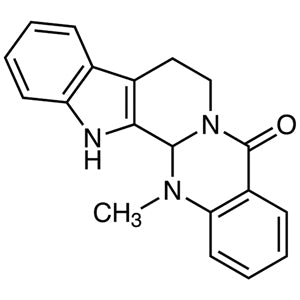
Strychnine Hydrochloride is a chemical compound classified under the alkaloid group, widely utilized in life science research. It plays a crucial role in biochemical and pharmacological studies, serving as a key reagent for investigating biological mechanisms and chemical reactions within biological systems. Its unique chemical structure and properties make it an essential component in various experimental protocols, supporting both fundamental and applied research in scientific laboratories. This compound is particularly valuable for its ability to interact with biological systems, offering insights into drug mechanisms and physiological processes.
The compound exhibits solubility in organic solvents such as ethyl acetate and ethanol, which facilitates its use in analytical and preparative procedures. Its stable acidity level ensures consistent performance in experimental conditions, making it reliable for repeated use. Additionally, its chemical stability under specific conditions simplifies storage and long-term handling, reducing the risk of degradation. These characteristics contribute to its popularity among researchers seeking a dependable and versatile reagent for laboratory applications.
In Indonesian laboratories, Strychnine Hydrochloride is commonly used in pharmacological and biochemical research. Its availability and consistent chemical properties make it a preferred choice for scientific experiments. Researchers rely on this compound for its role in studying natural compounds and their biological activities, supporting advancements in both academic and industrial research settings.
TCI brochures (PDF)
- Traditional Medicine/Crude Medicine Research Reagents 2024-09-11 · p. 1
- Alkaloids 2025-10-10 · p. 6
- Plant Research Reagents 2026-02-24 · p. 8
- Phytochemicals 2025-12-17 · p. 4
- Pharmacological studies benefit from Strychnine Hydrochloride as it aids in investigating drug mechanisms and biological responses.
- Biochemical experiments utilize this compound to explore enzyme interactions and metabolic pathways in living systems.
- Natural compound analysis relies on its chemical properties for isolating and characterizing alkaloids from plant sources.
- Toxicological research employs it to assess the effects of alkaloids on cellular and physiological functions.
- Analytical chemistry applications use its solubility and stability for chromatographic and spectroscopic analyses.
| Brand | TCI |
|---|---|
| CAS number | 1421-86-9 |
| Molecular formula | — |
| Purity | — |
| Category | Life Science > Biochemicals and Reagents > Alkaloids |
| Pack sizes | Available in various quantities as per supplier specifications |
| Physical form | Solid powder |
| Storage | Store in a cool, dry place away from light and moisture |
Strychnine Hydrochloride should be stored in a cool, dry environment to maintain its chemical stability. It is recommended to keep the compound in a sealed container to prevent exposure to moisture and air. Due to its potential reactivity, it should be handled with appropriate personal protective equipment, including gloves and safety goggles. Storage should be in a location that is inaccessible to children and unauthorized personnel. Regular monitoring of storage conditions ensures the compound remains in optimal condition for use in laboratory experiments. Proper labeling of containers is essential for safe handling and to prevent accidental misuse.
—
Product Categories
Produk Terkait
-
Strychnine TCI S0249
Regular price Rp 2.147.250,00Regular priceRp 1.517.250,00Sale price Rp 2.147.250,00 -
StrychnineSulfatePentahydrate TCI S0094
Regular price Rp 4.213.650,00Regular priceRp 2.962.050,00Sale price Rp 4.213.650,00 -
StrychnineNitrate TCI S0093
Regular price Rp 2.227.050,00Regular priceRp 1.572.900,00Sale price Rp 2.227.050,00 -
Tabersonine TCI T3500
Regular price Rp 6.042.750,00Regular priceRp 4.240.950,00Sale price Rp 6.042.750,00 -
Rutaecarpine TCI R0102
Regular price Rp 3.895.500,00Regular priceRp 2.739.450,00Sale price Rp 3.895.500,00 -
Reserpine TCI R0007
Regular price Rp 1.988.700,00Regular priceRp 1.405.950,00Sale price Rp 1.988.700,00 -
Indirubin TCI I0868
Regular price Rp 7.102.200,00Regular priceRp 4.982.250,00Sale price Rp 7.102.200,00 -
(+/-)-Evodiamine TCI E1012
Regular price Rp 3.207.750,00Regular priceRp 2.258.550,00Sale price Rp 3.207.750,00