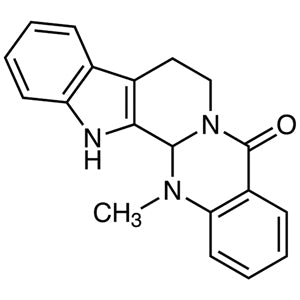
Rutaecarpine is an alkaloid compound derived from the plants *Piper longum* or *Piper nigrum*, commonly used in life sciences research. It plays a crucial role in laboratories where pharmacological and bioactive studies are conducted. Its ability to influence the nervous system and exhibit anti-inflammatory and anti-cancer properties makes it a valuable tool for researchers exploring therapeutic applications. This compound is widely utilized in biochemical and pharmacological experiments due to its stability and compatibility with various organic solvents.
Rutaecarpine is preferred for its chemical stability and solubility in organic solvents such as ethyl acetate and ethanol. These properties make it easy to handle and integrate into a wide range of chemical and biochemical experiments. Its well-defined molecular structure and high consistency also facilitate accurate identification and analysis in laboratory settings. These characteristics ensure reliable results and support reproducibility in research, making it a trusted choice among scientists.
In Indonesian laboratories, Rutaecarpine is commonly used in research related to traditional medicine, the development of new compounds, and pharmacological effect studies. It is frequently found in pharmaceutical and molecular biology research, particularly in higher education institutions and local research organizations. Its versatility and effectiveness contribute to its widespread use in various scientific disciplines.
TCI brochures (PDF)
- Traditional Medicine/Crude Medicine Research Reagents 2024-09-11 · p. 1
- Alkaloids 2025-10-10 · p. 6
- Plant Research Reagents 2026-02-24 · p. 8
- Phytochemicals 2025-12-17 · p. 4
- Pharmacological research utilizes Rutaecarpine to study its effects on the nervous system and its potential therapeutic applications.
- Biochemical experiments benefit from its solubility in organic solvents, allowing for easy integration into synthetic processes.
- Anti-inflammatory and anti-cancer studies rely on Rutaecarpine’s ability to modulate cellular responses and inhibit tumor growth.
- Traditional medicine research uses Rutaecarpine to explore its role in indigenous herbal formulations and their biological activities.
- Molecular biology applications leverage its stable structure for accurate identification and analysis in complex biological systems.
| Brand | TCI |
|---|---|
| CAS number | 84-26-4 |
| Molecular formula | — |
| Purity | — |
| Category | Life Science > Biochemicals and Reagents > Alkaloids |
| Pack sizes | Available in various quantities as per standard laboratory requirements |
| Physical form | Crystalline solid |
| Storage | Store in a cool, dry place away from light and moisture |
Rutaecarpine should be stored in a cool, dry place, away from light and moisture to maintain its chemical stability. It is recommended to use airtight containers to prevent exposure to air and contaminants. Due to its solubility in organic solvents, it should be handled in a well-ventilated area to avoid inhalation of vapors. Researchers should wear appropriate personal protective equipment, such as gloves and safety goggles, when handling this compound. Proper labeling of containers is essential to ensure safe handling and prevent accidental exposure. Regular monitoring of storage conditions helps maintain the integrity and effectiveness of the compound in laboratory settings.
—
Product Categories
Produk Terkait
-
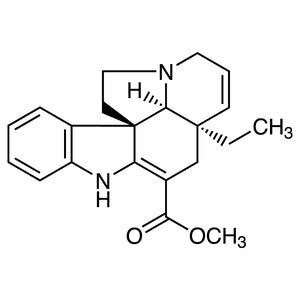
Tabersonine TCI T3500
Regular price Rp 6.042.750,00Regular priceRp 4.240.950,00Sale price Rp 6.042.750,00 -
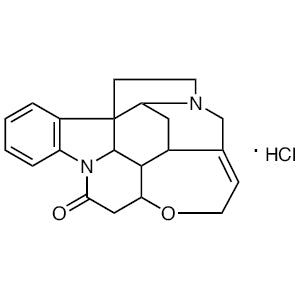
StrychnineHydrochloride TCI S0257
Regular price Rp 8.506.050,00Regular priceRp 5.964.000,00Sale price Rp 8.506.050,00 -
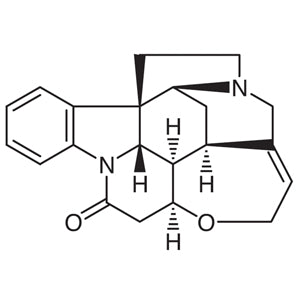
Strychnine TCI S0249
Regular price Rp 2.147.250,00Regular priceRp 1.517.250,00Sale price Rp 2.147.250,00 -
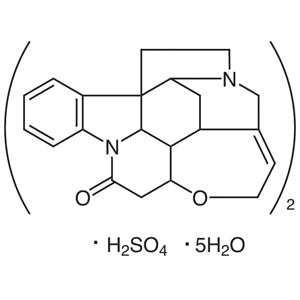
StrychnineSulfatePentahydrate TCI S0094
Regular price Rp 4.213.650,00Regular priceRp 2.962.050,00Sale price Rp 4.213.650,00 -
StrychnineNitrate TCI S0093
Regular price Rp 2.227.050,00Regular priceRp 1.572.900,00Sale price Rp 2.227.050,00 -
Reserpine TCI R0007
Regular price Rp 1.988.700,00Regular priceRp 1.405.950,00Sale price Rp 1.988.700,00 -
Indirubin TCI I0868
Regular price Rp 7.102.200,00Regular priceRp 4.982.250,00Sale price Rp 7.102.200,00 -
(+/-)-Evodiamine TCI E1012
Regular price Rp 3.207.750,00Regular priceRp 2.258.550,00Sale price Rp 3.207.750,00