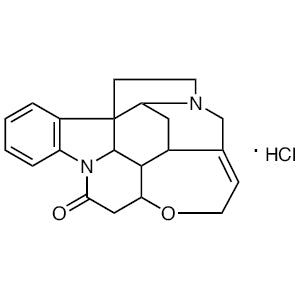
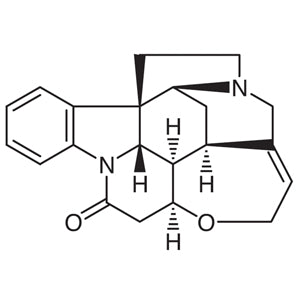
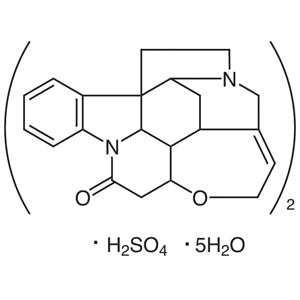
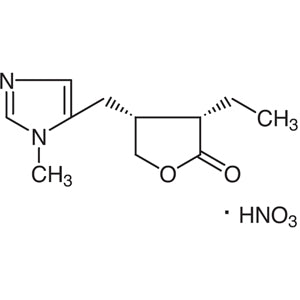
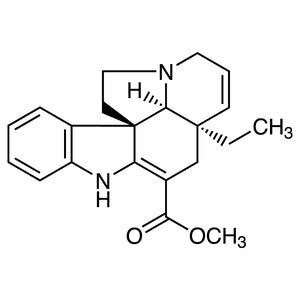
Strychnine Nitrate from TCI is the nitrate salt of strychnine, a complex indole alkaloid found naturally in the seeds of plants of the genus Strychnos. In life science laboratories it is known as an antagonist of the glycine receptor, the main inhibitory receptor in the spinal cord and brainstem. Researchers use Strychnine Nitrate as a pharmacological tool in neuroscience to study glycinergic transmission. It also serves as a reference standard in toxicological analysis and natural product chemistry, where a well-defined alkaloid salt is needed for comparison and identification.
Researchers often choose the nitrate salt because it is generally more soluble in water than strychnine free base. This makes it easier to prepare stock solutions for in vitro experiments and analytical standards. Strychnine acts very specifically at the glycine receptor, which has made it a classic tool for separating glycinergic inhibition from GABAergic inhibition in electrophysiology studies. That selectivity lets researchers interpret results with more confidence. The compound is, however, extremely toxic. Its use must be limited to research by trained personnel, with controlled access and strict safety procedures in place.
In Indonesia, Strychnine Nitrate is relevant to pharmacology and neuroscience research laboratories, university life science departments, and toxicology and forensic analysis units that need a reliable alkaloid reference material. Laboratories working on natural product chemistry, including studies of medicinal plants, can also use it as a comparison standard. Because the compound is so hazardous, institutions usually manage its procurement, storage, and use under internal chemical safety policies, controlled-substance registers, and supervision by qualified research staff.
TCI brochures (PDF)
- Traditional Medicine/Crude Medicine Research Reagents 2024-09-11 · p. 1
- Alkaloids 2025-10-10 · p. 6
- Plant Research Reagents 2026-02-24 · p. 8
- Phytochemicals 2025-12-17 · p. 4
- Glycine receptor pharmacology: strychnine is a specific glycine receptor antagonist, so it lets researchers block glycinergic signalling and study its role in spinal cord and brainstem circuits.
- Electrophysiology studies: strychnine acts selectively, so it is a classic tool for separating glycinergic inhibitory currents from GABAergic components in neuronal recordings and slice preparations.
- Neuroscience research on inhibitory transmission: the compound helps researchers study how glycinergic inhibition shapes motor control, reflex pathways, and sensory processing in experimental models.
- Toxicological analysis: Strychnine Nitrate serves as a reference standard for identifying and confirming strychnine in analytical workflows, supporting method development and comparative testing.
- Natural product chemistry: as a defined salt of a known Strychnos alkaloid, it is a useful comparison material when characterising indole alkaloids from plant extracts.
| Brand | TCI (product code S0093) |
|---|---|
| CAS number | 66-32-0 |
| Molecular formula | — |
| Purity | — |
| Category | Life Science > Biochemicals and Reagents > Alkaloids |
| Pack sizes | refer to the TCI catalogue listing for available pack sizes |
| Physical form | solid nitrate salt; see TCI product documentation for details |
| Storage | follow the storage conditions stated on the TCI label and Safety Data Sheet |
Store Strychnine Nitrate in its original, tightly closed container from the manufacturer, in a cool, dry, well-ventilated area away from incompatible materials and sources of heat. Because the compound is highly toxic, keep it in a locked cabinet or controlled-access storage area and record its use in a chemical inventory log. Only trained personnel should handle it, wearing suitable protective equipment such as gloves, a laboratory coat, and eye protection. Weigh and prepare solutions inside a fume hood or ventilated enclosure to avoid inhaling dust. Do not eat, drink, or smoke in the work area, and wash your hands thoroughly after handling. Always read the Safety Data Sheet before use, and dispose of waste in line with institutional and local regulations for hazardous chemicals.
—
Product Categories
Produk Terkait
-
StrychnineHydrochloride TCI S0257
Regular price Rp 8.506.050,00Regular priceRp 5.964.000,00Sale price Rp 8.506.050,00 -
Strychnine TCI S0249
Regular price Rp 2.147.250,00Regular priceRp 1.517.250,00Sale price Rp 2.147.250,00 -
StrychnineSulfatePentahydrate TCI S0094
Regular price Rp 4.213.650,00Regular priceRp 2.962.050,00Sale price Rp 4.213.650,00 -
PilocarpineNitrate TCI P0399
Regular price Rp 2.439.150,00Regular priceRp 1.720.950,00Sale price Rp 2.439.150,00 -
BrucineSulfateHeptahydrate[forNitrateAnalysis] TCI B0672
Regular price Rp 1.801.800,00Regular priceRp 1.275.750,00Sale price Rp 1.801.800,00 -
Tabersonine TCI T3500
Regular price Rp 6.042.750,00Regular priceRp 4.240.950,00Sale price Rp 6.042.750,00 -
Rutaecarpine TCI R0102
Regular price Rp 3.895.500,00Regular priceRp 2.739.450,00Sale price Rp 3.895.500,00 -
Reserpine TCI R0007
Regular price Rp 1.988.700,00Regular priceRp 1.405.950,00Sale price Rp 1.988.700,00