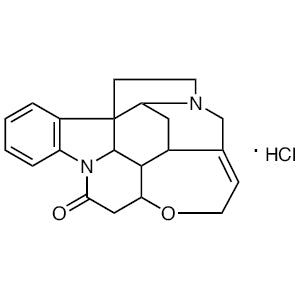
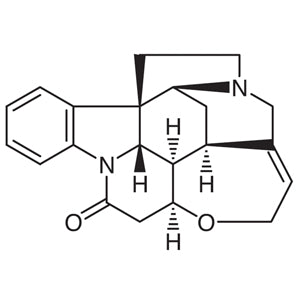
Strychnine Sulfate Pentahydrate from TCI is the sulfate salt of the alkaloid strychnine, supplied as a hydrate containing five molecules of water of crystallization. Like other strychnine salts, it is used in life science laboratories as an antagonist of the glycine receptor, which mediates inhibitory neurotransmission in the central nervous system. Pharmacology and neuroscience researchers use it to study how inhibitory circuits work, and analytical laboratories use it as a reference standard for identifying and quantifying alkaloids.
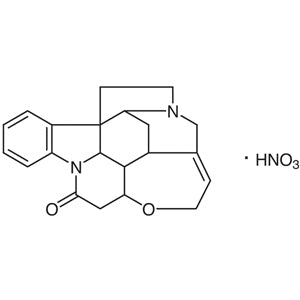
The sulfate pentahydrate salt is a well-defined crystalline solid with adequate water solubility, which makes it practical for preparing aqueous solutions for biological experiments. For some researchers, the choice between the sulfate and nitrate salts comes down to how well the anion suits the experimental system. Some avoid nitrate ions in certain systems, while others want to follow literature protocols that specify the sulfate salt. The water of crystallization must be included when calculating the molar concentration of a solution. Otherwise the stock solution will be weaker than intended and the results will be less accurate.
In Indonesia, Strychnine Sulfate Pentahydrate is relevant to pharmacology laboratories in university faculties, neuroscience research groups studying inhibitory neurotransmission, and analytical laboratories that need a reliable alkaloid reference material. Research teams working on receptor pharmacology, neurophysiology, or natural product analysis can use this TCI reagent when their protocols call for a sulfate salt. Because the compound is highly toxic, it is normally used only by trained personnel in controlled laboratory settings under the institution's safety procedures.
TCI brochures (PDF)
- Traditional Medicine/Crude Medicine Research Reagents 2024-09-11 · p. 1
- Alkaloids 2025-10-10 · p. 6
- Plant Research Reagents 2026-02-24 · p. 8
- Phytochemicals 2025-12-17 · p. 4
- Glycine receptor studies: as a glycine receptor antagonist, it lets researchers block inhibitory glycinergic signalling and observe the effect on neuronal activity in the central nervous system.
- Neuroscience research on inhibitory circuits: neuroscientists use it to investigate how inhibitory circuits work, comparing neuronal responses with and without glycinergic inhibition in their experimental models.
- Pharmacological characterization: pharmacology laboratories use it as a well-known reference antagonist when characterizing receptor responses or comparing the activity of other compounds acting on related targets.
- Alkaloid identification and quantification: analytical laboratories use it as a reference standard, giving them a defined crystalline material for identifying and quantifying strychnine-type alkaloids in their methods.
- Aqueous solution preparation for biological assays: its adequate water solubility makes it practical for preparing aqueous stock solutions, especially where protocols specify the sulfate salt or nitrate ions should be avoided.
| Brand | TCI |
|---|---|
| CAS number | 60491-10-3 |
| Molecular formula | — |
| Purity | — |
| Category | Life Science > Biochemicals and Reagents > Alkaloids |
| Pack sizes | Please refer to the available options on the product listing |
| Physical form | Crystalline solid (sulfate salt, pentahydrate) |
| Storage | Store according to the TCI label and Safety Data Sheet, and treat as a highly toxic substance |
Store Strychnine Sulfate Pentahydrate in its original, tightly closed container under the conditions given on the TCI label and Safety Data Sheet. Keep it in a cool, dry, well-ventilated area away from incompatible materials. Because strychnine compounds are highly toxic, keep the material in a locked or access-controlled storage area that only authorized personnel can open, and keep an accurate usage log. Handle it in a fume hood or another suitable containment area, and wear appropriate personal protective equipment, including gloves, a lab coat, and eye protection. Avoid creating dust, and do not inhale, ingest, or let it contact skin. Label all prepared solutions clearly, and remember that the five waters of crystallization affect molar concentration calculations. Dispose of waste and contaminated materials according to institutional and local regulations for hazardous chemicals.
—
Product Categories
Produk Terkait
-
StrychnineHydrochloride TCI S0257
Regular price Rp 8.506.050,00Regular priceRp 5.964.000,00Sale price Rp 8.506.050,00 -
Strychnine TCI S0249
Regular price Rp 2.147.250,00Regular priceRp 1.517.250,00Sale price Rp 2.147.250,00 -
StrychnineNitrate TCI S0093
Regular price Rp 2.227.050,00Regular priceRp 1.572.900,00Sale price Rp 2.227.050,00 -
BerberineSulfate TCI B0451
Regular price From Rp 1.378.650,00Regular priceRp 979.650,00Sale price From Rp 1.378.650,00 -
QuinidineSulfateDihydrate TCI Q0010
Regular price From Rp 848.400,00Regular priceRp 609.000,00Sale price From Rp 848.400,00 -
AtropineSulfateMonohydrate TCI A0550
Regular price From Rp 1.908.900,00Regular priceRp 1.350.300,00Sale price From Rp 1.908.900,00 -
VincristineSulfate TCI V0129
Regular price Rp 4.636.800,00Regular priceRp 3.258.150,00Sale price Rp 4.636.800,00 -
Tabersonine TCI T3500
Regular price Rp 6.042.750,00Regular priceRp 4.240.950,00Sale price Rp 6.042.750,00