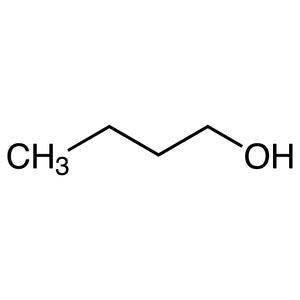
2-Butanol, with CAS number 78-92-2, is an organic compound widely used in various chemical experiments conducted in laboratories. As a type of alcohol, it is known for its volatility and tendency to evaporate quickly, making it ideal for applications requiring a light solvent. This compound is commonly used to dissolve a variety of organic substances, including polymers, oils, and other chemicals that are not soluble in water. Its versatility makes it a valuable resource in both research and industrial settings.
The chemical and physical properties of 2-Butanol make it a preferred choice for many laboratory applications. It has a relatively low boiling point, which facilitates easy evaporation and makes it suitable for distillation processes. Additionally, its non-polar nature allows it to dissolve non-polar compounds, enhancing its utility as a flexible solvent. The compound is also considered non-toxic in small doses, ensuring a safer environment for laboratory use. These characteristics contribute to its widespread use in scientific research.
In Indonesian laboratories, 2-Butanol is frequently utilized in chemical, pharmaceutical, and industrial settings. It plays a key role in extraction processes, chemical synthesis, and analytical procedures. Its ability to dissolve a wide range of substances makes it an essential component in many laboratory workflows. Due to its reliability and effectiveness, it remains a popular choice among researchers and technicians in Indonesia.
TCI brochures (PDF)
- Stilbene Ligand for Stereospecific Cross-Coupling Reactions 2026-09-10 · p. 1
Related TCI products
- Chemical synthesis: 2-Butanol is ideal for chemical synthesis due to its ability to dissolve various organic compounds and its volatility, which aids in purification processes.
- Extraction processes: Its non-polar nature makes it suitable for extracting non-polar substances from complex mixtures, enhancing the efficiency of separation techniques.
- Analytical chemistry: 2-Butanol is used in qualitative and quantitative analysis as a solvent that can dissolve a wide range of compounds for testing and identification.
- Pharmaceutical research: It is commonly used in drug development to dissolve active ingredients and facilitate reactions in the formulation of new compounds.
- Industrial applications: Its versatility makes it suitable for use in industrial laboratories where it is used for dissolving and processing various materials in production processes.
From the TCI brochure
- Component of the reaction conditions in the stereospecific cross-coupling scheme with E1539
| Brand | TCI |
|---|---|
| CAS number | 78-92-2 |
| Molecular formula | — |
| Purity | — |
| Category | Chemistry > Solvents > Alcohol Solvents |
| Pack sizes | Available in various sizes as per supplier specifications |
| Physical form | Liquid |
| Storage | Store in a cool, well-ventilated area away from direct sunlight |
2-Butanol should be stored in a cool, well-ventilated area away from direct sunlight to maintain its stability and prevent degradation. It is recommended to use appropriate containers that are resistant to chemical reactions and ensure airtight sealing to minimize evaporation. Laboratory personnel should handle the compound with care, using proper personal protective equipment such as gloves and safety goggles. Due to its volatility, it is important to avoid open flames and ensure proper ventilation when working with it. Regular monitoring of storage conditions is essential to maintain the quality and safety of the material in the laboratory environment.
References cited in the TCI brochure
- Jianyu Xu. Overcoming the Naphthyl Requirement in Stereospecific Cross-Couplings to Form Quaternary Stereocenters Journal of the American Chemical Society, 2021. doi:10.1021/jacs.1c03898
Product Categories
Produk Terkait
-
1-Butanol[forHPLCSolvent] TCI B0944
Regular price Rp 1.246.350,00Regular priceRp 871.500,00Sale price Rp 1.246.350,00 -
1-Butanol TCI B0704
Regular price From Rp 452.550,00Regular priceRp 316.050,00Sale price From Rp 452.550,00 -
1-Butanol[forSpectrophotometry] TCI B0228
Regular price Rp 928.200,00Regular priceRp 648.900,00Sale price Rp 928.200,00 -
4,4,4-Trifluoro-1-butanol TCI T2781
Regular price From Rp 1.220.100,00Regular priceRp 852.600,00Sale price From Rp 1.220.100,00 -
1-Bromo-2-butanol(containsca.30%2-Bromo-1-butanol) TCI B0932
Regular price Rp 2.359.350,00Regular priceRp 1.649.550,00Sale price Rp 2.359.350,00 -
(R)-(-)-2-Butanol TCI B0926
Regular price From Rp 1.749.300,00Regular priceRp 1.223.250,00Sale price From Rp 1.749.300,00 -
(S)-(+)-2-Butanol TCI B0925
Regular price From Rp 1.749.300,00Regular priceRp 1.223.250,00Sale price From Rp 1.749.300,00