Sodium Alkylnaphthalenesulfonate (SAANS) is a chemical compound widely used in laboratory settings related to materials science and polymer research. As a non-ionic surfactant, it plays a crucial role in enhancing the solubility and stability of polymer systems. Its unique chemical structure allows it to interact effectively with various substrates, making it a versatile additive in polymer modification and surface treatment applications. In laboratory environments, SAANS is valued for its ability to improve mechanical properties, tensile strength, and rigidity of polymer materials without altering the pH of the solution. This makes it an essential component in the development and testing of advanced polymer-based materials.
SAANS is preferred due to its chemical stability and resistance to degradation, which ensures consistent performance across different experimental conditions. Its non-ionic nature means it does not interfere with the pH of the solution, making it ideal for experiments requiring pH stability. Additionally, SAANS exhibits excellent compatibility with a wide range of substrates, which allows it to be used in surface modification and polymer coating applications. These properties make it a reliable and efficient additive for both academic and industrial research in the field of polymer science.
In Indonesian laboratories, SAANS is commonly used in polymer research and development, particularly in the modification of polymer surfaces and the enhancement of material properties. It is also utilized in the formulation of polymer-based products and in the study of surfactant behavior in different chemical environments. Its availability in a 40% aqueous solution simplifies its integration into various experimental protocols, making it a practical choice for researchers working in materials science and polymer chemistry.
TCI brochures (PDF)
- Polymer Additives 2026-04-16 · p. 10
Related TCI products
- TCI H1354 505-86-2 Hexadecyltrimethylammonium Hydroxide (10% in Water)
- TCI D1238 69669-44-9 Sodium Dodecylbenzenesulfonate (soft type) (mixture) (62%, wetted with Water)
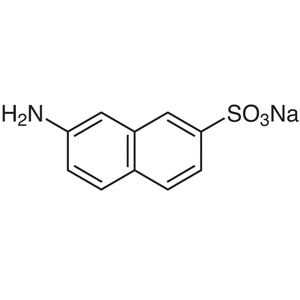
- TCI A0355 5412-82-8 Sodium 7-Amino-2-naphthalenesulfonate
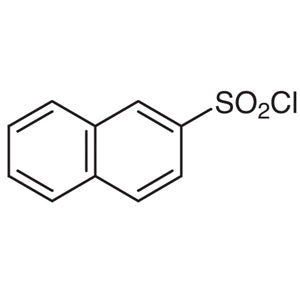
- TCI N0018 93-11-8 2-Naphthalenesulfonyl Chloride
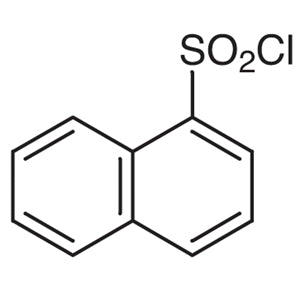
- TCI N0017 85-46-1 1-Naphthalenesulfonyl Chloride
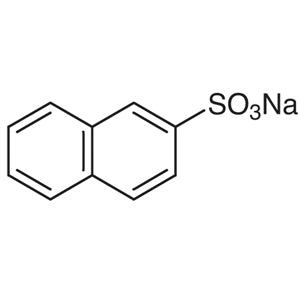
- TCI N0016 532-02-5 Sodium 2-Naphthalenesulfonate
- Polymer Surface Modification: SAANS is used to enhance the surface properties of polymers, improving adhesion and compatibility with other materials.
- Polymer Stabilization: It helps in stabilizing polymer systems by improving their solubility and preventing phase separation.
- Coating Formulation: SAANS is incorporated into polymer coatings to improve their durability and resistance to environmental factors.
- Material Testing: It is used in mechanical testing to enhance the tensile strength and rigidity of polymer samples.
- Surfactant Behavior Studies: SAANS is employed in studies to understand surfactant interactions and their impact on polymer systems.
| Brand | TCI |
|---|---|
| CAS number | 131-61-9 |
| Molecular formula | — |
| Purity | — |
| Category | Materials Science > Polymer/Macromolecule Reagents > Polymer Additives |
| Pack sizes | Available in standard laboratory quantities |
| Physical form | Liquid |
| Storage | Store in a cool, dry place away from direct sunlight |
SAANS should be stored in a cool, dry location, away from direct sunlight and sources of heat. It is recommended to use airtight containers to prevent moisture absorption and contamination. As a non-ionic surfactant, it is generally non-hazardous, but standard laboratory safety precautions should be followed, including proper ventilation and personal protective equipment when handling. Due to its aqueous nature, it should be kept in containers that are compatible with water-based solutions. Avoid exposure to incompatible substances and ensure that storage conditions are consistent with general chemical safety guidelines.
—
Product Categories
Produk Terkait
-
HexadecyltrimethylammoniumHydroxide(10%inWater) TCI H1354
Regular price From Rp 1.538.250,00Regular priceRp 1.090.950,00Sale price From Rp 1.538.250,00 -
SodiumDodecylbenzenesulfonate(softtype)(mixture)(62%,wettedwithWater) TCI D1238
Regular price From Rp 477.750,00Regular priceRp 333.900,00Sale price From Rp 477.750,00 -
Sodium7-Amino-2-naphthalenesulfonate TCI A0355
Regular price From Rp 1.193.850,00Regular priceRp 834.750,00Sale price From Rp 1.193.850,00 -
2-NaphthalenesulfonylChloride TCI N0018
Regular price Rp 1.696.800,00Regular priceRp 1.186.500,00Sale price Rp 1.696.800,00 -
1-NaphthalenesulfonylChloride TCI N0017
Regular price From Rp 3.127.950,00Regular priceRp 2.187.150,00Sale price From Rp 3.127.950,00 -
Sodium2-Naphthalenesulfonate TCI N0016
Regular price From Rp 557.550,00Regular priceRp 389.550,00Sale price From Rp 557.550,00