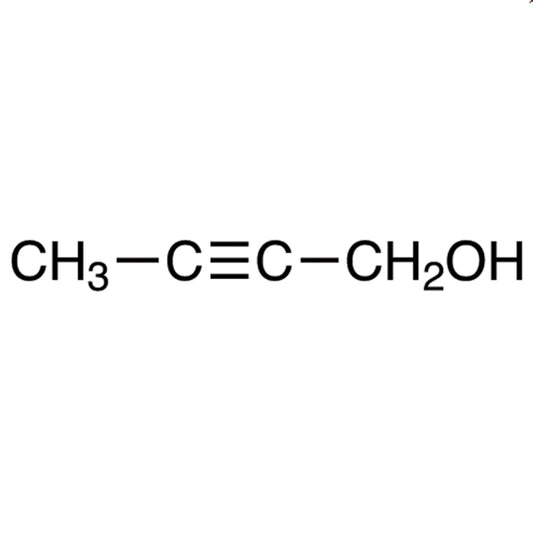
3-Butyn-1-ol is an organic compound belonging to the alcohol category, characterized by its molecular structure containing both an alkyl group and an alkyne group. This compound plays a crucial role in chemical synthesis as a foundational building block for the creation of more complex molecules. In laboratory settings, it serves as a key reagent in various chemical reactions, particularly those involving the formation of double bonds and substitution reactions. Its versatility makes it an essential component in many synthetic pathways, contributing to the development of new compounds and materials.
The chemical properties of 3-Butyn-1-ol, including its reactivity and molecular structure, make it a preferred choice for chemists. It is capable of participating in a wide range of reactions such as hydration, reduction, and coupling reactions. These properties allow it to be used in diverse applications, from organic synthesis to pharmaceutical research. Its ability to form stable intermediates and undergo various functional group transformations further enhances its utility in laboratory environments.
In Indonesian laboratories, 3-Butyn-1-ol is commonly used in chemical research, especially in the fields of organic synthesis and the development of new compounds. Its availability in various packaging options makes it convenient for both small-scale and large-scale experiments. The compound's reactivity and structural versatility make it a go-to material for researchers aiming to explore new synthetic routes and chemical transformations.
TCI brochures (PDF)
- Cross-linkers 2026-04-14 · p. 2
- Bioconjugation Reagents 2026-07-07 · p. 8
- Click Chemistry 2026-09-08 · p. 13
- Reagents for Biological Research 2025-03-11 · p. 29
- Organic synthesis: 3-Butyn-1-ol is widely used in organic synthesis due to its ability to participate in various chemical reactions, including coupling and substitution reactions.
- Pharmaceutical research: The compound is valuable in the development of new pharmaceuticals because of its reactivity and structural adaptability.
- Materials science: It serves as a building block for creating new materials with specific chemical properties and functional groups.
- Analytical chemistry: The compound is used in analytical procedures to test and characterize other substances through reaction-based methods.
- Academic research: It is a common reagent in academic laboratories for teaching and experimental purposes in chemistry courses.
| Brand | TCI |
|---|---|
| CAS number | 927-74-2 |
| Molecular formula | — |
| Purity | — |
| Category | Chemistry > Building Blocks > Non-Heterocyclic Building Blocks |
| Pack sizes | Available in various packaging options to suit different laboratory needs |
| Physical form | Liquid |
| Storage | Store in a cool, dry place away from light and incompatible materials |
3-Butyn-1-ol should be stored in a cool, dry place, away from direct sunlight and sources of heat. It is recommended to keep the compound in a tightly sealed container to prevent evaporation and contamination. Due to its volatility, it is important to handle it in a well-ventilated area to avoid inhalation of vapors. The container should be made of a material compatible with the compound, such as glass or high-density polyethylene. Always use appropriate personal protective equipment, including gloves and safety goggles, when handling this substance. Regularly inspect storage conditions to ensure the integrity of the material and maintain a safe laboratory environment.
—
Product Categories
Produk Terkait
-
3-Butyn-2-ol TCI B1001
Regular price From Rp 928.200,00Regular priceRp 648.900,00Sale price From Rp 928.200,00 -
2-Methyl-3-butyn-2-ol TCI M0180
Regular price From Rp 505.050,00Regular priceRp 352.800,00Sale price From Rp 505.050,00 -
3-Butyn-2-one TCI B2393
Regular price From Rp 2.174.550,00Regular priceRp 1.520.400,00Sale price From Rp 2.174.550,00 -
(S)-(-)-3-Butyn-2-ol TCI B2910
Regular price From Rp 1.961.400,00Regular priceRp 1.371.300,00Sale price From Rp 1.961.400,00 -
(R)-(+)-3-Butyn-2-ol TCI B2909
Regular price From Rp 3.419.850,00Regular priceRp 2.390.850,00Sale price From Rp 3.419.850,00 -
2-Butyn-1-ol TCI B0712
Regular price From Rp 1.273.650,00Regular priceRp 890.400,00Sale price From Rp 1.273.650,00 -
2-Methyl-4-phenyl-3-butyn-2-ol TCI M1415
Regular price Rp 1.590.750,00Regular priceRp 1.111.950,00Sale price Rp 1.590.750,00 -
10-Undecyn-1-ol TCI U0055
Regular price Rp 3.446.100,00Regular priceRp 2.409.750,00Sale price Rp 3.446.100,00