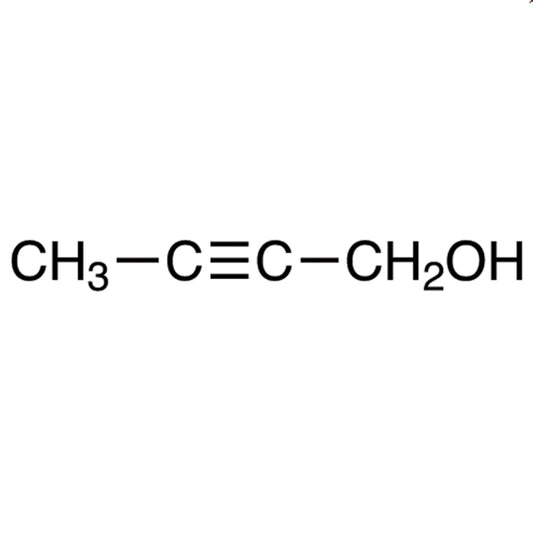
3-Butyn-2-ol is an organic compound widely used in chemical synthesis, particularly in the production of heterocyclic compounds and complex molecular structures. This compound is essential in laboratory settings due to its unique molecular structure, which includes a triple carbon-carbon bond and a hydroxyl group. These features enable it to participate in a variety of chemical reactions, making it a versatile reagent in synthetic chemistry. Its role as a building block in the development of new materials and pharmaceuticals is critical in both academic and industrial research environments.
The properties of 3-Butyn-2-ol, such as its reactivity and volatility, make it a preferred choice for many chemical processes. It is highly reactive, especially in reactions involving carbon-carbon triple bonds, which allows for the formation of complex molecules with high efficiency. Its volatility requires careful handling, but this characteristic also makes it suitable for applications where controlled evaporation is desired. The compound’s ability to undergo substitution, oxidation, and catalytic reactions further enhances its utility in laboratory experiments.
In Indonesian laboratories, 3-Butyn-2-ol is commonly used in various fields of chemical research, including pharmaceutical synthesis, material science, and environmental studies. Its relevance extends to educational institutions and research centers focused on organic chemistry and molecular synthesis. The compound is a key component in experiments that require high reactivity and structural versatility, making it an essential tool for researchers and students alike.
TCI brochures (PDF)
- Click Chemistry 2026-09-08 · p. 13
- Pharmaceutical synthesis: 3-Butyn-2-ol is used to create complex organic molecules, which are essential in drug development and medicinal chemistry.
- Material science research: Its unique structure allows for the development of advanced materials with specific chemical properties.
- Environmental studies: It is employed in the analysis of organic pollutants and the synthesis of compounds for environmental remediation.
- Organic chemistry education: It serves as a key reagent in teaching and research, helping students understand chemical reactivity and synthesis techniques.
- Catalytic reaction testing: Its reactivity makes it ideal for studying catalytic processes and reaction mechanisms in laboratory settings.
| Brand | TCI |
|---|---|
| CAS number | 2028-63-9 |
| Molecular formula | — |
| Purity | — |
| Category | Chemistry > Building Blocks > Non-Heterocyclic Building Blocks |
| Pack sizes | Available in various quantities as per supplier specifications |
| Physical form | Liquid |
| Storage | Store in a cool, dry place away from heat and direct sunlight |
3-Butyn-2-ol should be stored in a cool, dry environment, away from heat and direct sunlight. It is recommended to use sealed containers to prevent evaporation and contamination. Due to its volatility, it should be handled in a well-ventilated area to avoid inhalation of vapors. Laboratory personnel should wear appropriate personal protective equipment, such as gloves and safety goggles, when working with this compound. It is important to ensure that the storage area is free from incompatible materials, such as strong oxidizers, to prevent any potential chemical reactions. Proper labeling and storage practices are essential to maintain safety and compliance with laboratory standards.
—
Product Categories
Produk Terkait
-
3-Butyn-1-ol TCI B0799
Regular price From Rp 928.200,00Regular priceRp 648.900,00Sale price From Rp 928.200,00 -
2-Methyl-3-butyn-2-ol TCI M0180
Regular price From Rp 505.050,00Regular priceRp 352.800,00Sale price From Rp 505.050,00 -
3-Butyn-2-one TCI B2393
Regular price From Rp 2.174.550,00Regular priceRp 1.520.400,00Sale price From Rp 2.174.550,00 -
(S)-(-)-3-Butyn-2-ol TCI B2910
Regular price From Rp 1.961.400,00Regular priceRp 1.371.300,00Sale price From Rp 1.961.400,00 -
(R)-(+)-3-Butyn-2-ol TCI B2909
Regular price From Rp 3.419.850,00Regular priceRp 2.390.850,00Sale price From Rp 3.419.850,00 -
2-Butyn-1-ol TCI B0712
Regular price From Rp 1.273.650,00Regular priceRp 890.400,00Sale price From Rp 1.273.650,00 -
2-Methyl-4-phenyl-3-butyn-2-ol TCI M1415
Regular price Rp 1.590.750,00Regular priceRp 1.111.950,00Sale price Rp 1.590.750,00 -
10-Undecyn-1-ol TCI U0055
Regular price Rp 3.446.100,00Regular priceRp 2.409.750,00Sale price Rp 3.446.100,00