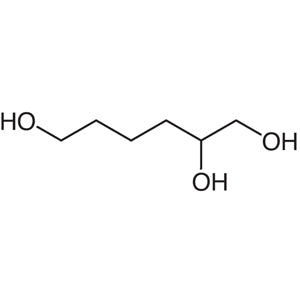
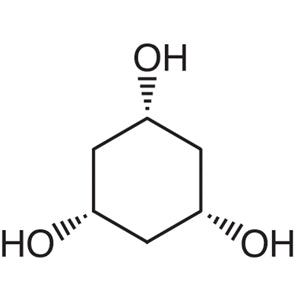
1,2,3-Butanetriol is a chemical compound classified as a building block in organic chemistry. It is a triol, meaning it contains three hydroxyl (-OH) groups attached to three consecutive carbon atoms. This structure makes it a versatile molecule in laboratory settings, particularly in the synthesis of complex compounds. Its reactivity and functional group versatility allow it to be used in various chemical transformations, making it an essential material for researchers working in synthetic chemistry.
The key properties that make 1,2,3-Butanetriol a preferred choice include its high polarity and the presence of multiple hydroxyl groups. These groups can participate in a wide range of reactions, such as esterification, substitution, and oxidation. The compound’s polar nature also enhances its solubility in polar solvents like water and ethanol, which is crucial for many laboratory procedures. Its ability to form hydrogen bonds further supports its utility in reactions requiring strong intermolecular interactions.
In Indonesian laboratories, 1,2,3-Butanetriol is commonly used in the development of polymers, surfactants, and industrial chemicals. Its role as a building block is vital in creating more complex molecules. Due to its stability under normal laboratory conditions, it is a reliable and accessible material for chemical synthesis and research. Its widespread application in both academic and industrial settings highlights its importance in the chemical industry.
- Polymer synthesis: 1,2,3-Butanetriol is widely used in the production of polyols, which are essential components in the creation of polyurethanes and other polymers.
- Surfactant development: Its hydroxyl groups allow it to act as a precursor in the formation of surfactants, which are used in various cleaning and emulsifying applications.
- Industrial chemical synthesis: The compound is a key ingredient in the manufacture of a variety of industrial chemicals, including additives and stabilizers.
- Organic reaction intermediates: Due to its reactivity, it is frequently used as an intermediate in the synthesis of more complex organic molecules.
- Research and development: It is a valuable tool for researchers exploring new chemical reactions and material properties.
| Brand | TCI |
|---|---|
| CAS number | 4435-50-1 |
| Molecular formula | — |
| Purity | — |
| Category | Chemistry > Building Blocks > Non-Heterocyclic Building Blocks |
| Pack sizes | Available in various quantities as per standard laboratory supply |
| Physical form | Liquid |
| Storage | Store in a cool, dry place away from direct sunlight |
1,2,3-Butanetriol should be stored in a cool, dry environment to maintain its stability and prevent degradation. It is recommended to keep it in a tightly sealed container to minimize exposure to air and moisture. The compound is generally non-hazardous under normal laboratory conditions, but standard safety precautions should be followed when handling it. It is advisable to store it in a well-ventilated area to ensure proper air circulation. Avoid contact with incompatible materials to maintain its chemical integrity. Proper labeling and storage conditions help ensure safe and effective use in laboratory environments.
—
Produk Terkait
-
1,2,5-Pentanetriol TCI P1350
Regular price From Rp 3.074.400,00Regular priceRp 2.165.100,00Sale price From Rp 3.074.400,00 -
1,2,8-Octanetriol TCI O0279
Regular price Rp 9.275.700,00Regular priceRp 6.501.600,00Sale price Rp 9.275.700,00 -
1,2,7-Heptanetriol TCI H0957
Regular price Rp 9.698.850,00Regular priceRp 6.797.700,00Sale price Rp 9.698.850,00 -
1,2,9-Nonanetriol TCI N0652
Regular price Rp 12.189.450,00Regular priceRp 8.539.650,00Sale price Rp 12.189.450,00 -
1,2,6-Hexanetriol TCI H1069
Regular price From Rp 1.298.850,00Regular priceRp 924.000,00Sale price From Rp 1.298.850,00 -
1,2,6-Hexanetriol TCI H0104
Regular price From Rp 1.140.300,00Regular priceRp 812.700,00Sale price From Rp 1.140.300,00 -
1,2,10-Decanetriol TCI D2721
Regular price Rp 6.253.800,00Regular priceRp 4.389.000,00Sale price Rp 6.253.800,00 -
(1alpha,3alpha,5alpha)-1,3,5-Cyclohexanetriol TCI C2275
Regular price From Rp 5.910.450,00Regular priceRp 4.148.550,00Sale price From Rp 5.910.450,00