2,3-Bis(4-chlorophenyl)-5-phenyltetrazolium Chloride is a chemical compound widely used in laboratory settings for various chemical reactions and analytical processes. This compound belongs to the category of heterocyclic building blocks, which are essential in the synthesis of complex organic molecules. Its unique molecular structure enables it to participate in specific chemical reactions, making it a valuable tool for researchers working in organic and analytical chemistry. Due to its stability and reactivity, this compound is frequently used in oxidation and reduction reactions, as well as in the synthesis of other organic compounds.
The compound's chemical properties, including its reactivity and structural complexity, make it a preferred choice for laboratory applications. It is available in a solid form, which enhances its usability in various experimental setups. Its ability to undergo specific chemical transformations allows for precise control in synthetic processes, which is crucial in both academic and industrial research. The compound’s reliability and consistent performance contribute to its popularity among scientists and researchers in Indonesia.
In Indonesian laboratories, this compound is commonly used in chemical research, particularly in higher education institutions and research centers. It is often employed in experiments that require heterocyclic compounds with specific structural features. Its availability and ease of use make it a go-to material for many laboratory applications, supporting a wide range of chemical investigations and analytical techniques.
Related TCI products
- TCI I0067 146-68-9 2-(4-Iodophenyl)-3-(4-nitrophenyl)-5-phenyltetrazolium Chloride
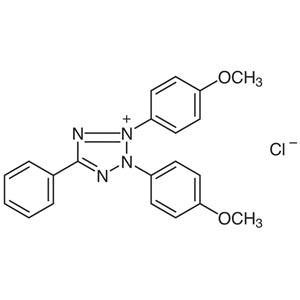
- TCI B1056 104497-79-2 2,3-Bis(4-methoxyphenyl)-5-phenyltetrazolium Chloride
- TCI B1047 69231-13-6 2,3-Bis(4-nitrophenyl)-5-phenyltetrazolium Chloride
- TCI B0311 3-(4-Nitrophenyl)-5-methyl-2-phenyltetrazolium Chloride
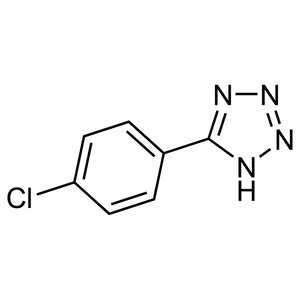
- TCI C4066 16687-61-9 5-(4-Chlorophenyl)-1H-tetrazole
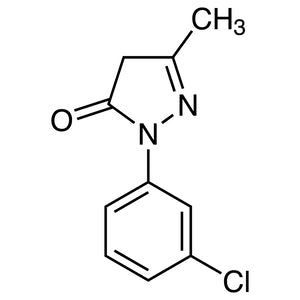
- TCI C3919 90-31-3 2-(3-Chlorophenyl)-5-methyl-2,4-dihydro-3H-pyrazol-3-one
- Used in organic synthesis for the preparation of complex heterocyclic compounds due to its reactive tetrazolium structure.
- Applied in analytical chemistry for colorimetric assays and redox reactions due to its stable and predictable chemical behavior.
- Utilized in pharmaceutical research for the development of new drugs involving tetrazole-based compounds.
- Employed in electrochemical studies for its ability to participate in electron transfer reactions.
- Used in environmental analysis for the detection of specific pollutants through chemical interaction and reaction specificity.
| Brand | TCI |
|---|---|
| CAS number | 135788-08-8 |
| Molecular formula | — |
| Purity | — |
| Category | Chemistry > Building Blocks > Heterocyclic Building Blocks |
| Pack sizes | Available in standard laboratory quantities |
| Physical form | Solid |
| Storage | Store in a cool, dry place away from light and moisture |
This compound should be stored in a cool, dry place, away from direct light and moisture to maintain its stability. It is recommended to use airtight containers to prevent exposure to humidity and air. Due to its chemical reactivity, it should be handled with care, using appropriate personal protective equipment such as gloves and safety goggles. It is important to ensure that the compound is stored separately from incompatible substances to avoid any potential chemical interactions. Proper labeling of storage containers is essential for safe handling and easy identification in a laboratory environment.
—
Produk Terkait
-
2-(4-Iodophenyl)-3-(4-nitrophenyl)-5-phenyltetrazoliumChloride TCI I0067
Regular price From Rp 1.167.600,00Regular price -
2,3-Bis(4-methoxyphenyl)-5-phenyltetrazoliumChloride TCI B1056
Regular price Rp 6.599.250,00Regular price -
2,3-Bis(4-nitrophenyl)-5-phenyltetrazoliumChloride TCI B1047
Regular price Rp 3.446.100,00Regular price -
Chloride TCI B0311
Regular price Rp 1.326.150,00Regular price -
5-(4-Chlorophenyl)-1H-tetrazole TCI C4066
Regular price From Rp 848.400,00Regular price -
2-(3-Chlorophenyl)-5-methyl-2,4-dihydro-3H-pyrazol-3-one TCI C3919
Regular price From Rp 1.167.600,00Regular price -
2-(4-Chlorophenyl)imidazo[1,2-a]pyridine TCI C3913
Regular price From Rp 3.260.250,00Regular price -
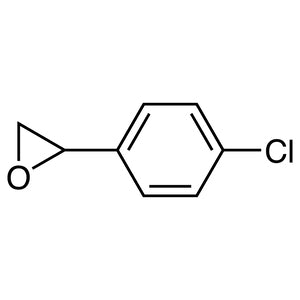
2-(4-Chlorophenyl)oxirane TCI C3907
Regular price From Rp 2.147.250,00Regular price



![2-(4-Chlorophenyl)imidazo[1,2-a]pyridine (CAS 38922-74-6) - TCI C3913 - AMI Scientific](http://amiscientific.com/cdn/shop/files/TCI2510C3913.jpg?v=1767100294&width=533)