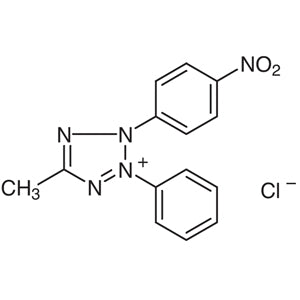
3-(4-Nitrophenyl)-5-methyl-2-phenyltetrazolium Chloride is a chemical compound widely used in laboratory settings for its versatility in chemical reactions and analytical procedures. As a heterocyclic building block, it plays a crucial role in the synthesis of complex organic molecules. This compound is particularly valued for its ability to participate in redox reactions and serve as a substrate in various analytical techniques. Its chemical structure provides a foundation for the development of new compounds in pharmaceutical and industrial applications.
The compound's unique chemical properties make it a preferred choice in laboratory environments. It exhibits stability under certain conditions, although it is sensitive to moisture and sunlight. In solid form, it appears as a white to pale yellow powder and dissolves easily in organic solvents such as ethyl acetate and acetone. These characteristics allow it to be used in reactions requiring high reactivity and precision. Its solubility and reactivity make it suitable for a wide range of experimental applications.
In Indonesian laboratories, this compound is commonly used in organic chemistry research, drug development, and qualitative analysis. It is a key component in many research projects conducted by academic institutions and research centers. Its availability and reliability make it a valuable resource for scientists and researchers working in the field of chemistry.
Related TCI products
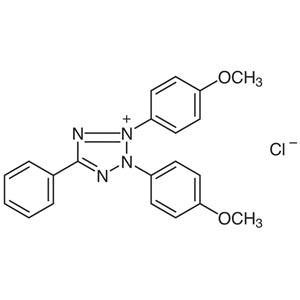
- TCI B1056 104497-79-2 2,3-Bis(4-methoxyphenyl)-5-phenyltetrazolium Chloride
- TCI B1047 69231-13-6 2,3-Bis(4-nitrophenyl)-5-phenyltetrazolium Chloride
- TCI B0333 55699-64-4 2-(2-Benzothiazolyl)-3,5-diphenyltetrazolium Bromide
- TCI B0325 38800-20-3 2,3-Diphenyl-5-(2-thienyl)tetrazolium Chloride
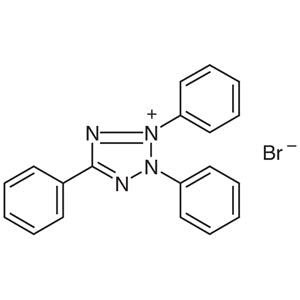
- TCI T0814 1096-80-6 2,3,5-Triphenyltetrazolium Bromide
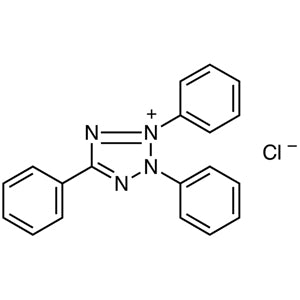
- TCI T0520 298-96-4 2,3,5-Triphenyltetrazolium Chloride
- Organic synthesis where heterocyclic compounds are required for building complex molecular structures.
- Redox reaction experiments due to its ability to act as a substrate in electron transfer processes.
- Quantitative analysis methods where it serves as an indicator for detecting specific chemical species.
- Pharmaceutical research for the development of new drug compounds and therapeutic agents.
- Qualitative analysis in chemical testing to identify specific functional groups or molecular structures.
| Brand | TCI |
|---|---|
| CAS number | — |
| Molecular formula | — |
| Purity | — |
| Category | Chemistry > Building Blocks > Heterocyclic Building Blocks |
| Pack sizes | Available in standard laboratory quantities |
| Physical form | White to pale yellow powder |
| Storage | Store in a cool, dry place away from light and moisture |
This compound should be stored in a cool, dry environment, away from direct sunlight and moisture. It is recommended to use airtight containers made of glass or high-density polyethylene to prevent exposure to humidity. Due to its sensitivity to light, it is advisable to keep it in a dark storage cabinet or under a light-protective cover. Proper labeling of containers is essential to ensure safe handling and prevent accidental contamination. In laboratory settings, it should be handled with appropriate personal protective equipment to minimize exposure. Regular monitoring of storage conditions ensures the compound remains stable and effective for use in experiments.
—
Produk Terkait
-
2,3-Bis(4-methoxyphenyl)-5-phenyltetrazoliumChloride TCI B1056
Regular price Rp 6.599.250,00Regular price -
2,3-Bis(4-nitrophenyl)-5-phenyltetrazoliumChloride TCI B1047
Regular price Rp 3.446.100,00Regular price -
2-(2-Benzothiazolyl)-3,5-diphenyltetrazoliumBromide TCI B0333
Regular price Rp 1.378.650,00Regular price -
2,3-Diphenyl-5-(2-thienyl)tetrazoliumChloride TCI B0325
Regular price From Rp 1.696.800,00Regular price -
2,3,5-TriphenyltetrazoliumBromide TCI T0814
Regular price Rp 477.750,00Regular price -
2,3,5-TriphenyltetrazoliumChloride TCI T0520
Regular price From Rp 610.050,00Regular price -
5-Phenyltetrazole TCI P1109
Regular price Rp 1.353.450,00Regular price -
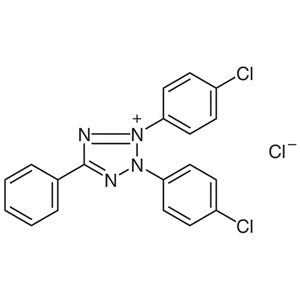
2,3-Bis(4-chlorophenyl)-5-phenyltetrazoliumChloride TCI B1052
Regular price Rp 1.829.100,00Regular price