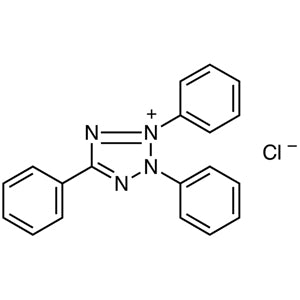
2,3,5-Triphenyltetrazolium Bromide (TTC) is a chemical compound widely used in laboratory experiments, particularly in biology and chemistry. It functions as a reduction indicator in chemical reactions, especially in the measurement of enzyme activity and cellular metabolism. TTC is essential in research involving dehydrogenase activity, as it changes color when reacting with substrates containing reducing agents. This property makes it a valuable tool for observing chemical changes in biological samples. TTC is known for its chemical stability and solubility in organic solvents such as ethanol or DMSO, making it suitable for various analytical methods.
TTC is preferred due to its chemical stability, solubility in organic solvents, and ability to provide clear, accurate results. Its reactivity and resistance to degradation ensure consistent experimental outcomes. These characteristics make TTC a reliable choice for researchers seeking precise data interpretation. Additionally, TTC’s ability to undergo color change upon reaction with reducing agents simplifies the analysis of enzymatic activity and cellular viability. Its reliability and ease of use make it a staple in many laboratory settings.
In Indonesian laboratories, TTC is commonly used in biochemical and cellular studies. It is frequently employed in enzyme activity assays and cell viability tests. Its role in detecting metabolic activity and assessing the effects of various treatments on biological samples is well established. TTC is an essential reagent in both academic and industrial research settings in Indonesia, supporting a wide range of scientific investigations.
Related TCI products
- TCI T0520 298-96-4 2,3,5-Triphenyltetrazolium Chloride
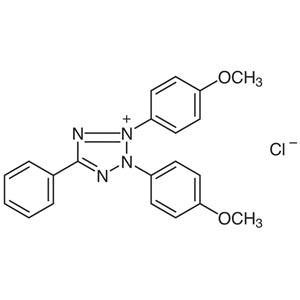
- TCI B1056 104497-79-2 2,3-Bis(4-methoxyphenyl)-5-phenyltetrazolium Chloride
- TCI B1047 69231-13-6 2,3-Bis(4-nitrophenyl)-5-phenyltetrazolium Chloride
- TCI B0333 55699-64-4 2-(2-Benzothiazolyl)-3,5-diphenyltetrazolium Bromide
- TCI B0325 38800-20-3 2,3-Diphenyl-5-(2-thienyl)tetrazolium Chloride
- TCI B0311 3-(4-Nitrophenyl)-5-methyl-2-phenyltetrazolium Chloride
- Enzyme Activity Assays: TTC is used to measure dehydrogenase activity, as it changes color when reduced, providing a visual indicator of enzymatic reactions.
- Cell Viability Testing: TTC is employed to assess cell viability by detecting metabolic activity, making it a key reagent in cytotoxicity studies.
- Metabolic Activity Analysis: TTC helps in evaluating the metabolic state of cells or tissues by reacting with reducing agents present in the sample.
- Biochemical Research: TTC is widely used in biochemical experiments to monitor redox reactions and assess the impact of various compounds on cellular processes.
- Diagnostic Applications: TTC is used in diagnostic assays to detect the presence of reducing substances in biological samples, aiding in the identification of metabolic disorders.
| Brand | TCI |
|---|---|
| CAS number | 1096-80-6 |
| Molecular formula | — |
| Purity | — |
| Category | Chemistry > Building Blocks > Heterocyclic Building Blocks |
| Pack sizes | Available in various quantities as per standard laboratory supply |
| Physical form | Solid powder |
| Storage | Store in a cool, dry place away from light |
TTC should be stored in a cool, dry place, away from direct light to maintain its chemical stability. It is recommended to use airtight containers to prevent moisture absorption, which can affect its performance. As a solid powder, TTC is generally stable under normal laboratory conditions but should be handled with care to avoid contamination. It is not toxic in normal handling conditions, but standard laboratory safety protocols should be followed when working with chemical reagents. Proper labeling of containers is essential to ensure safe handling and prevent accidental exposure. Always ensure that the storage area is well-ventilated and free from incompatible materials.
—
Produk Terkait
-
2,3,5-TriphenyltetrazoliumChloride TCI T0520
Regular price From Rp 610.050,00Regular price -
2,3-Bis(4-methoxyphenyl)-5-phenyltetrazoliumChloride TCI B1056
Regular price Rp 6.599.250,00Regular price -
2,3-Bis(4-nitrophenyl)-5-phenyltetrazoliumChloride TCI B1047
Regular price Rp 3.446.100,00Regular price -
2-(2-Benzothiazolyl)-3,5-diphenyltetrazoliumBromide TCI B0333
Regular price Rp 1.378.650,00Regular price -
2,3-Diphenyl-5-(2-thienyl)tetrazoliumChloride TCI B0325
Regular price From Rp 1.696.800,00Regular price -
Chloride TCI B0311
Regular price Rp 1.326.150,00Regular price -
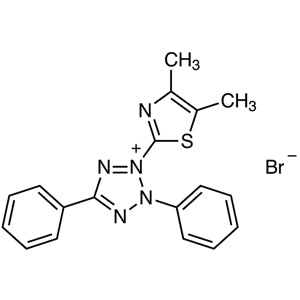
3-(4,5-Dimethyl-2-thiazolyl)-2,5-diphenyltetrazoliumBromide TCI D0801
Regular price From Rp 2.147.250,00Regular price -
5-Phenyltetrazole TCI P1109
Regular price Rp 1.353.450,00Regular price