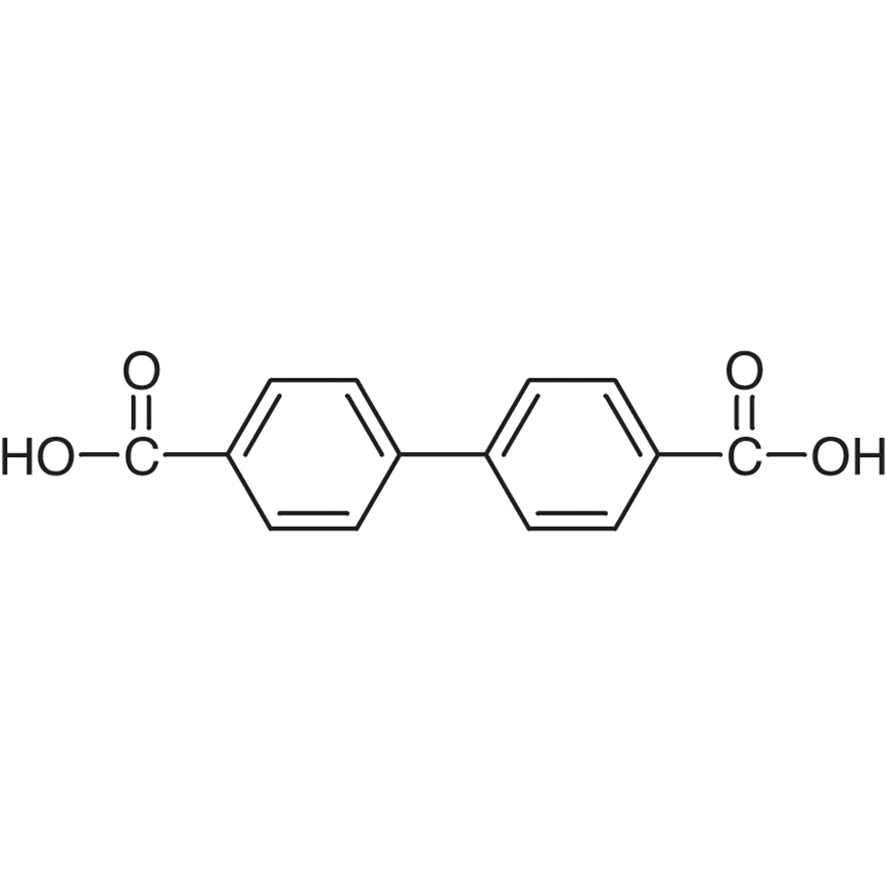
4,4'-Biphenyldicarboxylic Acid is an organic compound widely used in scientific research, particularly in the fields of materials chemistry and material science. This compound plays a crucial role in the synthesis of metal organic frameworks (MOFs), which are porous materials with high adsorption and surface area properties. In the laboratory, it serves as a key component in the development of MOFs, contributing to the structural integrity and functional performance of these advanced materials. Its versatility makes it an essential reagent for researchers working on innovative material solutions.
The compound is valued for its complex molecular structure and its ability to form stable bonds with metals. These properties make it highly suitable for the synthesis of MOFs, which are used in various applications such as gas separation, energy storage, and catalysis. Its chemical stability and high purity ensure consistent and reliable results in experimental processes, supporting accurate and reproducible research outcomes. These characteristics are especially important in high-precision laboratory settings where reliability is paramount.
In Indonesian laboratories, 4,4'-Biphenyldicarboxylic Acid is commonly used by researchers in higher education institutions and research organizations. It supports the development of new materials that align with industrial and environmental needs in the region. Its application in MOF synthesis is integral to advancing scientific innovation and technological progress in the field of materials science.
TCI brochures (PDF)
- Organic Linker Molecules for Metal Organic Frameworks (MOFs) 2026-05-11 · p. 4
- Monomers 2025-05-28 · p. 34
Related TCI products
- Metal Organic Frameworks (MOF) Synthesis: This compound is ideal for creating MOFs due to its ability to form strong metal-ligand bonds, which are essential for the structural stability of these materials.
- Gas Separation and Purification: The high porosity and adsorption capacity of MOFs synthesized using this acid make it suitable for gas separation and purification applications.
- Energy Storage Materials: The compound contributes to the development of materials used in energy storage systems, such as hydrogen storage and battery components.
- Catalytic Reactions: Its role in MOF synthesis supports the creation of catalysts that enhance chemical reaction efficiency in various industrial processes.
- Environmental Remediation: MOFs made with this acid can be used to remove pollutants from water and air, making it valuable in environmental research and treatment applications.
| Brand | TCI |
|---|---|
| CAS number | 787-70-2 |
| Molecular formula | — |
| Purity | — |
| Category | Materials Science > Organic-Inorganic Hybrid Materials > Metal Organic Frameworks (MOF) and Their Raw Materials |
| Pack sizes | Available in various quantities as per standard laboratory supply |
| Physical form | Solid powder |
| Storage | Store in a cool, dry place away from moisture and direct sunlight |
4,4'-Biphenyldicarboxylic Acid should be stored in a cool, dry environment to maintain its chemical stability and prevent degradation. It is recommended to use airtight containers to protect it from moisture and humidity, which can affect its purity and performance. The compound is typically handled in a well-ventilated laboratory setting to ensure safe exposure. General laboratory precautions include wearing appropriate personal protective equipment such as gloves and safety goggles. It should be stored away from incompatible substances to avoid any potential chemical reactions. Proper labeling of containers is essential to ensure safe handling and usage in the laboratory environment.
—
Product Categories
- Organic-Inorganic Hybrid MaterialsMetal Organic Frameworks (MOF) and Their Raw MaterialsOrganic Linker Molecules [Metal Organic Frameworks (MOFs) Precursors]
- Polymer/Macromolecule ReagentsMetal Organic Frameworks (MOF) and Their Raw MaterialsOrganic Linker Molecules [Metal Organic Frameworks (MOFs) Precursors]
- Polymer/Macromolecule ReagentsMonomersDicarboxylic Acid Monomers
Produk Terkait
-
2,2'-BiphenyldicarboxylicAcid TCI D0864
Regular price From Rp 3.155.250,00Regular priceRp 2.206.050,00Sale price From Rp 3.155.250,00 -
AcetylenedicarboxylicAcid TCI A0088
Regular price From Rp 1.220.100,00Regular priceRp 868.350,00Sale price From Rp 1.220.100,00 -
TetrafluoroisophthalicAcid TCI T1374
Regular price From Rp 2.625.000,00Regular priceRp 1.835.400,00Sale price From Rp 2.625.000,00 -
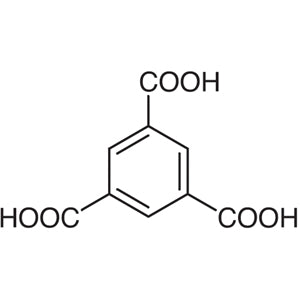
1,3,5-BenzenetricarboxylicAcid TCI B0043
Regular price From Rp 1.035.300,00Regular priceRp 723.450,00Sale price From Rp 1.035.300,00 -
Anthraquinone-2,3-dicarboxylicAcid TCI A1681
Regular price Rp 9.461.550,00Regular priceRp 6.616.050,00Sale price Rp 9.461.550,00 -
Azobenzene-4,4'-dicarboxylicAcid TCI A1596
Regular price From Rp 3.419.850,00Regular priceRp 2.390.850,00Sale price From Rp 3.419.850,00 -
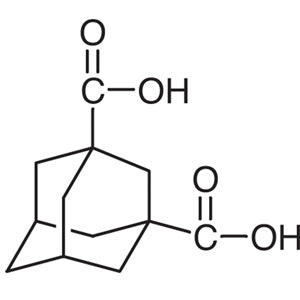
1,3-AdamantanedicarboxylicAcid TCI A1358
Regular price From Rp 1.749.300,00Regular priceRp 1.223.250,00Sale price From Rp 1.749.300,00 -
TetrafluoroterephthalicAcid TCI T0930
Regular price From Rp 980.700,00Regular priceRp 685.650,00Sale price From Rp 980.700,00