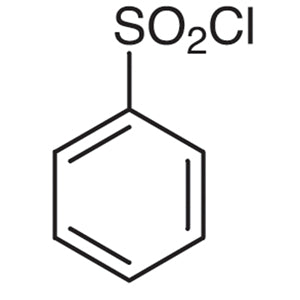
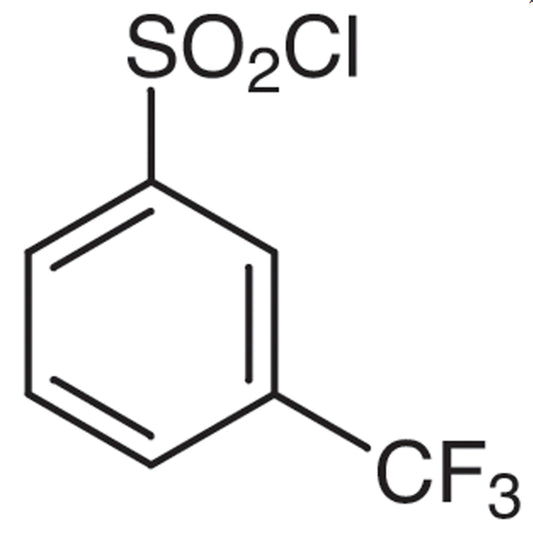
Benzenesulfonyl Chloride (BC), with the CAS number 98-09-9, is a chemical compound widely used in laboratory settings for its reactivity and utility in organic synthesis. It is a key reagent in electrophilic substitution reactions, particularly in the replacement of hydroxyl or hydrocarbon groups in organic molecules. Its role in the laboratory is critical for the preparation of complex compounds, making it an essential tool for chemists working in various research fields. This compound is especially relevant in the determination of hippuric acid, a compound of interest in pharmaceutical and analytical chemistry.
The chemical properties of Benzenesulfonyl Chloride make it a preferred choice for specific reactions that require high reactivity. It exhibits good solubility in organic solvents, facilitating easy mixing and reaction processes. Its stability under certain conditions ensures reliable performance in controlled laboratory environments. These characteristics allow it to be used effectively in a variety of synthetic pathways, contributing to the efficiency and accuracy of chemical experiments.
In Indonesian laboratories, Benzenesulfonyl Chloride is commonly used in organic chemistry, pharmaceutical research, and analytical chemistry. Its application is particularly significant in the study of hippuric acid, where it plays a vital role in analytical procedures. The compound is a valuable resource for researchers aiming to synthesize complex organic molecules and conduct precise chemical analyses.
Related TCI products
- TCI B3936 66176-39-4 4-(Bromomethyl)benzenesulfonyl Chloride
- TCI B0036 98-09-9 Benzenesulfonyl Chloride
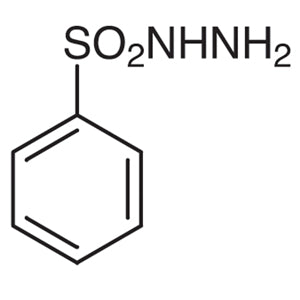
- TCI B0038 80-17-1 Benzenesulfonyl Hydrazide
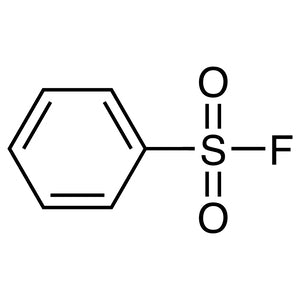
- TCI B6627 368-43-4 Benzenesulfonyl Fluoride
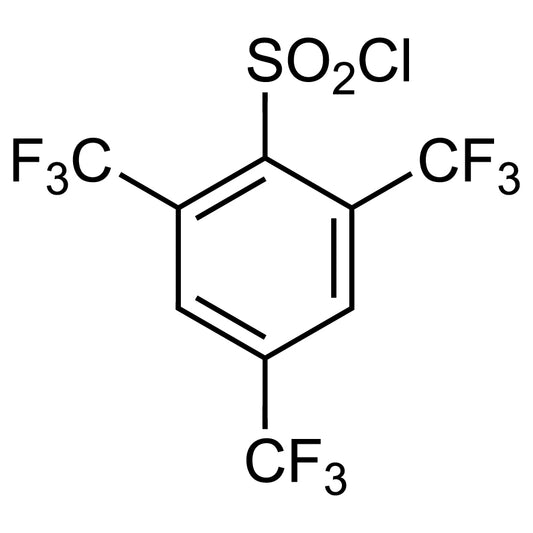
- TCI T4302 944453-80-9 2,4,6-Tris(trifluoromethyl)benzenesulfonyl Chloride
- TCI T3508 220227-84-9 3-(Trifluoromethoxy)benzenesulfonyl Chloride
- Electrophilic Substitution Reactions: Benzenesulfonyl Chloride is ideal for substitution reactions due to its reactivity and ability to replace hydroxyl or hydrocarbon groups in organic molecules.
- Organic Synthesis: It is widely used in the synthesis of complex organic compounds, especially in the preparation of derivatives with specific functional groups.
- Hippuric Acid Determination: This compound is crucial in analytical procedures for the detection and quantification of hippuric acid in biological samples.
- Pharmaceutical Research: Its role in the synthesis of pharmaceutical intermediates makes it a valuable tool in drug development studies.
- Analytical Chemistry: It is employed in various analytical techniques to facilitate the identification and characterization of organic compounds.
| Brand | TCI |
|---|---|
| CAS number | 98-09-9 |
| Molecular formula | — |
| Purity | — |
| Category | Chemistry > Building Blocks > Non-Heterocyclic Building Blocks |
| Pack sizes | Available in standard laboratory quantities |
| Physical form | Solid |
| Storage | Store in a cool, dry place away from moisture and light |
Benzenesulfonyl Chloride should be stored in a cool, dry place, away from moisture and direct light. It is recommended to use airtight containers to prevent exposure to air and humidity. Due to its reactivity, it should be handled in a well-ventilated area, preferably under a fume hood. Avoid contact with incompatible materials such as strong bases or reducing agents. Always wear appropriate personal protective equipment, including gloves and safety goggles, when handling this compound. Proper storage and handling ensure the safety of laboratory personnel and maintain the compound's chemical integrity.
—
Produk Terkait
-
4-(Bromomethyl)benzenesulfonylChloride TCI B3936
Regular price From Rp 1.353.450,00Regular priceRp 946.050,00Sale price From Rp 1.353.450,00 -
BenzenesulfonylChloride TCI B0036
Regular price From Rp 452.550,00Regular priceRp 316.050,00Sale price From Rp 452.550,00 -
BenzenesulfonylHydrazide TCI B0038
Regular price From Rp 1.563.450,00Regular priceRp 1.108.800,00Sale price From Rp 1.563.450,00 -
BenzenesulfonylFluoride TCI B6627
Regular price From Rp 1.353.450,00Regular priceRp 946.050,00Sale price From Rp 1.353.450,00 -
2,4,6-Tris(trifluoromethyl)benzenesulfonylChloride TCI T4302
Regular price From Rp 3.949.050,00Regular priceRp 2.761.500,00Sale price From Rp 3.949.050,00 -
3-(Trifluoromethoxy)benzenesulfonylChloride TCI T3508
Regular price From Rp 530.250,00Regular priceRp 370.650,00Sale price From Rp 530.250,00 -
4-(Trifluoromethoxy)benzenesulfonylChloride TCI T2146
Regular price From Rp 1.087.800,00Regular priceRp 760.200,00Sale price From Rp 1.087.800,00 -
3-(Trifluoromethyl)benzenesulfonylChloride TCI T1910
Regular price From Rp 1.856.400,00Regular priceRp 1.297.800,00Sale price From Rp 1.856.400,00