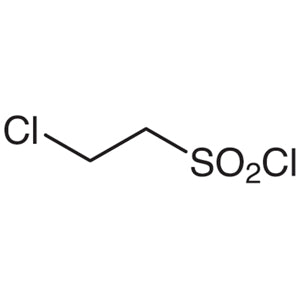
Benzenesulfonyl Chloride (CAS 98-09-9) is a chemical compound widely used in laboratory settings as a key building block in organic synthesis. It is a versatile reagent that plays a crucial role in various chemical reactions, particularly in substitution reactions where it acts as an electrophilic agent. Its molecular structure consists of a benzene ring attached to a sulfonyl chloride group, making it highly reactive and suitable for modifying functional groups in organic molecules. This compound is commonly used in the preparation of compounds with specific functional properties, such as high polarity or the ability to form stable bonds with other functional groups.
The reactivity of Benzenesulfonyl Chloride is due to its ability to interact with electron-deficient compounds like amines and hydroxyl groups. This makes it an ideal choice for reactions involving substitution, coupling, or molecular modification. Its high reactivity also allows it to participate in a wide range of synthetic pathways, contributing to the development of new compounds with desired chemical properties. Its chemical stability under controlled conditions further enhances its utility in laboratory applications.
In Indonesian laboratories, Benzenesulfonyl Chloride is frequently used in organic chemistry research, especially in the synthesis of pharmaceutical compounds and functionalized molecules. Its availability and effectiveness make it a preferred choice for researchers working on projects that require precise chemical transformations. The compound is essential for advancing chemical synthesis and innovation in both academic and industrial research settings.
TCI brochures (PDF)
- Sulfonylation Reagents 2023-01-20 · p. 4
- Protecting Agents 2025-03-25 · p. 11
Related TCI products
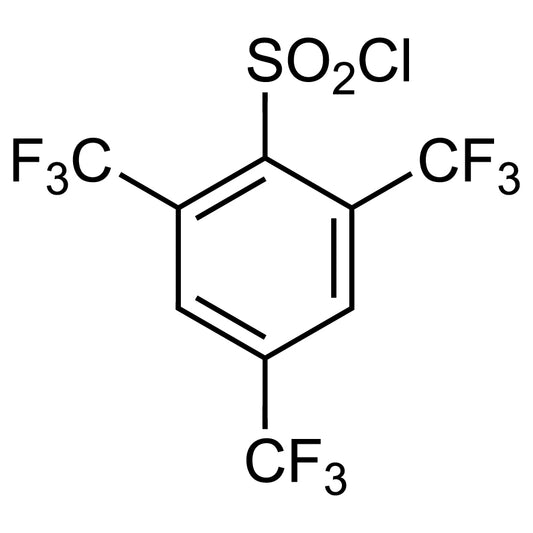
- TCI T4302 944453-80-9 2,4,6-Tris(trifluoromethyl)benzenesulfonyl Chloride
- TCI B3936 66176-39-4 4-(Bromomethyl)benzenesulfonyl Chloride
- TCI B1211 98-09-9 Benzenesulfonyl Chloride [for Determination of Hippuric Acid]
- TCI T0459 6553-96-4 2,4,6-Triisopropylbenzenesulfonyl Chloride
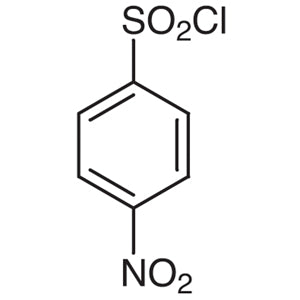
- TCI N0144 98-74-8 4-Nitrobenzenesulfonyl Chloride
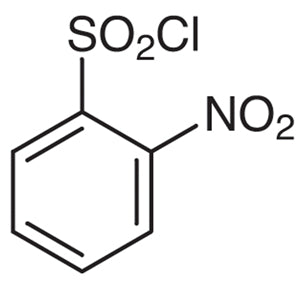
- TCI N0142 1694-92-4 2-Nitrobenzenesulfonyl Chloride
- Organic synthesis is a key application where Benzenesulfonyl Chloride is used to modify functional groups and create complex molecular structures.
- Pharmaceutical research benefits from this compound as it helps in the development of new drugs through targeted chemical modifications.
- Functional group introduction is facilitated by its reactivity, allowing for the creation of compounds with specific chemical properties.
- Coupling reactions often utilize Benzenesulfonyl Chloride to link different molecular components efficiently.
- Molecular modification in synthetic pathways relies on its ability to participate in substitution and other reaction mechanisms.
| Brand | TCI |
|---|---|
| CAS number | 98-09-9 |
| Molecular formula | — |
| Purity | — |
| Category | Chemistry > Building Blocks > Non-Heterocyclic Building Blocks |
| Pack sizes | Available in various quantities as per standard laboratory supply |
| Physical form | Solid |
| Storage | Store in a cool, dry place away from moisture and direct sunlight |
Benzenesulfonyl Chloride should be stored in a cool, dry environment to maintain its chemical integrity. It is recommended to keep the compound in a sealed container to prevent exposure to moisture, which can affect its reactivity. Due to its high reactivity, it should be handled with care, using appropriate personal protective equipment such as gloves and safety goggles. The compound is best stored in a fume hood or a well-ventilated area to minimize inhalation risks. Avoid contact with incompatible materials, and ensure proper ventilation when working with this substance. Always follow standard laboratory safety protocols to ensure safe handling and storage.
—
Produk Terkait
-
2,4,6-Tris(trifluoromethyl)benzenesulfonylChloride TCI T4302
Regular price From Rp 3.949.050,00Regular priceRp 2.761.500,00Sale price From Rp 3.949.050,00 -
4-(Bromomethyl)benzenesulfonylChloride TCI B3936
Regular price From Rp 1.353.450,00Regular priceRp 946.050,00Sale price From Rp 1.353.450,00 -
BenzenesulfonylChloride[forDeterminationofHippuricAcid] TCI B1211
Regular price Rp 769.650,00Regular priceRp 537.600,00Sale price Rp 769.650,00 -
2,4,6-TriisopropylbenzenesulfonylChloride TCI T0459
Regular price From Rp 2.227.050,00Regular priceRp 1.557.150,00Sale price From Rp 2.227.050,00 -
4-NitrobenzenesulfonylChloride TCI N0144
Regular price From Rp 557.550,00Regular priceRp 389.550,00Sale price From Rp 557.550,00 -
2-NitrobenzenesulfonylChloride TCI N0142
Regular price From Rp 1.273.650,00Regular priceRp 890.400,00Sale price From Rp 1.273.650,00 -
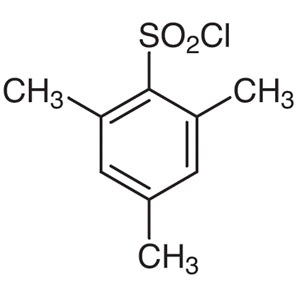
2-MesitylenesulfonylChloride TCI M0071
Regular price From Rp 1.510.950,00Regular priceRp 1.056.300,00Sale price From Rp 1.510.950,00 -
2-ChloroethanesulfonylChloride TCI C1142
Regular price From Rp 1.193.850,00Regular priceRp 834.750,00Sale price From Rp 1.193.850,00