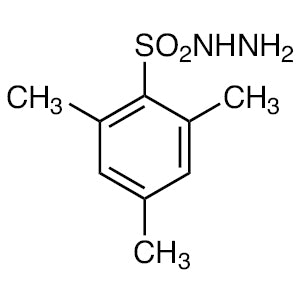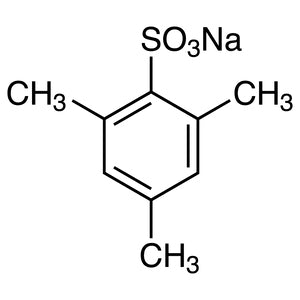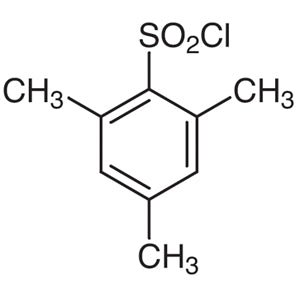
2-Mesitylenesulfonyl Chloride is a chemical compound widely used as a building block in the synthesis of complex molecules. It plays a crucial role in laboratory settings by enabling the construction of intricate molecular structures through various synthetic reactions. This compound is particularly valuable in organic chemistry due to its ability to participate in substitution and activation reactions, making it a versatile reagent for researchers. Its unique molecular structure allows it to serve as a key intermediate in the development of heterocyclic compounds and other organic derivatives.
The compound is favored for its stable chemical properties and controlled reactivity, which ensure predictable outcomes in synthetic processes. Its solubility in organic solvents further enhances its utility, as it facilitates efficient reaction kinetics and simplifies purification steps. These characteristics make it an essential tool for chemists aiming to achieve high precision and reproducibility in their experiments. Its reliability and consistent performance contribute to its popularity in both academic and industrial research environments.
In Indonesian laboratories, 2-Mesitylenesulfonyl Chloride is commonly used in scientific research and industrial applications. It supports a wide range of chemical investigations, particularly in organic synthesis and structural analysis. Its availability and quality make it a preferred choice for institutions and research centers that require reliable and high-performance reagents for their experiments. This compound is integral to advancing chemical knowledge and innovation in the region.
TCI brochures (PDF)
- Sulfonylation Reagents 2023-01-20 · p. 4
- Protecting Agents 2025-03-25 · p. 11
- Nucleosides, Nucleotides, Nucleic Acids and Related Reagents 2026-03-23 · p. 15
Related TCI products
- TCI T0459 6553-96-4 2,4,6-Triisopropylbenzenesulfonyl Chloride
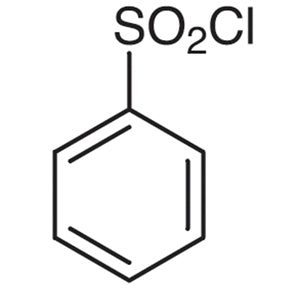
- TCI B0036 98-09-9 Benzenesulfonyl Chloride
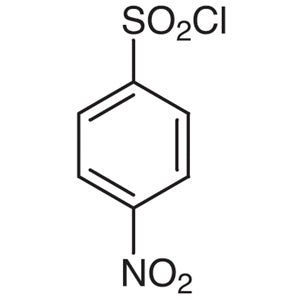
- TCI N0144 98-74-8 4-Nitrobenzenesulfonyl Chloride
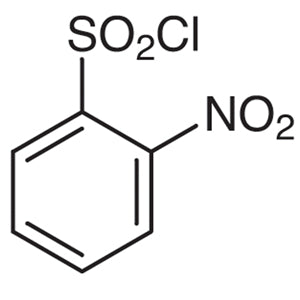
- TCI N0142 1694-92-4 2-Nitrobenzenesulfonyl Chloride
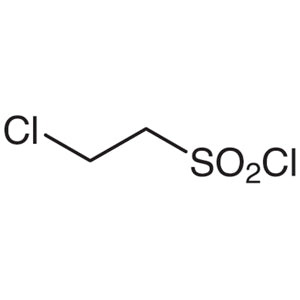
- TCI C1142 1622-32-8 2-Chloroethanesulfonyl Chloride
- TCI M1198 16182-15-3 2-Mesitylenesulfonyl Hydrazide
- Organic synthesis applications benefit from this compound's ability to participate in substitution and activation reactions, facilitating the construction of complex molecular frameworks.
- Heterocyclic compound development relies on its unique molecular structure, allowing it to act as a key intermediate in the formation of ring-based structures.
- Industrial research utilizes its stable chemical properties and controlled reactivity to ensure consistent and reproducible results in large-scale chemical processes.
- Analytical chemistry applications leverage its solubility in organic solvents, enabling efficient reaction kinetics and simplifying purification procedures.
- Structural analysis in chemical research benefits from its predictable behavior, making it a reliable reagent for studying molecular interactions and transformations.
| Brand | TCI |
|---|---|
| CAS number | 773-64-8 |
| Molecular formula | — |
| Purity | — |
| Category | Chemistry > Building Blocks > Non-Heterocyclic Building Blocks |
| Pack sizes | Available in various quantities as per standard laboratory requirements |
| Physical form | Solid |
| Storage | Store in a cool, dry place away from moisture and direct sunlight |
This compound should be stored in a cool, dry environment to maintain its chemical stability and prevent degradation. It is recommended to keep it in airtight containers to avoid exposure to moisture and air, which could affect its reactivity. Proper ventilation is essential when handling the material to minimize inhalation risks. Due to its chemical nature, it should be stored away from incompatible substances such as strong bases or reducing agents. Laboratory personnel should wear appropriate personal protective equipment, including gloves and safety goggles, when handling this compound to ensure safety and compliance with standard chemical handling protocols.
—
Product Categories
- Building BlocksNon-Heterocyclic Building BlocksSulfur Compounds [Non-Heterocyclic Building Blocks]
- Chemical BiologyNucleic Acid ChemistryCoupling Activators and Condensing Agents [Nucleic Acid Synthesis]
- Synthetic ReagentsProtection, Deprotection, DerivatizationProtecting and Derivatizing Reagents [Synthetic Reagents]
- Pharmaceutical Development and Drug Discovery Research ReagentsNucleic Acid ChemistryCoupling Activators and Condensing Agents [Nucleic Acid Synthesis]
Produk Terkait
-
2,4,6-TriisopropylbenzenesulfonylChloride TCI T0459
Regular price From Rp 2.227.050,00Regular priceRp 1.557.150,00Sale price From Rp 2.227.050,00 -
BenzenesulfonylChloride TCI B0036
Regular price From Rp 452.550,00Regular priceRp 316.050,00Sale price From Rp 452.550,00 -
4-NitrobenzenesulfonylChloride TCI N0144
Regular price From Rp 557.550,00Regular priceRp 389.550,00Sale price From Rp 557.550,00 -
2-NitrobenzenesulfonylChloride TCI N0142
Regular price From Rp 1.273.650,00Regular priceRp 890.400,00Sale price From Rp 1.273.650,00 -
2-ChloroethanesulfonylChloride TCI C1142
Regular price From Rp 1.193.850,00Regular priceRp 834.750,00Sale price From Rp 1.193.850,00 -
2-MesitylenesulfonylHydrazide TCI M1198
Regular price From Rp 1.934.100,00Regular priceRp 1.368.150,00Sale price From Rp 1.934.100,00 -
2,4-MesitylenedisulfonylDichloride TCI M1186
Regular price From Rp 3.312.750,00Regular priceRp 2.316.300,00Sale price From Rp 3.312.750,00 -
SodiumMesitylenesulfonate TCI M0796
Regular price Rp 1.405.950,00Regular priceRp 982.800,00Sale price Rp 1.405.950,00