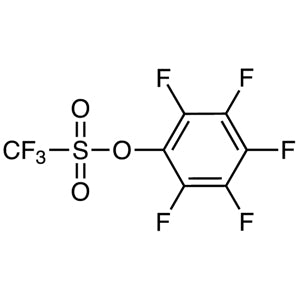
2,4-Mesitylenedisulfonyl Dichloride is a chemical compound widely used as a building block in the synthesis of complex organic compounds. Its unique molecular structure features two disulfonyl groups attached to carbon atoms at positions 2 and 4 of mesitylene, making it a valuable reagent in organic chemistry. In laboratory settings, this compound plays a crucial role in various synthetic reactions, particularly those involving substitution and coupling mechanisms. Its versatility allows chemists to create molecules with specific functional groups, enhancing its importance in research and development.
The compound's highly reactive nature makes it suitable for a range of chemical reactions, including nucleophilic, electrophilic, and redox processes. Its reactivity is complemented by its stability under certain conditions, which facilitates long-term storage and use. This combination of reactivity and stability ensures that it remains a reliable choice for researchers working on complex organic syntheses. Additionally, its chemical properties make it an essential tool for those exploring new synthetic pathways and molecular designs.
In Indonesian laboratories, 2,4-Mesitylenedisulfonyl Dichloride is commonly used in organic chemistry research, especially in the study of heterocyclic compound synthesis and the development of complex molecular structures. Many research institutions and universities rely on this compound as a key component in advanced chemical experiments. Its presence in these laboratories underscores its significance in both academic and industrial chemical research.
TCI brochures (PDF)
- Condensing Agents 2025-11-18 · p. 5
- Nucleosides, Nucleotides, Nucleic Acids and Related Reagents 2026-03-23 · p. 15
- Monomers 2025-05-28 · p. 39
Related TCI products
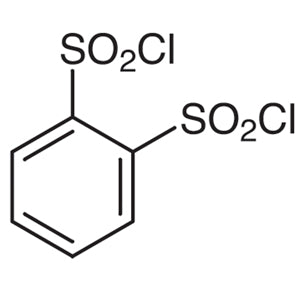
- TCI B1128 6461-76-3 1,2-Benzenedisulfonyl Dichloride
- TCI T0459 6553-96-4 2,4,6-Triisopropylbenzenesulfonyl Chloride
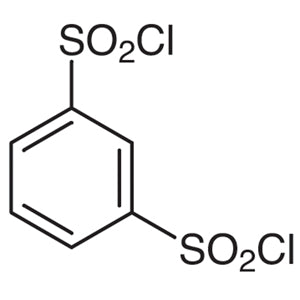
- TCI B0848 585-47-7 1,3-Benzenedisulfonyl Chloride
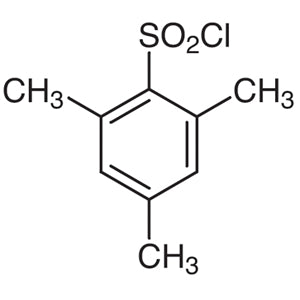
- TCI M0071 773-64-8 2-Mesitylenesulfonyl Chloride
- TCI M1669 5799-68-8 Methanedisulfonyl Dichloride
- TCI T1985 2232-08-8 1-(p-Toluenesulfonyl)imidazole
- Synthesis of heterocyclic compounds for the development of new pharmaceuticals due to its ability to form complex molecular frameworks.
- Coupling reactions in organic synthesis where it acts as a versatile reagent for bond formation between different molecular entities.
- Redox reactions where its reactive nature facilitates electron transfer processes in synthetic pathways.
- Nucleophilic substitution reactions due to its electrophilic characteristics that allow for efficient reaction mechanisms.
- Structural modification of organic molecules to create compounds with desired functional groups and properties.
| Brand | TCI |
|---|---|
| CAS number | 68985-08-0 |
| Molecular formula | — |
| Purity | — |
| Category | Chemistry > Building Blocks > Non-Heterocyclic Building Blocks |
| Pack sizes | Available in various quantities as per standard laboratory supply formats |
| Physical form | Solid |
| Storage | Store in a cool, dry place away from moisture and direct sunlight |
This compound should be stored in a cool, dry environment, away from moisture and direct sunlight to maintain its chemical integrity. It is recommended to use airtight containers to prevent exposure to air and potential degradation. Due to its reactivity, it should be handled in a well-ventilated area with appropriate personal protective equipment. Avoid contact with incompatible materials such as strong bases or reducing agents. Proper labeling and storage conditions are essential to ensure safety and maintain the compound's effectiveness in laboratory applications.
—
Product Categories
- Building BlocksNon-Heterocyclic Building BlocksSulfur Compounds [Non-Heterocyclic Building Blocks]
- Chemical BiologyNucleic Acid ChemistryCoupling Activators and Condensing Agents [Nucleic Acid Synthesis]
- Synthetic ReagentsCoupling [Synthetic Reagents]Active Esters, Additives [Coupling Reagents]
- Pharmaceutical Development and Drug Discovery Research ReagentsNucleic Acid ChemistryCoupling Activators and Condensing Agents [Nucleic Acid Synthesis]
Produk Terkait
-
1,2-BenzenedisulfonylDichloride TCI B1128
Regular price From Rp 2.889.600,00Regular priceRp 2.020.200,00Sale price From Rp 2.889.600,00 -
2,4,6-TriisopropylbenzenesulfonylChloride TCI T0459
Regular price From Rp 2.227.050,00Regular priceRp 1.557.150,00Sale price From Rp 2.227.050,00 -
1,3-BenzenedisulfonylChloride TCI B0848
Regular price From Rp 1.565.550,00Regular priceRp 1.094.100,00Sale price From Rp 1.565.550,00 -
2-MesitylenesulfonylChloride TCI M0071
Regular price From Rp 1.510.950,00Regular priceRp 1.056.300,00Sale price From Rp 1.510.950,00 -
MethanedisulfonylDichloride TCI M1669
Regular price From Rp 6.704.250,00Regular priceRp 4.688.250,00Sale price From Rp 6.704.250,00 -
1-(p-Toluenesulfonyl)imidazole TCI T1985
Regular price From Rp 1.140.300,00Regular priceRp 812.700,00Sale price From Rp 1.140.300,00 -
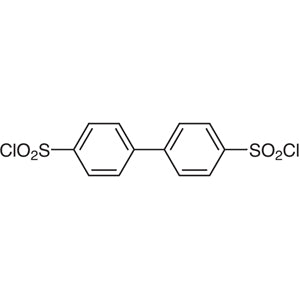
4,4'-BiphenyldisulfonylChloride TCI B1165
Regular price From Rp 1.220.100,00Regular priceRp 852.600,00Sale price From Rp 1.220.100,00 -
PentafluorophenylTrifluoromethanesulfonate TCI P2188
Regular price From Rp 795.900,00Regular priceRp 572.250,00Sale price From Rp 795.900,00