1,3-Bis(isocyanatomethyl)cyclohexane (cis- and trans- mixture) is a chemical compound widely used in laboratory settings for polymer and macromolecule synthesis. This compound is a key reagent in the development of advanced materials, particularly in the creation of polyurethanes, rubbers, and composite materials. Its unique molecular structure, composed of two isomers—cis and trans—offers versatility in chemical reactivity and physical properties. As a monomer, it plays a crucial role in the polymerization process, enabling the formation of complex molecular architectures. Its application spans across various research fields, including materials science and organic chemistry.
The compound’s high reactivity, especially due to its isocyanate functional groups, makes it a preferred choice for chemical synthesis. These groups are highly reactive towards amines, hydroxides, and water, facilitating a wide range of polymerization reactions. The presence of both cis and trans isomers enhances its applicability by allowing for the fine-tuning of material properties such as mechanical strength, thermal stability, and flexibility. This dual isomer structure also contributes to the compound’s versatility in different synthetic pathways. Its reactivity and structural complexity make it an essential component in modern material research.
In Indonesian laboratories, 1,3-Bis(isocyanatomethyl)cyclohexane is extensively used in academic and industrial research. It is commonly found in polymer synthesis projects at universities and research institutions. Its application in the development of new materials and chemical compounds supports both fundamental and applied research. The compound’s role in creating functional materials and its adaptability to various experimental conditions make it a valuable resource for scientists and researchers in Indonesia.
TCI brochures (PDF)
- Raw Materials for Polyimide Synthesis 2026-05-11 · p. 6
- Biomaterials Research Reagents 2025-02-19 · p. 17
- Monomers 2025-05-28 · p. 28
Related TCI products
- TCI B1442 2778-42-9 1,3-Bis(2-isocyanato-2-propyl)benzene
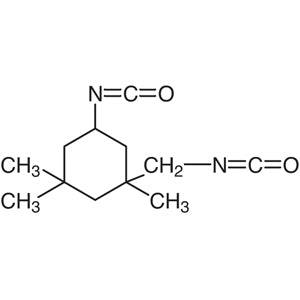
- TCI I0314 4098-71-9 Isophorone Diisocyanate (mixture of isomers)
- TCI D2380 5124-30-1 Dicyclohexylmethane 4,4'-Diisocyanate (mixture of isomers)
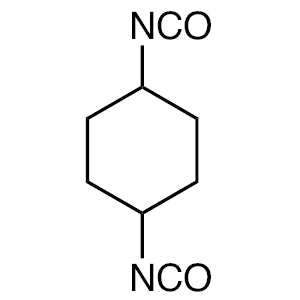
- TCI D5635 2556-36-7 1,4-Diisocyanatocyclohexane (cis- and trans- mixture)
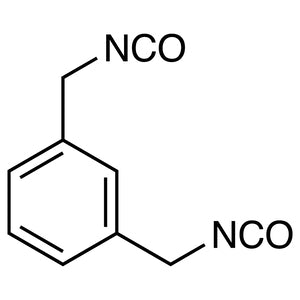
- TCI X0022 3634-83-1 m-Xylylene Diisocyanate
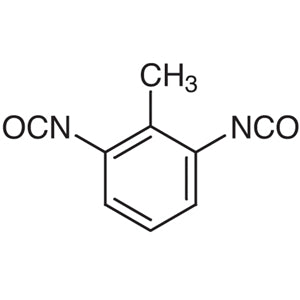
- TCI T1153 91-08-7 Tolylene-2,6-diisocyanate
- Polymer synthesis for polyurethane production due to its reactive isocyanate groups and ability to form cross-linked networks.
- Development of composite materials where the compound’s dual isomer structure enhances mechanical and thermal properties.
- Organic chemistry research for creating novel macromolecules and functionalized polymers through controlled polymerization.
- Material science experiments involving the study of isomer effects on polymer morphology and performance.
- Industrial applications in the formulation of rubber and elastomer-based products requiring high chemical reactivity and durability.
| Brand | TCI |
|---|---|
| CAS number | 38661-72-2 |
| Molecular formula | — |
| Purity | — |
| Category | Materials Science > Polymer/Macromolecule Reagents > Monomers |
| Pack sizes | Available in various quantities as per standard laboratory supply |
| Physical form | Liquid |
| Storage | Store in a cool, dry place away from moisture and direct sunlight |
This compound should be stored in a cool, dry environment, away from sources of heat and direct sunlight. It is recommended to use sealed containers made of materials compatible with organic solvents to prevent evaporation and contamination. Due to its reactivity, it should be handled in a well-ventilated area, preferably under a fume hood, to minimize exposure. Avoid contact with moisture, as it can lead to unwanted chemical reactions. Always use appropriate personal protective equipment, including gloves and safety goggles, when handling this material. Proper labeling and storage practices are essential to ensure safety and maintain the integrity of the compound in the laboratory.
—
Product Categories
- Polymer/Macromolecule ReagentsMonomersIsocyanate Monomers
- Polymer/Macromolecule ReagentsPolyimide Raw MaterialsDiisocyanates [Polyimide Raw Materials]
- Biomaterials/Biocompatible Materials Research ReagentsMonomers and Macromonomers [Biomaterials/Biocompatible Materials Research Reagents]Isocyanate Monomers [Biomaterials/Biocompatible Materials Research Reagents]
Produk Terkait
-
1,3-Bis(2-isocyanato-2-propyl)benzene TCI B1442
Regular price From Rp 1.298.850,00Regular priceRp 908.250,00Sale price From Rp 1.298.850,00 -
IsophoroneDiisocyanate(mixtureofisomers) TCI I0314
Regular price From Rp 530.250,00Regular priceRp 370.650,00Sale price From Rp 530.250,00 -
Dicyclohexylmethane4,4'-Diisocyanate(mixtureofisomers) TCI D2380
Regular price Rp 795.900,00Regular priceRp 556.500,00Sale price Rp 795.900,00 -
1,4-Diisocyanatocyclohexane(cis-andtrans-mixture) TCI D5635
Regular price From Rp 2.411.850,00Regular priceRp 1.686.300,00Sale price From Rp 2.411.850,00 -
m-XylyleneDiisocyanate TCI X0022
Regular price Rp 848.400,00Regular priceRp 593.250,00Sale price Rp 848.400,00 -
Tolylene-2,6-diisocyanate TCI T1153
Regular price From Rp 823.200,00Regular priceRp 575.400,00Sale price From Rp 823.200,00 -
TolyleneDiisocyanate(2,4-ca.80%,2,6-ca.20%) TCI T0264
Regular price From Rp 717.150,00Regular priceRp 500.850,00Sale price From Rp 717.150,00 -
Tolylene-2,4-diisocyanate TCI T0263
Regular price From Rp 505.050,00Regular priceRp 352.800,00Sale price From Rp 505.050,00