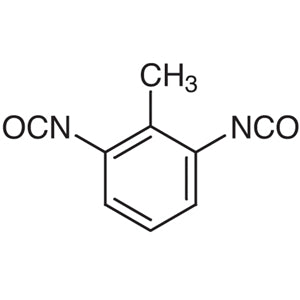
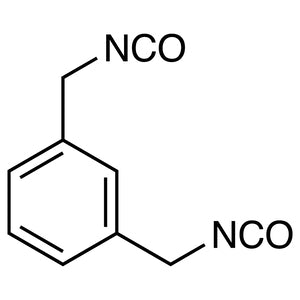
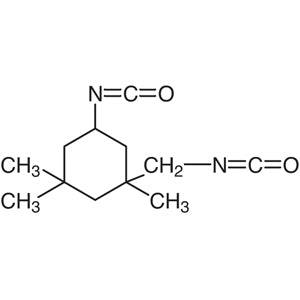
Tolylene Diisocyanate (TDI), with the CAS number 26471-62-5, is a key chemical compound widely used in materials science and polymer chemistry. As a monomer, TDI plays a crucial role in the synthesis of polyurethanes, which are essential in various industrial applications such as manufacturing, construction, and consumer goods. In the laboratory, TDI is an important tool for studying polymer properties, including viscosity, reactivity, and thermal stability. Its versatility makes it a valuable component in both research and development settings.
TDI is known for its reactive isocyanate groups, which enable it to participate in polymerization and crosslinking reactions. This reactivity, combined with its chemical structure, allows TDI to be a preferred choice for creating a wide range of polymeric materials. Its ability to form stable chemical bonds with other compounds enhances its utility in synthesizing complex materials. Additionally, TDI’s chemical structure provides it with unique properties that make it suitable for various applications in both academic and industrial laboratories.
In Indonesian laboratories, TDI is commonly used in polymer research and development, particularly in chemical engineering, material science, and environmental studies. It is frequently employed to test the properties of new materials or to develop advanced polymer-based products. Its presence in research institutions and companies underscores its importance in the scientific community for innovation and technological advancement.
TCI brochures (PDF)
- Reagents for Preparing Animal Disease Models 2024-09-13 · p. 2
- Raw Materials for Polyimide Synthesis 2026-05-11 · p. 7
- Immunology Research Reagents 2026-06-03 · p. 8
- Biomaterials Research Reagents 2025-02-19 · p. 17
- Monomers 2025-05-28 · p. 28
Related TCI products
- Polymer synthesis and polyurethane development due to its reactive isocyanate groups that enable crosslinking and chain extension.
- Material characterization studies to analyze polymer properties such as thermal stability and reactivity in controlled environments.
- Formulation of foam and elastomer materials because of its ability to react with polyols to create flexible and durable structures.
- Research in environmental science for developing biodegradable or eco-friendly polymer-based products.
- Chemical engineering applications for creating advanced composite materials with tailored mechanical and thermal properties.
| Brand | TCI |
|---|---|
| CAS number | 26471-62-5 |
| Molecular formula | — |
| Purity | — |
| Category | Materials Science > Polymer/Macromolecule Reagents > Monomers |
| Pack sizes | — |
| Physical form | Liquid |
| Storage | Must be stored in a cool, dry place away from moisture and incompatible materials. |
TDI should be stored in a cool, dry environment to prevent degradation and maintain its chemical integrity. It is recommended to use sealed containers made of materials that are chemically inert to isocyanate groups, such as stainless steel or glass. Due to its reactive nature, TDI must be kept away from moisture, heat, and incompatible substances like acids or bases. Proper ventilation is essential when handling TDI to minimize exposure to its strong odor. Laboratory personnel should wear appropriate personal protective equipment, including gloves, goggles, and a lab coat, to ensure safe handling. Regular monitoring of storage conditions is necessary to maintain the quality and safety of the material.
—
Product Categories
- Polymer/Macromolecule ReagentsMonomersIsocyanate Monomers
- Polymer/Macromolecule ReagentsPolyimide Raw MaterialsDiisocyanates [Polyimide Raw Materials]
- Biomaterials/Biocompatible Materials Research ReagentsMonomers and Macromonomers [Biomaterials/Biocompatible Materials Research Reagents]Isocyanate Monomers [Biomaterials/Biocompatible Materials Research Reagents]
Produk Terkait
-
Tolylene-2,6-diisocyanate TCI T1153
Regular price From Rp 823.200,00Regular priceRp 575.400,00Sale price From Rp 823.200,00 -
Tolylene-2,4-diisocyanate TCI T0263
Regular price From Rp 505.050,00Regular priceRp 352.800,00Sale price From Rp 505.050,00 -
m-XylyleneDiisocyanate TCI X0022
Regular price Rp 848.400,00Regular priceRp 593.250,00Sale price Rp 848.400,00 -
1,4-PhenyleneDiisocyanate TCI P1640
Regular price From Rp 2.491.650,00Regular priceRp 1.741.950,00Sale price From Rp 2.491.650,00 -
1,3-PhenyleneDiisocyanate TCI P1092
Regular price From Rp 955.500,00Regular priceRp 667.800,00Sale price From Rp 955.500,00 -
IsophoroneDiisocyanate(mixtureofisomers) TCI I0314
Regular price From Rp 530.250,00Regular priceRp 370.650,00Sale price From Rp 530.250,00 -
Dicyclohexylmethane4,4'-Diisocyanate(mixtureofisomers) TCI D2380
Regular price Rp 795.900,00Regular priceRp 556.500,00Sale price Rp 795.900,00 -
TrimethylhexamethyleneDiisocyanate(2,2,4-and2,4,4-mixture) TCI T1176
Regular price From Rp 743.400,00Regular priceRp 519.750,00Sale price From Rp 743.400,00