TCI T1176 Trimethylhexamethylene Diisocyanate is a mixture of the 2,2,4- and 2,4,4- isomers of an aliphatic diisocyanate. In materials science it is classed among the monomers used to build polymers and macromolecules. Its main role in the laboratory is as a building block for polyurethanes. Both isocyanate groups can react with hydroxyl or amine groups to form urethane or urea linkages, which connect polymer chains into the final material. For researchers, this makes it a practical starting point for studying how monomer structure shapes the behavior of a polyurethane.
Because its backbone is aliphatic, this type of diisocyanate is commonly chosen when researchers want a polyurethane that contains no aromatic rings. The isomer mixture carries methyl branches, which can affect how closely the polymer chains pack together. This may in turn influence the solubility and flexibility of the resulting polymer. The isocyanate groups are highly reactive toward water, alcohols, and amines, so the material must be kept dry. Many materials researchers also choose the TCI brand because it is supplied for research use.
In Indonesian laboratories, this reagent is relevant to research groups working on polymers, coatings, adhesives, and elastomers who develop polyurethane formulations on a small scale. Pack sizes of 25 mL, 100 mL, and 500 mL allow users to choose a quantity that fits their needs, from initial feasibility tests to repeated formulation work. AMI Scientific supplies it as a research reagent for these university, institute, and industrial R&D settings.
TCI brochures (PDF)
- Biomaterials Research Reagents 2025-02-19 · p. 17
- Monomers 2025-05-28 · p. 28
Related TCI products
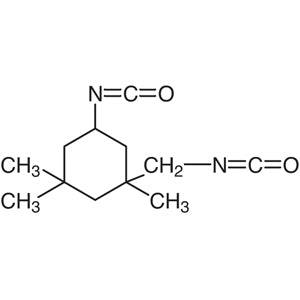
- TCI I0314 4098-71-9 Isophorone Diisocyanate (mixture of isomers)
- TCI D2380 5124-30-1 Dicyclohexylmethane 4,4'-Diisocyanate (mixture of isomers)
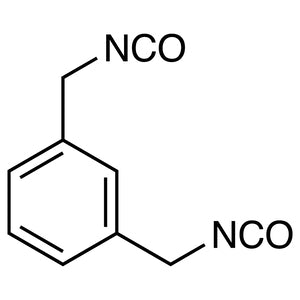
- TCI X0022 3634-83-1 m-Xylylene Diisocyanate
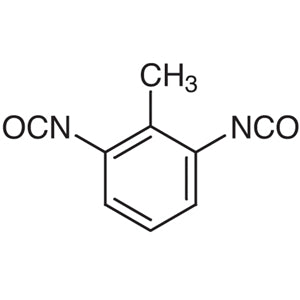
- TCI T1153 91-08-7 Tolylene-2,6-diisocyanate
- TCI T0264 26471-62-5 Tolylene Diisocyanate (2,4- ca. 80%, 2,6- ca. 20%)
- TCI T0263 584-84-9 Tolylene-2,4-diisocyanate
- Polyurethane synthesis: the two isocyanate groups react with hydroxyl groups on polyols to form urethane linkages, so this monomer can serve as the chain-linking component in small-scale polymer preparation.
- Polyurea formation: reaction of the isocyanate groups with amines produces urea linkages, which makes this diisocyanate suitable for researchers studying polymers built on urea-based connections between chains.
- Aliphatic polyurethane research: because the backbone contains no aromatic ring, it suits studies that specifically require a polyurethane free of aromatic groups in the polymer structure.
- Coating and adhesive formulation: research groups developing polyurethane-based coatings and adhesives can use it as a reactive component when testing how the monomer influences the properties of the formulation.
- Elastomer development: the methyl-branched isomer mixture may affect chain packing, so it is of interest to groups examining how monomer structure influences the flexibility and solubility of elastomeric polymers.
| Brand | TCI (product code T1176) |
|---|---|
| CAS number | 32052-51-0 |
| Molecular formula | — |
| Purity | — |
| Category | Materials Science > Polymer/Macromolecule Reagents > Monomers |
| Pack sizes | 25 mL, 100 mL, 500 mL |
| Physical form | — |
| Storage | keep tightly closed and protected from moisture |
- Composition: mixture of 2,2,4- and 2,4,4- isomers
Isocyanate groups react readily with water, alcohols, and amines, so this reagent should be stored tightly closed in a dry place, away from moisture and from incompatible chemicals. Keep the original container sealed whenever it is not in use, and avoid leaving it open to humid air. Handle it in a well-ventilated area or a fume hood, and wear suitable gloves, eye protection, and a laboratory coat. Use dry glassware and dry transfer tools to prevent unwanted reactions. Always consult the safety data sheet supplied with the product for specific hazard information, storage temperature, and disposal requirements before use.
—
Product Categories
Produk Terkait
-
IsophoroneDiisocyanate(mixtureofisomers) TCI I0314
Regular price From Rp 530.250,00Regular priceRp 370.650,00Sale price From Rp 530.250,00 -
Dicyclohexylmethane4,4'-Diisocyanate(mixtureofisomers) TCI D2380
Regular price Rp 795.900,00Regular priceRp 556.500,00Sale price Rp 795.900,00 -
m-XylyleneDiisocyanate TCI X0022
Regular price Rp 848.400,00Regular priceRp 593.250,00Sale price Rp 848.400,00 -
Tolylene-2,6-diisocyanate TCI T1153
Regular price From Rp 823.200,00Regular priceRp 575.400,00Sale price From Rp 823.200,00 -
TolyleneDiisocyanate(2,4-ca.80%,2,6-ca.20%) TCI T0264
Regular price From Rp 717.150,00Regular priceRp 500.850,00Sale price From Rp 717.150,00 -
Tolylene-2,4-diisocyanate TCI T0263
Regular price From Rp 505.050,00Regular priceRp 352.800,00Sale price From Rp 505.050,00 -
1,4-PhenyleneDiisocyanate TCI P1640
Regular price From Rp 2.491.650,00Regular priceRp 1.741.950,00Sale price From Rp 2.491.650,00 -
1,3-PhenyleneDiisocyanate TCI P1092
Regular price From Rp 955.500,00Regular priceRp 667.800,00Sale price From Rp 955.500,00