Tolylene-2,6-diisocyanate is an aromatic diisocyanate: a toluene molecule carrying two isocyanate groups at the two and six positions. The isocyanate group is highly reactive toward compounds with active hydrogen, such as alcohols, amines and water. TCI T1153 is supplied as a monomer reagent for polymer science, mainly for making polyurethanes and polyureas at research scale. In the laboratory it also serves as a crosslinking agent and as a derivatization reagent, which makes it a useful building block for both synthesis and method development.
Its defining feature is the pair of NCO groups, which can react in stages to form urethane or urea linkages. In the 2,6-isomer, the two groups flank the methyl group in a symmetric arrangement. Because of this, the reactivity and the chain structure of the resulting polymer can differ from those obtained with other isomers. That makes the reagent attractive to researchers who want to study how monomer structure relates to polymer properties. Because it is so reactive, the material is sensitive to moisture and must be handled with strict discipline.
In Indonesian laboratories, this reagent is used in research on polymers, coatings, adhesives and foams, mostly at small scale for formulation development. The 1 g, 5 g and 25 g pack sizes let researchers choose the amount that matches their work, from small exploratory trials to repeated experiments. AMI Scientific supplies it for research groups, university laboratories and development teams that need a dependable TCI monomer reagent for polymer work.
TCI brochures (PDF)
- Raw Materials for Polyimide Synthesis 2026-05-11 · p. 7
- Biomaterials Research Reagents 2025-02-19 · p. 17
- Monomers 2025-05-28 · p. 28
Related TCI products
- TCI T0264 26471-62-5 Tolylene Diisocyanate (2,4- ca. 80%, 2,6- ca. 20%)
- TCI T0263 584-84-9 Tolylene-2,4-diisocyanate
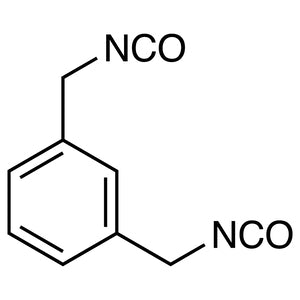
- TCI X0022 3634-83-1 m-Xylylene Diisocyanate
- TCI P1640 104-49-4 1,4-Phenylene Diisocyanate
- TCI P1092 123-61-5 1,3-Phenylene Diisocyanate
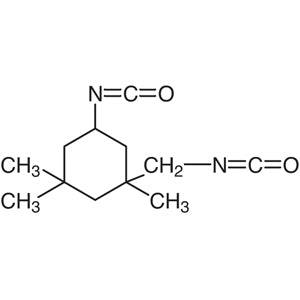
- TCI I0314 4098-71-9 Isophorone Diisocyanate (mixture of isomers)
- Polyurethane synthesis: the two isocyanate groups react with polyols to form urethane linkages, so this monomer suits small-scale polymer preparation and research on formulations.
- Polyurea preparation: the isocyanate groups react readily with amines to form urea bonds, which lets researchers build polyurea materials and examine how structure affects polymer behavior.
- Crosslinking studies: with two reactive NCO groups per molecule, it can link polymer chains containing active hydrogen groups, which is useful when testing how crosslinking changes material properties.
- Derivatization in analytical work: the reactive isocyanate group converts alcohols and amines into urethane or urea derivatives, which helps laboratories that need to modify analytes before further analysis.
- Structure–property research on isomers: its symmetric 2,6-substitution pattern lets researchers compare it with other diisocyanate isomers and see how monomer geometry influences reactivity and polymer chain structure.
| Brand | TCI |
|---|---|
| CAS number | 91-08-7 |
| Molecular formula | — |
| Purity | — |
| Category | Materials Science > Polymer/Macromolecule Reagents > Monomers |
| Pack sizes | 1 g, 5 g and 25 g |
| Physical form | — |
| Storage | moisture-sensitive; keep tightly closed and follow the label and safety data sheet |
- Product code: T1153
Tolylene-2,6-diisocyanate is moisture-sensitive, so it should be kept in its original tightly closed container, away from water and humid air. Follow the storage conditions printed on the label and in the safety data sheet. Reseal the container promptly after each use and avoid leaving it open on the bench. Use dry glassware and dry tools, and keep the reagent away from alcohols, amines and other compounds with active hydrogen unless a reaction is intended. Isocyanates are reactive chemicals, so work in a well-ventilated area or a fume hood. Wear suitable gloves, eye protection and a laboratory coat, and read the safety data sheet before starting. Dispose of waste according to your institution's chemical waste procedures.
—
Product Categories
- Polymer/Macromolecule ReagentsMonomersIsocyanate Monomers
- Polymer/Macromolecule ReagentsPolyimide Raw MaterialsDiisocyanates [Polyimide Raw Materials]
- Biomaterials/Biocompatible Materials Research ReagentsMonomers and Macromonomers [Biomaterials/Biocompatible Materials Research Reagents]Isocyanate Monomers [Biomaterials/Biocompatible Materials Research Reagents]
Produk Terkait
-
TolyleneDiisocyanate(2,4-ca.80%,2,6-ca.20%) TCI T0264
Regular price From Rp 717.150,00Regular priceRp 500.850,00Sale price From Rp 717.150,00 -
Tolylene-2,4-diisocyanate TCI T0263
Regular price From Rp 505.050,00Regular priceRp 352.800,00Sale price From Rp 505.050,00 -
m-XylyleneDiisocyanate TCI X0022
Regular price Rp 848.400,00Regular priceRp 593.250,00Sale price Rp 848.400,00 -
1,4-PhenyleneDiisocyanate TCI P1640
Regular price From Rp 2.491.650,00Regular priceRp 1.741.950,00Sale price From Rp 2.491.650,00 -
1,3-PhenyleneDiisocyanate TCI P1092
Regular price From Rp 955.500,00Regular priceRp 667.800,00Sale price From Rp 955.500,00 -
IsophoroneDiisocyanate(mixtureofisomers) TCI I0314
Regular price From Rp 530.250,00Regular priceRp 370.650,00Sale price From Rp 530.250,00 -
Dicyclohexylmethane4,4'-Diisocyanate(mixtureofisomers) TCI D2380
Regular price Rp 795.900,00Regular priceRp 556.500,00Sale price Rp 795.900,00 -
TrimethylhexamethyleneDiisocyanate(2,2,4-and2,4,4-mixture) TCI T1176
Regular price From Rp 743.400,00Regular priceRp 519.750,00Sale price From Rp 743.400,00