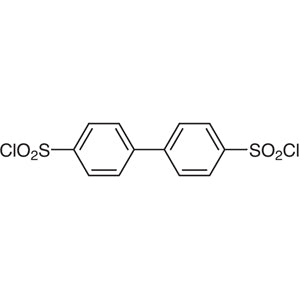
4,4'-Biphenyldisulfonic Acid is a chemical compound widely used in laboratory settings as a building block for constructing complex molecular structures. It plays a crucial role in organic synthesis, particularly in substitution and coupling reactions, where its unique chemical properties enable the formation of diverse compounds. This compound is a key component in the development of new materials, pharmaceuticals, and industrial chemicals, making it an essential tool for researchers and chemists. Its versatility and reliability make it a preferred choice in both academic and industrial research environments.
The compound is valued for its stable molecular structure and controllable reactivity, which allow for precise chemical reactions under various conditions. Its consistent chemical and physical properties ensure reproducibility in experiments, which is vital for scientific accuracy. Additionally, its availability in multiple packaging options makes it suitable for both small-scale and medium-scale laboratory applications. These attributes contribute to its popularity among scientists and researchers in Indonesia, where it is frequently used in chemical synthesis and research projects.
In Indonesian laboratories, 4,4'-Biphenyldisulfonic Acid is commonly used in scientific research and product development. It is relied upon by educational institutions and research organizations for experiments requiring precision and consistency. Its availability and quality make it a trusted material for both teaching and advanced research applications, supporting the growth of chemical sciences in the region.
Related TCI products
- TCI B1165 3406-84-6 4,4'-Biphenyldisulfonyl Chloride
- TCI V0037 330581-20-9 Disodium 1-Naphthol-3,6-disulfonate Hydrate
- TCI N0268 525-05-3 Disodium 1-Nitroso-2-naphthol-3,6-disulfonate Monohydrate
- TCI A0263 24605-36-5 Aniline-2,5-disulfonic Acid Monosodium Salt
- TCI A0308 853-68-9 Disodium Anthraquinone-2,6-disulfonate
- TCI A0337 842-15-9 Monopotassium 7-Amino-1,3-naphthalenedisulfonate Hydrate
- Organic synthesis applications benefit from its role in constructing complex molecular structures through substitution and coupling reactions.
- Pharmaceutical research utilizes it to develop new compounds with potential therapeutic applications.
- Material science experiments use it to create advanced polymers and functional materials with specific properties.
- Industrial chemical production relies on its stability and reactivity for manufacturing processes requiring controlled chemical transformations.
- Educational laboratories use it for teaching and demonstrating key chemical reaction mechanisms and synthesis techniques.
| Brand | TCI |
|---|---|
| CAS number | 5314-37-4 |
| Molecular formula | — |
| Purity | — |
| Category | Chemistry > Building Blocks > Non-Heterocyclic Building Blocks |
| Pack sizes | Available in various sizes to suit different laboratory needs |
| Physical form | Solid |
| Storage | Store in a cool, dry place away from direct sunlight |
4,4'-Biphenyldisulfonic Acid should be stored in a cool, dry environment to maintain its chemical stability. It is recommended to use airtight containers to prevent moisture absorption and contamination. Due to its chemical nature, it should be handled with appropriate personal protective equipment, such as gloves and safety goggles, to ensure laboratory safety. It is important to avoid exposure to heat and direct light, as these conditions may affect its properties. Proper storage and handling practices help preserve the compound's integrity and ensure safe usage in laboratory settings. Always follow standard laboratory safety protocols when working with this material.
—
Produk Terkait
-
4,4'-BiphenyldisulfonylChloride TCI B1165
Regular price From Rp 1.220.100,00Regular priceRp 852.600,00Sale price From Rp 1.220.100,00 -
Disodium1-Naphthol-3,6-disulfonateHydrate TCI V0037
Regular price Rp 584.850,00Regular priceRp 408.450,00Sale price Rp 584.850,00 -
Disodium1-Nitroso-2-naphthol-3,6-disulfonateMonohydrate TCI N0268
Regular price From Rp 1.035.300,00Regular priceRp 723.450,00Sale price From Rp 1.035.300,00 -
Aniline-2,5-disulfonicAcidMonosodiumSalt TCI A0263
Regular price From Rp 980.700,00Regular priceRp 685.650,00Sale price From Rp 980.700,00 -
DisodiumAnthraquinone-2,6-disulfonate TCI A0308
Regular price From Rp 5.300.400,00Regular priceRp 3.722.250,00Sale price From Rp 5.300.400,00 -
Monopotassium7-Amino-1,3-naphthalenedisulfonateHydrate TCI A0337
Regular price From Rp 903.000,00Regular priceRp 631.050,00Sale price From Rp 903.000,00 -
1,3-Benzenedisulfonamide TCI B4917
Regular price From Rp 2.332.050,00Regular priceRp 1.646.400,00Sale price From Rp 2.332.050,00 -
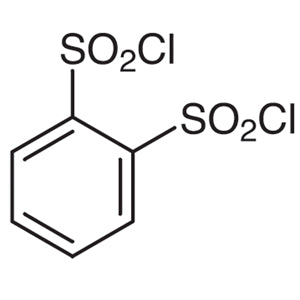
1,2-BenzenedisulfonylDichloride TCI B1128
Regular price From Rp 2.889.600,00Regular priceRp 2.020.200,00Sale price From Rp 2.889.600,00