2,2-Bis[3,5-dibromo-4-(2,3-dibromopropoxy)phenyl]propane is a chemical compound widely used in materials science research, particularly in polymer and macromolecule studies. This compound serves as a key additive in polymer synthesis, enabling the modification of mechanical, thermal, and electrical properties of various materials. Its complex structure, containing bromine atoms and propoxy groups, makes it highly reactive and compatible with a wide range of polymer matrices. This versatility makes it an essential tool for researchers aiming to enhance the performance of synthetic materials.
The unique chemical properties of this compound, including its reactivity and compatibility with different polymer systems, make it a preferred choice for advanced material development. Its ability to act as a foam inhibitor or filler in polymer formulations further expands its applications. The presence of multiple bromine atoms contributes to its stability and functional versatility, allowing it to be tailored for specific material requirements. These characteristics are crucial for achieving desired material properties in both academic and industrial settings.
In Indonesian laboratories, this compound is commonly used in material science research, especially in the development of new polymers or the modification of existing materials. Researchers in educational institutions and research centers rely on this additive to explore innovative material solutions. Its role in enhancing polymer performance aligns with the growing demand for advanced materials in various industrial applications within the region.
TCI brochures (PDF)
- Polymer Additives 2026-04-16 · p. 5
Related TCI products
- TCI I0355 52434-90-9 Tris(2,3-dibromopropyl) Isocyanurate
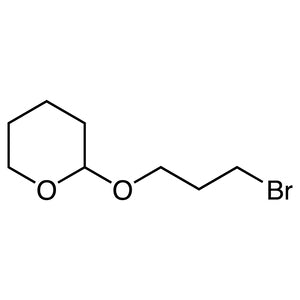
- TCI B3187 33821-94-2 2-(3-Bromopropoxy)tetrahydro-2H-pyran (stabilized with K2CO3)
- TCI T4294 63666-10-4 3-(1,1,2-Trimethyl-1H-benzo[e]indol-3-ium-3-yl)propane-1-sulfonate
- TCI B4807 79922-55-7 2,2-Bis[4-(4-maleimidophenoxy)phenyl]propane
- TCI B3026 2,2-Bis[4-(per-O-methyl-alpha-cyclodextrin-6-yloxy)phenyl]propane
- TCI B2192 59831-02-6 [1,3-Bis(diphenylphosphino)propane]palladium(II) Dichloride
- Polymer Modification: This compound is ideal for modifying polymer properties, offering enhanced mechanical and thermal stability.
- Foam Inhibition: Its chemical structure makes it effective in preventing foam formation during polymer processing.
- Material Stability Enhancement: It contributes to the long-term stability of polymer-based materials under various environmental conditions.
- Additive Compatibility: It is compatible with a wide range of polymer matrices, making it suitable for diverse material formulations.
- Research and Development: It is extensively used in R&D projects focused on creating new or improved polymer materials.
| Brand | TCI |
|---|---|
| CAS number | 21850-44-2 |
| Molecular formula | — |
| Purity | — |
| Category | Materials Science > Polymer/Macromolecule Reagents > Polymer Additives |
| Pack sizes | Available in various quantities as per standard laboratory supply |
| Physical form | Solid |
| Storage | Store in a cool, dry place away from direct sunlight |
This compound should be stored in a cool, dry environment, away from direct sunlight and sources of heat. It is recommended to use airtight containers to prevent moisture absorption and contamination. Due to its chemical composition, it should be handled with appropriate personal protective equipment, such as gloves and safety goggles, to ensure laboratory safety. It is important to keep it away from incompatible substances to avoid any potential chemical reactions. Proper labeling and storage conditions are essential to maintain its integrity and ensure safe usage in laboratory settings.
—
Produk Terkait
-
Tris(2,3-dibromopropyl)Isocyanurate TCI I0355
Regular price From Rp 530.250,00Regular priceRp 386.400,00Sale price From Rp 530.250,00 -
2-(3-Bromopropoxy)tetrahydro-2H-pyran(stabilizedwithK2CO3) TCI B3187
Regular price From Rp 1.988.700,00Regular priceRp 1.405.950,00Sale price From Rp 1.988.700,00 -
3-(1,1,2-Trimethyl-1H-benzo[e]indol-3-ium-3-yl)propane-1-sulfonate TCI T4294
Regular price From Rp 557.550,00Regular priceRp 405.300,00Sale price From Rp 557.550,00 -
2,2-Bis[4-(4-maleimidophenoxy)phenyl]propane TCI B4807
Regular price From Rp 1.618.050,00Regular priceRp 1.146.600,00Sale price From Rp 1.618.050,00 -
TCI B3026 2,2-Bis[4-(per-O-methyl-alpha-cyclodextrin-6-yloxy)phenyl]propane
Regular price Rp 5.910.450,00Regular priceRp 4.148.550,00Sale price Rp 5.910.450,00 -
[1,3-Bis(diphenylphosphino)propane]palladium(II)Dichloride TCI B2192
Regular price From Rp 2.199.750,00Regular priceRp 1.554.000,00Sale price From Rp 2.199.750,00 -
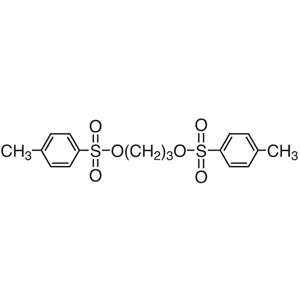
1,3-Bis(tosyloxy)propane TCI B1875
Regular price From Rp 689.850,00Regular priceRp 481.950,00Sale price From Rp 689.850,00 -
2,2-Bis(4-glycidyloxyphenyl)propane TCI B1796
Regular price From Rp 1.115.100,00Regular priceRp 779.100,00Sale price From Rp 1.115.100,00