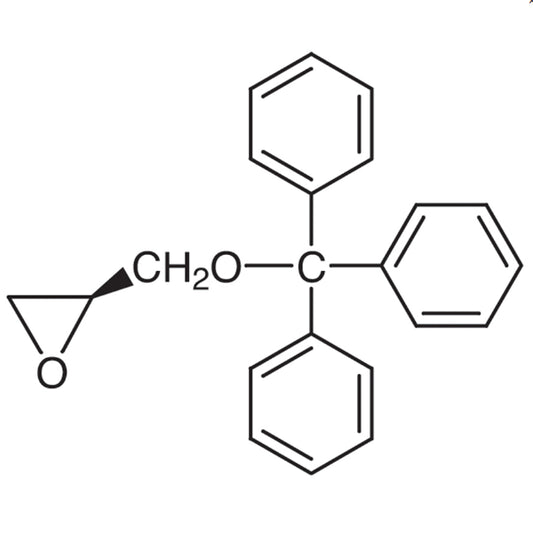
Benzyl (S)-(+)-Glycidyl Ether is a chiral compound widely used in asymmetric synthesis and the creation of complex molecular structures. This material plays a crucial role in laboratories focused on organic chemistry and pharmaceutical research, where precise control over stereochemistry is essential. Its unique chiral structure makes it an ideal building block for synthesizing biologically active compounds with specific spatial configurations. Due to its importance in creating molecules with defined stereochemistry, it is frequently utilized in advanced chemical and medicinal research.
The compound’s chiral nature and chemical stability under certain conditions make it a preferred choice for researchers aiming to achieve high selectivity in synthetic processes. Its ability to participate in various chemical reactions without undergoing unwanted side reactions enhances its utility in laboratory settings. Additionally, its compatibility with a range of solvents and reagents allows for greater flexibility in experimental design. These properties contribute to its popularity among scientists working on complex molecular synthesis and drug development.
In Indonesian laboratories, Benzyl (S)-(+)-Glycidyl Ether is commonly used in organic chemistry and pharmaceutical research. It is a key component in the development of new therapeutic agents and the study of molecular structures. Many research institutions and universities in Indonesia rely on this compound for its role in creating molecules with specific biological activities, supporting both academic and industrial research efforts.
TCI brochures (PDF)
- Epoxide Monomers 2025-09-19 · p. 4
- Chiral Building Blocks 2025-04-14 · p. 12
Related TCI products
- Asymmetric Synthesis: This compound is ideal for creating chiral molecules with high stereocontrol, making it essential for pharmaceutical research and drug development.
- Organic Chemistry Research: Its unique structure allows for the synthesis of complex organic compounds, supporting advanced chemical investigations.
- Pharmaceutical Development: It is used as a building block in the synthesis of biologically active compounds, aiding in the creation of new therapeutic agents.
- Molecular Structure Studies: The compound's chiral nature enables precise control over molecular configurations, supporting research into stereochemistry and molecular interactions.
- Academic Research: Widely used in Indonesian universities and research institutions for teaching and experimental work in synthetic chemistry and medicinal chemistry.
| Brand | TCI |
|---|---|
| CAS number | 16495-13-9 |
| Molecular formula | — |
| Purity | — |
| Category | Chemistry > Asymmetric Synthesis > Chiral Building Blocks |
| Pack sizes | — |
| Physical form | — |
| Storage | Store in a cool, dry place away from light and moisture |
This compound should be stored in a cool, dry place, away from direct light and moisture to maintain its chemical stability. It is recommended to use airtight containers to prevent exposure to air and humidity, which could potentially affect its integrity. Due to its chiral nature, it is important to handle the compound with care to avoid contamination or unintended stereochemical changes. In laboratory settings, it should be kept in a secure location, away from incompatible substances. Always follow standard safety protocols when handling and storing chemical compounds to ensure a safe working environment.
—
Produk Terkait
-
Benzyl(R)-(-)-GlycidylEther TCI B2238
Regular price From Rp 530.250,00Regular priceRp 370.650,00Sale price From Rp 530.250,00 -
(S)-GlycidylPhenylEther TCI G0410
Regular price From Rp 1.140.300,00Regular priceRp 796.950,00Sale price From Rp 1.140.300,00 -
(R)-GlycidylPhenylEther TCI G0409
Regular price Rp 5.194.350,00Regular priceRp 3.631.950,00Sale price Rp 5.194.350,00 -
(S)-GlycidylTritylEther TCI G0285
Regular price From Rp 1.829.100,00Regular priceRp 1.278.900,00Sale price From Rp 1.829.100,00 -
(R)-GlycidylTritylEther TCI G0284
Regular price From Rp 1.140.300,00Regular priceRp 796.950,00Sale price From Rp 1.140.300,00 -
(S)-GlycidylMethylEther TCI G0281
Regular price From Rp 2.439.150,00Regular priceRp 1.705.200,00Sale price From Rp 2.439.150,00 -
(R)-GlycidylMethylEther TCI G0280
Regular price From Rp 2.969.400,00Regular priceRp 2.075.850,00Sale price From Rp 2.969.400,00 -
(2S)-(+)-Glycidylp-Toluenesulfonate TCI T1612
Regular price From Rp 1.220.100,00Regular priceRp 852.600,00Sale price From Rp 1.220.100,00