Biotin Hydrazide TCI B2431 is a chemical compound widely used in biochemical and molecular conjugation applications within laboratory settings. This reagent plays a crucial role in facilitating the formation of stable bonds between molecules, particularly through specific chemical reactions. Its unique structure enables it to act as a versatile linker, making it an essential tool for researchers working on conjugation chemistry and click chemistry. In the laboratory, Biotin Hydrazide is often employed to create biotin-labeled molecules, which are vital for various diagnostic and research purposes.
The compound is favored for its high reactivity and stability under controlled conditions, allowing it to efficiently participate in conjugation reactions. Its chemical properties ensure rapid and effective bonding with target molecules, enhancing the efficiency of experimental processes. Additionally, Biotin Hydrazide exhibits relatively low toxicity, making it a safe option for use in a wide range of experimental scales. These characteristics contribute to its popularity among scientists and researchers in various fields.
In Indonesian laboratories, Biotin Hydrazide is commonly used in biochemical, pharmacological, and biotechnological research. It is particularly relevant in studies involving biotin-antigen or biotin-antibody conjugates, which are essential for immunoassays and molecular labeling. Its reliability and performance make it a preferred choice for both academic and industrial research applications.
TCI brochures (PDF)
- Europium Fluorescent Labeling Reagent and Labeled Probes 2025-01-30 · p. 4
- Streptavidins and Related Reagents 2025-02-28 · p. 3
- Biotinylation Reagents and Avidins 2025-06-26 · p. 2
- Bioconjugation Reagents 2026-07-07 · p. 3
- Reagents for Biological Research 2025-03-11 · p. 16
- Biotin-antigen conjugation: This item is ideal for creating stable biotin-antigen complexes, enhancing detection sensitivity in immunoassays.
- Antibody labeling: It facilitates the attachment of biotin to antibodies, enabling efficient detection and purification in biochemical experiments.
- Molecular labeling: Its reactivity allows for precise labeling of target molecules, supporting various analytical techniques in research.
- Click chemistry experiments: Biotin Hydrazide is well-suited for click chemistry due to its efficient and selective reaction properties.
- Diagnostic reagent development: It is used in the formulation of diagnostic kits, where specificity and stability are critical for accurate results.
| Brand | TCI |
|---|---|
| CAS number | 66640-86-6 |
| Molecular formula | — |
| Purity | — |
| Category | Chemistry > Chemical Biology > Conjugation Chemistry/Click Chemistry |
| Pack sizes | Available in various quantities as per supplier specifications |
| Physical form | Solid (as per standard product description) |
| Storage | Store in a cool, dry place away from moisture and direct sunlight |
Biotin Hydrazide should be stored in a cool, dry environment to maintain its chemical stability and reactivity. It is recommended to keep the compound in a sealed container to prevent exposure to moisture and air, which could affect its performance. Laboratory personnel should handle the material with care, using appropriate personal protective equipment such as gloves and safety goggles. Due to its relatively low toxicity, it is generally safe to work with, but standard laboratory safety protocols should still be followed. Proper labeling of storage containers is essential to ensure safe handling and prevent accidental exposure. The compound should not be stored near incompatible substances or in areas with high humidity to preserve its integrity and effectiveness.
—
Product Categories
- Biochemicals and ReagentsBioconjugationBiotins and Streptavidins
- Pharmaceutical Development and Drug Discovery ResearchBioconjugationBiotins and Streptavidins
- Pharmaceutical Development and Drug Discovery ResearchConjugation Chemistry/Click ChemistryAldehyde Reactive Fluorophores and Labels [Conjugation Chemistry/Click Chemistry]
Produk Terkait
-
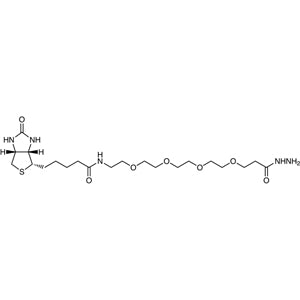
Biotin-PEG4-Hydrazide TCI B5578
Regular price Rp 2.306.850,00Regular priceRp 1.628.550,00Sale price Rp 2.306.850,00 -
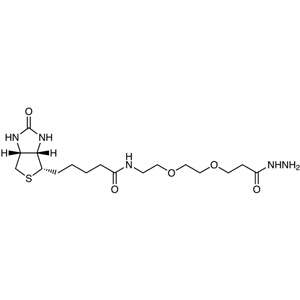
Biotin-PEG2-Hydrazide TCI B5577
Regular price From Rp 3.949.050,00Regular priceRp 2.777.250,00Sale price From Rp 3.949.050,00 -
Biotin-PEG3-Azide TCI A2523
Regular price Rp 4.373.250,00Regular priceRp 3.073.350,00Sale price Rp 4.373.250,00 -
Biotin-PEG4-Azide TCI B5546
Regular price Rp 7.949.550,00Regular priceRp 5.574.450,00Sale price Rp 7.949.550,00 -
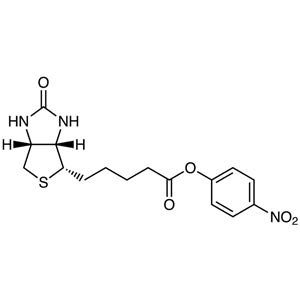
(+)-Biotin4-NitrophenylEster TCI B4009
Regular price Rp 1.510.950,00Regular priceRp 1.072.050,00Sale price Rp 1.510.950,00 -
Biotin-PEG3-Amine TCI B3172
Regular price From Rp 2.914.800,00Regular priceRp 2.053.800,00Sale price From Rp 2.914.800,00 -
Biotin-PEG2-Amine TCI B3171
Regular price From Rp 3.074.400,00Regular priceRp 2.165.100,00Sale price From Rp 3.074.400,00 -
Biotin-PEG11-Amine TCI B5565
Regular price From Rp 2.650.200,00Regular priceRp 1.869.000,00Sale price From Rp 2.650.200,00