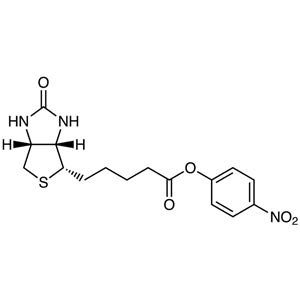
Biotin-PEG3-Azide is a chemical compound widely used in biochemical and molecular biology applications. It serves as a versatile reagent in conjugation chemistry and click chemistry, enabling the efficient and specific modification of biomolecules. This compound combines biotin, known for its high affinity to avidin, with an azide group, which is essential in click chemistry reactions. Its dual functionality makes it a key tool for researchers aiming to create bioconjugates with high specificity and stability.
The properties of Biotin-PEG3-Azide make it a preferred choice in laboratory settings. It exhibits chemical stability and high biocompatibility due to the presence of a polyethylene glycol (PEG) chain. This PEGylation reduces non-specific reactivity and enhances solubility in aqueous environments. Additionally, its ability to specifically bind to avidin or streptavidin ensures reliable and reproducible results in various experimental setups. These characteristics make it ideal for applications requiring precision and efficiency.
In Indonesian laboratories, Biotin-PEG3-Azide is commonly used in molecular biology, pharmacology, and biomedical research. It plays a crucial role in the development of biosensors, molecular conjugation, and biomolecule modification. Its reliability and effectiveness make it a staple in research focused on creating targeted and functional biomolecular systems.
TCI brochures (PDF)
- Bio-Orthogonal Non-Canonical Amino Acid Tagging (BONCAT) Related Reagents 2025-12-23 · p. 1
- Europium Fluorescent Labeling Reagent and Labeled Probes 2025-01-30 · p. 4
- Streptavidins and Related Reagents 2025-02-28 · p. 4
- Biotinylation Reagents and Avidins 2025-06-26 · p. 2
- Bioconjugation Reagents 2026-07-07 · p. 3
- Click Chemistry 2026-09-08 · p. 8
- Molecular biology research utilizes Biotin-PEG3-Azide for creating bioconjugates that enable specific molecular interactions and labeling.
- Biosensor development benefits from this compound due to its ability to form stable and specific bonds with avidin, enhancing detection accuracy.
- Pharmacological studies employ it for modifying drug molecules to improve targeting and reduce off-target effects through click chemistry.
- Biomedical applications rely on its biocompatibility and specificity for designing therapeutic agents and diagnostic tools.
- Protein engineering projects use it to attach functional groups to proteins, facilitating studies on structure, function, and interaction dynamics.
| Brand | TCI |
|---|---|
| CAS number | 875770-34-6 |
| Molecular formula | — |
| Purity | — |
| Category | Chemistry > Chemical Biology > Conjugation Chemistry/Click Chemistry |
| Pack sizes | Available in various quantities as per supplier specifications |
| Physical form | Solid or powder, depending on formulation |
| Storage | Store at controlled room temperature, away from moisture and light |
Biotin-PEG3-Azide should be stored in a cool, dry place, away from direct sunlight and sources of heat. It is recommended to keep the compound in a sealed container to prevent moisture absorption, which could affect its stability. When handling, it is important to use appropriate personal protective equipment, such as gloves and safety goggles, to avoid skin contact or inhalation. The compound should be stored in a well-ventilated area to ensure safe laboratory practices. Proper labeling of containers is essential for easy identification and safe handling. Always follow standard laboratory safety protocols when working with chemical reagents to maintain a secure and efficient research environment.
—
Product Categories
- Chemical BiologyConjugation Chemistry/Click ChemistryAzides [Conjugation Chemistry/Click Chemistry]
- Chemical BiologyConjugation Chemistry/Click ChemistryBiotin Azides/Alkynes [Conjugation Chemistry/Click Chemistry]
- Chemical BiologyConjugation Chemistry/Click ChemistryPEG Azides/Alkynes [Conjugation Chemistry/Click Chemistry]
- Chemical BiologyGlycoscienceReagents for Oligosaccharide Synthesis [Glycoscience]
- Chemical BiologyBioconjugationBiotins and Streptavidins
- GlycoscienceReagents for Oligosaccharide Synthesis [Glycoscience]
- Biochemicals and ReagentsBioconjugationBiotins and Streptavidins
- Pharmaceutical Development and Drug Discovery ResearchBioconjugationBiotins and Streptavidins
- Pharmaceutical Development and Drug Discovery ResearchConjugation Chemistry/Click ChemistryAzides [Conjugation Chemistry/Click Chemistry]
- Pharmaceutical Development and Drug Discovery ResearchConjugation Chemistry/Click ChemistryBiotin Azides/Alkynes [Conjugation Chemistry/Click Chemistry]
- Pharmaceutical Development and Drug Discovery ResearchConjugation Chemistry/Click ChemistryPEG Azides/Alkynes [Conjugation Chemistry/Click Chemistry]
Produk Terkait
-
Biotin-PEG4-Azide TCI B5546
Regular price Rp 7.949.550,00Regular priceRp 5.574.450,00Sale price Rp 7.949.550,00 -
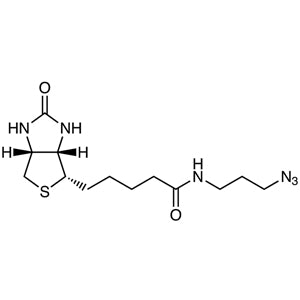
N-(3-Azidopropyl)biotinamide TCI A2524
Regular price Rp 10.069.500,00Regular priceRp 7.057.050,00Sale price Rp 10.069.500,00 -
SodiumAzide TCI S0489
Regular price Rp 875.700,00Regular priceRp 612.150,00Sale price Rp 875.700,00 -
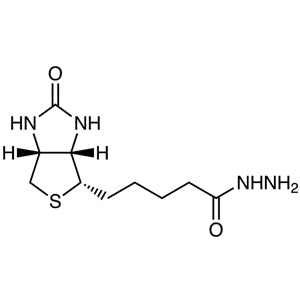
BiotinHydrazide TCI B2431
Regular price From Rp 1.326.150,00Regular priceRp 942.900,00Sale price From Rp 1.326.150,00 -
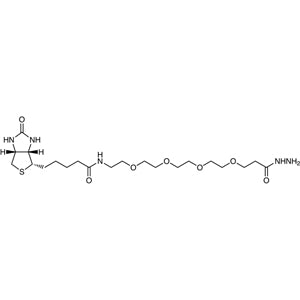
Biotin-PEG4-Hydrazide TCI B5578
Regular price Rp 2.306.850,00Regular priceRp 1.628.550,00Sale price Rp 2.306.850,00 -
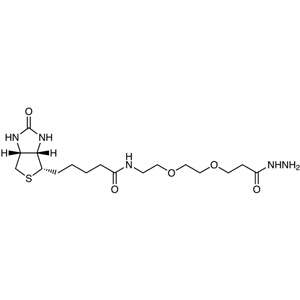
Biotin-PEG2-Hydrazide TCI B5577
Regular price From Rp 3.949.050,00Regular priceRp 2.777.250,00Sale price From Rp 3.949.050,00 -
AzideTrifluoroacetate TCI A2914
Regular price Rp 2.782.500,00Regular priceRp 1.961.400,00Sale price Rp 2.782.500,00 -
(+)-Biotin4-NitrophenylEster TCI B4009
Regular price Rp 1.510.950,00Regular priceRp 1.072.050,00Sale price Rp 1.510.950,00