Biotin-PEG3-Amine is a chemical compound widely used in laboratory settings for bioconjugation applications. It serves as a versatile linker molecule that enables the attachment of biomolecules such as proteins, antibodies, and enzymes to various substrates. This compound is particularly valuable in biochemical and biomedical research due to its ability to facilitate stable and specific molecular interactions. Its role in conjugation processes makes it an essential tool for researchers aiming to develop advanced diagnostic tools and therapeutic agents.
The compound's unique properties make it a preferred choice in laboratory environments. Biotin-PEG3-Amine combines the strong binding affinity of biotin with the hydrophilic and stabilizing characteristics of PEG3. The presence of PEG3 reduces molecular reactivity, minimizes unwanted interactions, and enhances solubility in both organic and aqueous solvents. These features contribute to its reliability and effectiveness in a wide range of experimental conditions. Additionally, its amphipathic nature allows it to function in diverse reaction environments, making it adaptable for various conjugation methods.
In Indonesian laboratories, Biotin-PEG3-Amine is extensively used in biochemistry and pharmacology research. It plays a key role in the development of biosensors, drug delivery systems, and molecular analysis techniques. Its stability and compatibility with multiple substrates make it a go-to reagent for scientists working on complex biochemical projects. Its application is particularly prominent in academic and industrial research settings where precision and reproducibility are critical.
TCI brochures (PDF)
- trans-Cyclooctenes Tetrazine Selective Conjugation Reagents 2026-04-23 · p. 3
- Streptavidins and Related Reagents 2025-02-28 · p. 3
- Biotinylation Reagents and Avidins 2025-06-26 · p. 1
- Bioconjugation Reagents 2026-07-07 · p. 3
- Reagents for Biological Research 2025-03-11 · p. 16
- Bioconjugation Research: Biotin-PEG3-Amine is ideal for linking biomolecules due to its strong biotin-avidin interaction and PEG3 stabilization.
- Biosensor Development: The compound enhances sensitivity and specificity in biosensor applications by enabling stable molecular attachment.
- Drug Delivery Systems: Its hydrophilic nature and stability make it suitable for creating targeted drug delivery platforms.
- Molecular Analysis: Biotin-PEG3-Amine facilitates accurate detection and analysis of biomolecules in various analytical techniques.
- Protein Modification: It is used to modify proteins for enhanced solubility, reduced immunogenicity, and improved functional properties.
From the TCI brochure
- Reacts with TCO-NHS axial isomer (practical example)
| Brand | TCI |
|---|---|
| CAS number | 359860-27-8 |
| Molecular formula | — |
| Purity | — |
| Category | Chemistry > Chemical Biology > Bioconjugation |
| Pack sizes | Available in various sizes as per supplier specifications |
| Physical form | Solid or powder, depending on the supplier |
| Storage | Store in a cool, dry place away from light and moisture |
Data from the TCI brochure
| Jumlah | 1.2 equiv.; 9.2 mg (0.022 mmol) (dengan T4456 5.0 mg (0.018 mmol), triethylamine 1.2 equiv., asetonitril, r.t., 30 min) |
|---|
Source: TCI brochure LL100 (2026-04-23)
Biotin-PEG3-Amine should be stored in a cool, dry place, away from direct light and moisture to maintain its stability and effectiveness. It is recommended to use airtight containers to prevent exposure to humidity and contaminants. In a laboratory setting, it is important to handle the compound with care, using appropriate personal protective equipment such as gloves and safety goggles. Ensure that the compound is kept in a secure location, away from incompatible materials. Regular monitoring of storage conditions is advised to ensure the integrity of the product. Proper labeling of containers is essential for safe handling and to prevent accidental misuse.
—
Produk Terkait
-
Biotin-PEG2-Amine TCI B3171
Regular price From Rp 3.074.400,00Regular priceRp 2.165.100,00Sale price From Rp 3.074.400,00 -
Biotin-PEG11-Amine TCI B5565
Regular price From Rp 2.650.200,00Regular priceRp 1.869.000,00Sale price From Rp 2.650.200,00 -
Biotin-PEG4-Amine TCI B5560
Regular price From Rp 1.563.450,00Regular priceRp 1.108.800,00Sale price From Rp 1.563.450,00 -
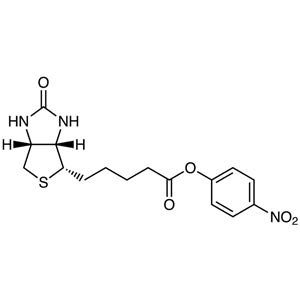
(+)-Biotin4-NitrophenylEster TCI B4009
Regular price Rp 1.510.950,00Regular priceRp 1.072.050,00Sale price Rp 1.510.950,00 -
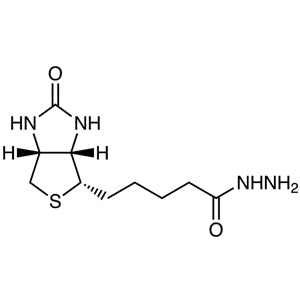
BiotinHydrazide TCI B2431
Regular price From Rp 1.326.150,00Regular priceRp 942.900,00Sale price From Rp 1.326.150,00 -
Biotin-PEG3-Azide TCI A2523
Regular price Rp 4.373.250,00Regular priceRp 3.073.350,00Sale price Rp 4.373.250,00 -
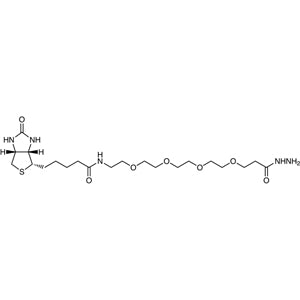
Biotin-PEG4-Hydrazide TCI B5578
Regular price Rp 2.306.850,00Regular priceRp 1.628.550,00Sale price Rp 2.306.850,00 -
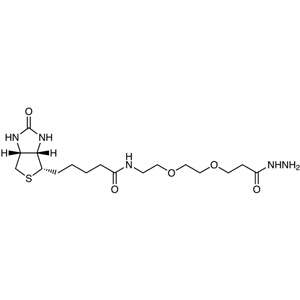
Biotin-PEG2-Hydrazide TCI B5577
Regular price From Rp 3.949.050,00Regular priceRp 2.777.250,00Sale price From Rp 3.949.050,00