Biotin-PEG2-Amine is a chemical compound widely used in bioconjugation applications within laboratory settings. It combines biotin with a two-unit polyethylene glycol (PEG) chain and an amino group at the terminal end. This unique structure enables it to serve as a versatile linker molecule in biochemical research. Its ability to bind specifically to avidin or streptavidin makes it a key component in various molecular modification and labeling techniques. The compound plays a critical role in attaching biomolecules such as proteins, nucleic acids, and antigens to surfaces or other molecules with high specificity and efficiency.
The preferred choice for researchers is due to its stability, non-toxicity, and compatibility with a wide range of biochemical processes. The PEGylation aspect reduces immunogenicity and enhances solubility, making it ideal for applications requiring prolonged stability. The amino group at the end allows for further chemical modifications, enabling the creation of custom conjugates tailored for specific experimental needs. These properties make Biotin-PEG2-Amine a reliable and flexible tool in modern bioconjugation strategies.
In Indonesian laboratories, Biotin-PEG2-Amine is commonly used in biochemical research, diagnostic testing, and drug development. It is particularly relevant in studies involving molecular labeling, surface modification, and conjugate formation. Its role in enabling precise molecular interactions supports advancements in biotechnology and life sciences research. The compound is a valuable resource for scientists working on complex biological systems and molecular interactions.
TCI brochures (PDF)
- Streptavidins and Related Reagents 2025-02-28 · p. 3
- Biotinylation Reagents and Avidins 2025-06-26 · p. 1
- Bioconjugation Reagents 2026-07-07 · p. 3
- Reagents for Biological Research 2025-03-11 · p. 16
- Bioconjugation Research: This compound is ideal for creating conjugates between biomolecules and surfaces, allowing precise molecular attachment in various biochemical experiments.
- Diagnostic Assays: It is used in immunoassays and molecular detection techniques due to its strong binding affinity with avidin and streptavidin, enhancing sensitivity and specificity.
- Protein Modification: The amino group enables chemical modification of proteins, facilitating the creation of functionalized proteins for therapeutic or research purposes.
- Surface Functionalization: It is applied in modifying surfaces for bioactive coatings, which is crucial in biosensor development and cell culture applications.
- Drug Delivery Systems: The PEG chain improves the solubility and stability of drug molecules, making it useful in designing targeted drug delivery formulations.
| Brand | TCI |
|---|---|
| CAS number | 138529-46-1 |
| Molecular formula | — |
| Purity | — |
| Category | Chemistry > Chemical Biology > Bioconjugation |
| Pack sizes | Available in various quantities as per standard laboratory supply |
| Physical form | Solid powder |
| Storage | Store at controlled room temperature, away from moisture and light |
Biotin-PEG2-Amine should be stored in a cool, dry place, away from direct sunlight and sources of heat. It is recommended to keep the compound in a sealed container to prevent moisture absorption, which could affect its stability. Due to its chemical nature, it is advisable to handle it in a well-ventilated area and avoid prolonged skin contact. The compound is non-toxic but should be treated with standard laboratory safety precautions. Proper labeling and storage conditions ensure the integrity of the material and its effectiveness in experimental applications. Always follow standard safety protocols when working with chemical compounds to maintain a safe laboratory environment.
—
Produk Terkait
-
Biotin-PEG3-Amine TCI B3172
Regular price From Rp 2.914.800,00Regular priceRp 2.053.800,00Sale price From Rp 2.914.800,00 -
Biotin-PEG11-Amine TCI B5565
Regular price From Rp 2.650.200,00Regular priceRp 1.869.000,00Sale price From Rp 2.650.200,00 -
Biotin-PEG4-Amine TCI B5560
Regular price From Rp 1.563.450,00Regular priceRp 1.108.800,00Sale price From Rp 1.563.450,00 -
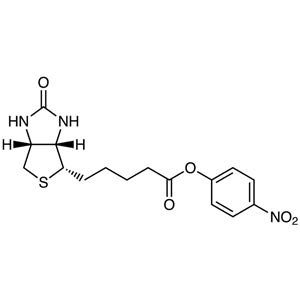
(+)-Biotin4-NitrophenylEster TCI B4009
Regular price Rp 1.510.950,00Regular priceRp 1.072.050,00Sale price Rp 1.510.950,00 -
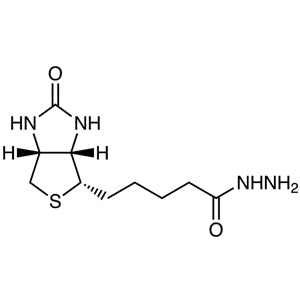
BiotinHydrazide TCI B2431
Regular price From Rp 1.326.150,00Regular priceRp 942.900,00Sale price From Rp 1.326.150,00 -
Biotin-PEG3-Azide TCI A2523
Regular price Rp 4.373.250,00Regular priceRp 3.073.350,00Sale price Rp 4.373.250,00 -
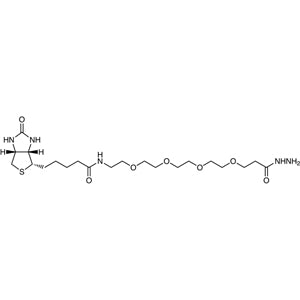
Biotin-PEG4-Hydrazide TCI B5578
Regular price Rp 2.306.850,00Regular priceRp 1.628.550,00Sale price Rp 2.306.850,00 -
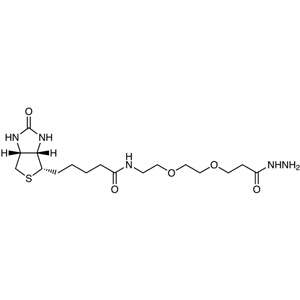
Biotin-PEG2-Hydrazide TCI B5577
Regular price From Rp 3.949.050,00Regular priceRp 2.777.250,00Sale price From Rp 3.949.050,00