3-Benzyloxy-4-methoxybenzaldehyde is a chemical compound widely used as a building block in the synthesis of complex molecules. It plays a crucial role in organic chemistry laboratories, where it serves as a versatile intermediate for constructing larger molecular structures. This compound is particularly valuable for its ability to participate in various chemical reactions, making it an essential tool for researchers aiming to develop new compounds with specific functional groups. Its presence in laboratory workflows supports the design and execution of synthetic pathways that require precise control over molecular architecture.
The compound’s stable molecular structure and predictable chemical behavior make it a preferred choice for laboratory applications. It exhibits compatibility with multiple reaction conditions, allowing for flexibility in experimental setups. Its functional groups, including the aldehyde and benzyloxy moieties, enable it to be modified through a range of chemical transformations, such as substitution, reduction, and condensation reactions. These characteristics ensure that it remains a reliable and consistent material for scientific research.
In Indonesian laboratories, 3-Benzyloxy-4-methoxybenzaldehyde is commonly used in pharmaceutical and organic chemistry research. It is accessible through local suppliers, facilitating its use in academic and industrial settings. Its availability supports a wide range of research activities, from drug development to the creation of new chemical materials. This compound is integral to the work of chemists and scientists in Indonesia, contributing to advancements in various scientific fields.
Related TCI products
- TCI B3599 2426-87-1 4-Benzyloxy-3-methoxybenzaldehyde
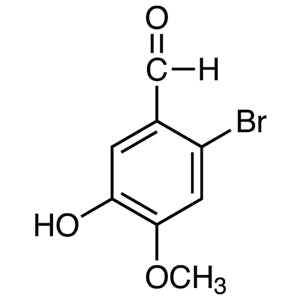
- TCI B4681 2973-59-3 2-Bromo-5-hydroxy-4-methoxybenzaldehyde
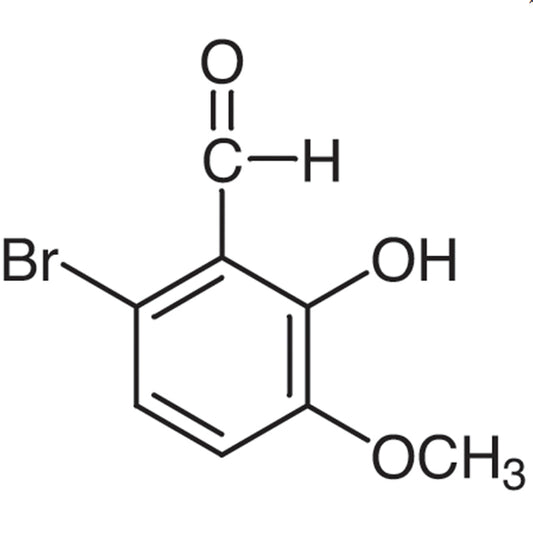
- TCI B1487 20035-41-0 6-Bromo-2-hydroxy-3-methoxybenzaldehyde
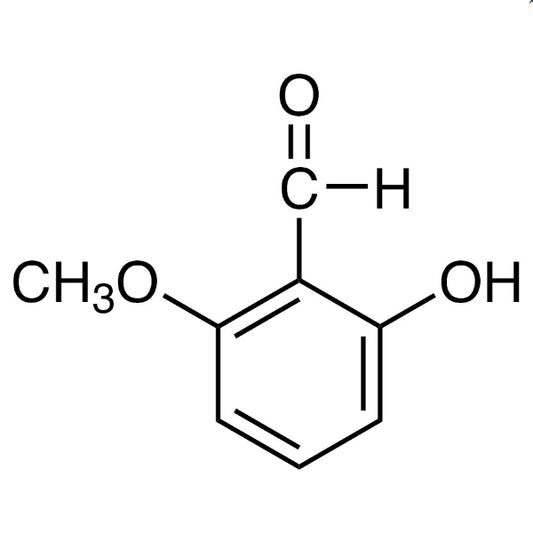
- TCI H1796 700-44-7 2-Hydroxy-6-methoxybenzaldehyde
- TCI H1191 18278-34-7 4-Hydroxy-2-methoxybenzaldehyde
- TCI H0881 672-13-9 2-Hydroxy-5-methoxybenzaldehyde
- Organic synthesis is a key application where this compound serves as a versatile building block for creating complex molecular structures.
- Pharmaceutical research benefits from its use in the development of new drug compounds due to its functional groups and reactivity.
- Material science applications leverage its chemical stability and reactivity for the synthesis of novel chemical materials.
- Academic research in chemistry utilizes it for teaching and experimental purposes, supporting student learning and innovation.
- Industrial chemical development incorporates it as a component in the production of specialized chemical products.
| Brand | TCI |
|---|---|
| CAS number | 6346-05-0 |
| Molecular formula | — |
| Purity | — |
| Category | Chemistry > Building Blocks > Non-Heterocyclic Building Blocks |
| Pack sizes | 5 g, 25 g, 100 g |
| Physical form | Solid |
| Storage | Store in a cool, dry place away from light and moisture |
This compound should be stored in a cool, dry environment, away from direct light and moisture to maintain its stability and purity. It is recommended to use airtight containers made of materials such as glass or high-density polyethylene to prevent contamination and degradation. Due to its chemical nature, it should be handled with care, using appropriate personal protective equipment such as gloves and safety goggles. In laboratory settings, it should be stored separately from incompatible substances to avoid potential chemical reactions. Regular monitoring of storage conditions is advised to ensure the compound remains suitable for use in research applications.
—
Produk Terkait
-
4-Benzyloxy-3-methoxybenzaldehyde TCI B3599
Regular price From Rp 769.650,00Regular priceRp 537.600,00Sale price From Rp 769.650,00 -
2-Bromo-5-hydroxy-4-methoxybenzaldehyde TCI B4681
Regular price Rp 4.293.450,00Regular priceRp 3.001.950,00Sale price Rp 4.293.450,00 -
6-Bromo-2-hydroxy-3-methoxybenzaldehyde TCI B1487
Regular price From Rp 1.087.800,00Regular priceRp 760.200,00Sale price From Rp 1.087.800,00 -
2-Hydroxy-6-methoxybenzaldehyde TCI H1796
Regular price From Rp 2.862.300,00Regular priceRp 2.001.300,00Sale price From Rp 2.862.300,00 -
4-Hydroxy-2-methoxybenzaldehyde TCI H1191
Regular price From Rp 1.035.300,00Regular priceRp 723.450,00Sale price From Rp 1.035.300,00 -
2-Hydroxy-5-methoxybenzaldehyde TCI H0881
Regular price From Rp 1.988.700,00Regular priceRp 1.390.200,00Sale price From Rp 1.988.700,00 -
2-Hydroxy-4-methoxybenzaldehyde TCI H0699
Regular price From Rp 1.298.850,00Regular priceRp 908.250,00Sale price From Rp 1.298.850,00 -
3-Ethoxy-4-methoxybenzaldehyde TCI E0835
Regular price From Rp 795.900,00Regular priceRp 556.500,00Sale price From Rp 795.900,00