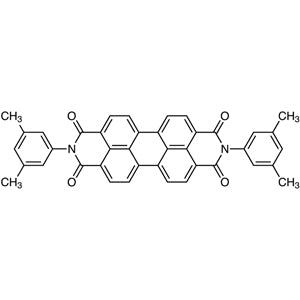
N,N'-Bis(4-methoxyphenyl)-3,4,9,10-perylenetetracarboxylic Diimide is a chemical compound widely used in scientific experiments, particularly in the fields of chemistry and materials science. This compound is a type of pigment known for its unique color properties and chemical stability, making it a valuable tool in research settings. Its complex molecular structure, featuring a perylenetetracarboxylic diimide framework modified with methoxy groups, allows it to serve as a reliable coloring agent in various experimental applications.
The compound's chemical stability and resistance to environmental factors such as temperature and pH variations make it a preferred choice for long-term research use. Its high molecular complexity also contributes to its durability, ensuring that it maintains its properties over time. Additionally, the compound exhibits interesting optical characteristics, which enable it to be used in applications requiring consistent and long-lasting color performance. These properties make it a versatile material for a range of scientific investigations.
In Indonesian laboratories, this compound is commonly used in chemical and material research, especially in organic chemistry and materials technology. Its stability and color properties make it suitable for applications such as color indication in chemical processes and as a pigment in experimental formulations. It is a key component in many research projects aimed at developing new materials or understanding chemical behavior under different conditions.
TCI brochures (PDF)
- Solar Cell Materials 2026-04-21 · p. 11
Related TCI products
- TCI B4231 4948-15-6 N,N'-Bis(3,5-dimethylphenyl)-3,4,9,10-perylenetetracarboxylic Diimide
- TCI B4268 82953-57-9 N,N'-Bis(2,6-diisopropylphenyl)-3,4,9,10-perylenetetracarboxylic Diimide
- TCI P0984 81-33-4 3,4,9,10-Perylenetetracarboxylic Diimide
- TCI D4429 5521-31-3 N,N'-Dimethyl-3,4,9,10-perylenetetracarboxylic Diimide
- TCI D4175 78151-58-3 N,N'-Di-n-octyl-3,4,9,10-perylenetetracarboxylic Diimide
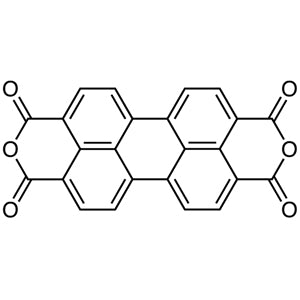
- TCI P2102 128-69-8 3,4,9,10-Perylenetetracarboxylic Dianhydride (purified by sublimation)
- Organic chemistry research utilizes this compound as a stable pigment for color indication in chemical reactions due to its consistent optical properties.
- Material science experiments employ it as a coloring agent in polymer and composite formulations to study color stability under various environmental conditions.
- Spectroscopy studies benefit from its optical characteristics, allowing it to serve as a reference material for light absorption and emission analysis.
- Dye development projects use it as a base compound for creating new pigments with enhanced colorfastness and chemical resistance.
- Industrial process monitoring incorporates it as a visual indicator in chemical processes where color change is a critical parameter for quality control.
| Brand | TCI |
|---|---|
| CAS number | 6424-77-7 |
| Molecular formula | — |
| Purity | — |
| Category | Chemistry > Stains and Dyes (for Research and Experimental Use) > Pigments (for Research and Experimental Use) |
| Pack sizes | Available in standard laboratory quantities as specified by the supplier |
| Physical form | Solid powder |
| Storage | Store in a cool, dry place away from direct light and moisture |
This compound should be stored in a cool, dry environment, away from direct sunlight and sources of moisture. It is recommended to use airtight containers to prevent exposure to air and humidity, which could affect its stability. Due to its chemical nature, it should be handled with care, using appropriate personal protective equipment such as gloves and safety goggles. It is not classified as hazardous under standard laboratory conditions, but general laboratory safety protocols should be followed to ensure safe handling and storage. Proper labeling of containers is essential to prevent accidental misuse and to maintain a safe working environment.
—
Product Categories
Produk Terkait
-
N,N'-Bis(3,5-dimethylphenyl)-3,4,9,10-perylenetetracarboxylicDiimide TCI B4231
Regular price From Rp 2.518.950,00Regular priceRp 1.776.600,00Sale price From Rp 2.518.950,00 -
N,N'-Bis(2,6-diisopropylphenyl)-3,4,9,10-perylenetetracarboxylicDiimide TCI B4268
Regular price From Rp 11.395.650,00Regular priceRp 7.984.200,00Sale price From Rp 11.395.650,00 -
3,4,9,10-PerylenetetracarboxylicDiimide TCI P0984
Regular price Rp 1.749.300,00Regular priceRp 1.239.000,00Sale price Rp 1.749.300,00 -
N,N'-Dimethyl-3,4,9,10-perylenetetracarboxylicDiimide TCI D4429
Regular price From Rp 2.544.150,00Regular priceRp 1.794.450,00Sale price From Rp 2.544.150,00 -
N,N'-Di-n-octyl-3,4,9,10-perylenetetracarboxylicDiimide TCI D4175
Regular price Rp 3.895.500,00Regular priceRp 2.739.450,00Sale price Rp 3.895.500,00 -
3,4,9,10-PerylenetetracarboxylicDianhydride(purifiedbysublimation) TCI P2102
Regular price Rp 3.021.900,00Regular priceRp 2.112.600,00Sale price Rp 3.021.900,00 -
3,4,9,10-PerylenetetracarboxylicDianhydride TCI P0972
Regular price From Rp 1.485.750,00Regular priceRp 1.038.450,00Sale price From Rp 1.485.750,00 -
N,N'-Bis(2-ethylhexyl)-3,4,9,10-perylenetetracarboxylicDiimide TCI B4343
Regular price Rp 6.360.900,00Regular priceRp 4.463.550,00Sale price Rp 6.360.900,00