N,N’-Bis(2-ethylhexyl)-3,4,9,10-perylenetetracarboxylic Diimide is a chemical compound widely used in materials science, particularly in the study of optical and photonic materials. This compound plays a crucial role in laboratory research by enabling the development of materials with high fluorescence properties. Its unique optical characteristics make it an essential component in various scientific investigations, especially those focused on light absorption and emission. Due to its versatility and performance, it is frequently utilized in advanced material synthesis processes.
The compound is preferred for its excellent chemical stability, thermal resistance, and compatibility with a wide range of organic solvents. These properties ensure consistent performance in laboratory settings, making it a reliable choice for researchers. Its ability to maintain structural integrity under varying environmental conditions further enhances its applicability in experimental work. Additionally, its solubility in organic solvents simplifies the synthesis and application processes, contributing to its popularity among scientists.
In Indonesian laboratories, this compound is commonly used in optical material research, including the development of LEDs, optical sensors, and energy storage devices. Its role in enhancing the optical properties of materials makes it a key component in various scientific projects. Researchers in Indonesia rely on this compound for its reliability and effectiveness in creating advanced photonic materials. Its widespread use underscores its importance in both academic and industrial research environments.
Related TCI products
- TCI B4268 82953-57-9 N,N'-Bis(2,6-diisopropylphenyl)-3,4,9,10-perylenetetracarboxylic Diimide
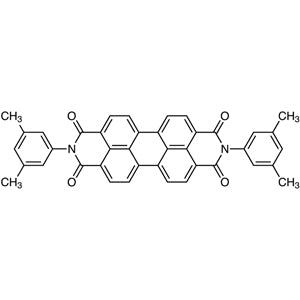
- TCI B4231 4948-15-6 N,N'-Bis(3,5-dimethylphenyl)-3,4,9,10-perylenetetracarboxylic Diimide
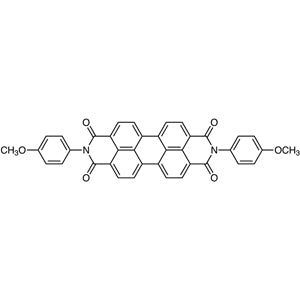
- TCI B2892 6424-77-7 N,N'-Bis(4-methoxyphenyl)-3,4,9,10-perylenetetracarboxylic Diimide
- TCI P0984 81-33-4 3,4,9,10-Perylenetetracarboxylic Diimide
- TCI D4429 5521-31-3 N,N'-Dimethyl-3,4,9,10-perylenetetracarboxylic Diimide
- TCI D4175 78151-58-3 N,N'-Di-n-octyl-3,4,9,10-perylenetetracarboxylic Diimide
- Optical material development for LED manufacturing due to its high fluorescence properties and stability.
- Sensor fabrication for light detection applications because of its ability to absorb and emit light in specific wavelength ranges.
- Energy storage device research as it contributes to the development of photovoltaic and optoelectronic components.
- Photonic material synthesis for advanced optical components requiring precise light interaction properties.
- Research in material science for studying the optical behavior of organic compounds in different environments.
| Brand | TCI |
|---|---|
| CAS number | 82531-03-1 |
| Molecular formula | — |
| Purity | — |
| Category | Materials Science > Photonic Materials and Optical Materials > Perylene Dyes |
| Pack sizes | Available in various quantities as per standard laboratory supply standards |
| Physical form | Solid powder |
| Storage | Store in a cool, dry place away from direct sunlight and moisture |
This compound should be stored in a cool, dry environment, away from direct sunlight and moisture to maintain its chemical stability. It is recommended to use airtight containers made of glass or high-density polyethylene to prevent contamination and degradation. Due to its organic nature, it should be handled in a well-ventilated area to avoid inhalation of vapors. Proper personal protective equipment, such as gloves and safety goggles, should be worn during handling to ensure laboratory safety. Avoid exposure to incompatible materials, such as strong oxidizing agents, to prevent unwanted reactions. Regular inspection of storage conditions is essential to maintain the integrity of the compound over time.
—
Product Categories
Produk Terkait
-
N,N'-Bis(2,6-diisopropylphenyl)-3,4,9,10-perylenetetracarboxylicDiimide TCI B4268
Regular price From Rp 11.395.650,00Regular priceRp 7.984.200,00Sale price From Rp 11.395.650,00 -
N,N'-Bis(3,5-dimethylphenyl)-3,4,9,10-perylenetetracarboxylicDiimide TCI B4231
Regular price From Rp 2.518.950,00Regular priceRp 1.776.600,00Sale price From Rp 2.518.950,00 -
N,N'-Bis(4-methoxyphenyl)-3,4,9,10-perylenetetracarboxylicDiimide TCI B2892
Regular price From Rp 2.013.900,00Regular priceRp 1.423.800,00Sale price From Rp 2.013.900,00 -
3,4,9,10-PerylenetetracarboxylicDiimide TCI P0984
Regular price Rp 1.749.300,00Regular priceRp 1.239.000,00Sale price Rp 1.749.300,00 -
N,N'-Dimethyl-3,4,9,10-perylenetetracarboxylicDiimide TCI D4429
Regular price From Rp 2.544.150,00Regular priceRp 1.794.450,00Sale price From Rp 2.544.150,00 -
N,N'-Di-n-octyl-3,4,9,10-perylenetetracarboxylicDiimide TCI D4175
Regular price Rp 3.895.500,00Regular priceRp 2.739.450,00Sale price Rp 3.895.500,00 -
N,N'-Ditridecyl-3,4,9,10-perylenetetracarboxylicDiimide TCI D3947
Regular price From Rp 1.934.100,00Regular priceRp 1.368.150,00Sale price From Rp 1.934.100,00 -
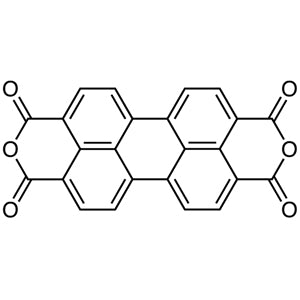
3,4,9,10-PerylenetetracarboxylicDianhydride(purifiedbysublimation) TCI P2102
Regular price Rp 3.021.900,00Regular priceRp 2.112.600,00Sale price Rp 3.021.900,00