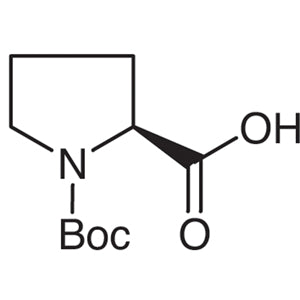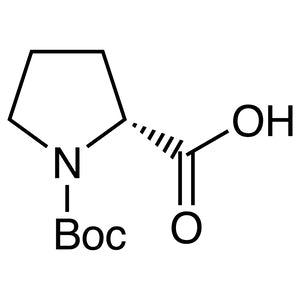
N-(tert-Butoxycarbonyl)-D-proline is a chemical compound widely used in peptide synthesis, particularly in peptide bond formation reactions. It serves as a key component in the coupling of amino acids to form more complex peptide chains. This compound is essential in biochemical and pharmacological research, especially in the development of drugs and bioactive compounds. Its chemical stability and reactivity under specific conditions make it a valuable tool in synthetic chemistry.
The compound’s chemical structure allows it to function as a protecting group, preventing unwanted side reactions during synthesis. This property makes it highly reliable for precise and controlled chemical processes. Its controlled reactivity ensures that it can be used in high-accuracy applications where consistency is crucial. The stability of N-(tert-Butoxycarbonyl)-D-proline allows it to be stored and used over extended periods without significant degradation.
In Indonesian laboratories, N-(tert-Butoxycarbonyl)-D-proline is commonly used in organic and biochemical research. Many research institutions and universities rely on this compound for the development of new therapeutic compounds. Its availability in the local market supports ongoing scientific investigations and experimental needs. The compound is a standard in peptide chemistry, making it an essential material for researchers in the field.
TCI brochures (PDF)
- Amino Acids and Peptide Synthesis Reagents 2025-08-14 · p. 13
Related TCI products
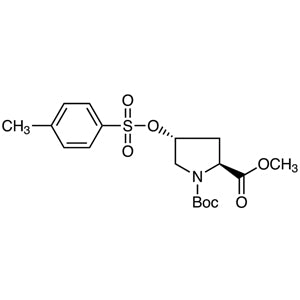
- TCI B5247 88043-21-4 N-(tert-Butoxycarbonyl)-trans-4-(p-toluenesulfonyloxy)-L-proline Methyl Ester
- TCI B4787 73323-65-6 N-(tert-Butoxycarbonyl)-D-proline Methyl Ester
- TCI B4141 84348-37-8 N-(tert-Butoxycarbonyl)-4-oxo-L-proline
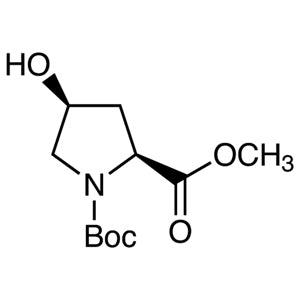
- TCI B3987 102195-79-9 N-(tert-Butoxycarbonyl)-cis-4-hydroxy-L-proline Methyl Ester
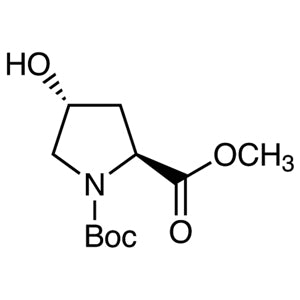
- TCI B3843 74844-91-0 N-(tert-Butoxycarbonyl)-trans-4-hydroxy-L-proline Methyl Ester
- TCI B3414 102185-34-2 N-(tert-Butoxycarbonyl)-D-proline Succinimidyl Ester
- Peptide Synthesis: This compound is ideal for peptide synthesis due to its role in forming peptide bonds and its ability to act as a protecting group.
- Biochemical Research: It is used in biochemical studies to develop new bioactive compounds and pharmaceuticals.
- Organic Chemistry Experiments: Its chemical stability and reactivity make it suitable for various organic synthesis processes.
- Drug Development: It supports the creation of new therapeutic agents by enabling precise amino acid coupling.
- Academic Research: It is frequently used in university laboratories for teaching and research in chemical biology.
| Brand | TCI |
|---|---|
| CAS number | 37784-17-1 |
| Molecular formula | — |
| Purity | — |
| Category | Chemistry > Chemical Biology > Peptide Chemistry |
| Pack sizes | Available in various quantities as per standard laboratory requirements |
| Physical form | Solid |
| Storage | Store in a cool, dry place away from direct sunlight |
N-(tert-Butoxycarbonyl)-D-proline should be stored in a cool, dry environment to maintain its chemical stability. It is recommended to keep the compound in a tightly sealed container to prevent moisture absorption. Proper ventilation should be ensured when handling the material to avoid inhalation of vapors. The substance is generally non-hazardous but should be handled with care in a well-ventilated laboratory setting. It is advisable to use appropriate personal protective equipment, such as gloves and safety goggles, when working with this compound. Storage should be away from incompatible materials to ensure safety and prevent unwanted chemical reactions.
—
Product Categories
Produk Terkait
-
N-(tert-Butoxycarbonyl)-trans-4-(p-toluenesulfonyloxy)-L-prolineMethylEster TCI B5247
Regular price From Rp 610.050,00Regular priceRp 442.050,00Sale price From Rp 610.050,00 -
N-(tert-Butoxycarbonyl)-D-prolineMethylEster TCI B4787
Regular price From Rp 822.150,00Regular priceRp 590.100,00Sale price From Rp 822.150,00 -
N-(tert-Butoxycarbonyl)-4-oxo-L-proline TCI B4141
Regular price From Rp 1.351.350,00Regular priceRp 960.750,00Sale price From Rp 1.351.350,00 -
N-(tert-Butoxycarbonyl)-cis-4-hydroxy-L-prolineMethylEster TCI B3987
Regular price From Rp 742.350,00Regular priceRp 534.450,00Sale price From Rp 742.350,00 -
N-(tert-Butoxycarbonyl)-trans-4-hydroxy-L-prolineMethylEster TCI B3843
Regular price From Rp 822.150,00Regular priceRp 590.100,00Sale price From Rp 822.150,00 -
N-(tert-Butoxycarbonyl)-D-prolineSuccinimidylEster TCI B3414
Regular price From Rp 795.900,00Regular priceRp 572.250,00Sale price From Rp 795.900,00 -
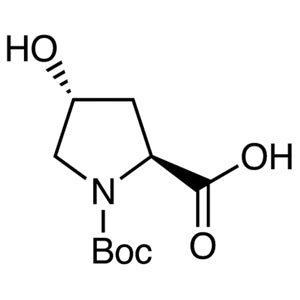
trans-N-(tert-Butoxycarbonyl)-4-hydroxy-L-proline TCI B1635
Regular price Rp 1.829.100,00Regular priceRp 1.294.650,00Sale price Rp 1.829.100,00 -
N-(tert-Butoxycarbonyl)-L-proline TCI B1188
Regular price From Rp 557.550,00Regular priceRp 405.300,00Sale price From Rp 557.550,00