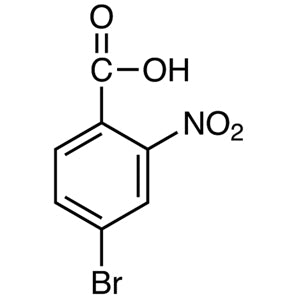
2-Bromo-3-nitrobenzoic Acid (TCI B3322) is a chemical compound widely used in organic laboratory settings for its versatility in synthetic reactions. This compound serves as a key building block in the development of aromatic and heterocyclic compounds, playing a crucial role in the synthesis of various functional molecules. Its molecular structure contains bromo, nitro, and carboxylic acid groups, which contribute to its reactivity and utility in chemical transformations. Due to its ability to participate in multiple reaction pathways, it is a valuable tool for researchers aiming to explore new chemical structures and reaction mechanisms.
The reactivity of 2-Bromo-3-nitrobenzoic Acid is primarily attributed to its bromo and nitro functional groups, which are known for their electrophilic and nucleophilic properties. These groups enable the compound to undergo substitution, reduction, and electrophilic reactions, making it suitable for a wide range of synthetic applications. Its stability under controlled laboratory conditions further enhances its reliability as a reagent. The compound’s ability to interact with various reagents and its predictable chemical behavior make it a preferred choice for both academic and industrial research.
In Indonesian laboratories, 2-Bromo-3-nitrobenzoic Acid is commonly used in organic chemistry research, particularly in the synthesis of complex compounds. It is a staple in academic institutions and research centers that focus on the development of new chemical entities. Its role in teaching and research makes it an essential component of laboratory work in chemical sciences, supporting both theoretical and practical studies in organic chemistry.
Related TCI products
- Organic synthesis of aromatic and heterocyclic compounds due to its reactive bromo and nitro groups.
- Development of new chemical entities through substitution and electrophilic reactions in controlled environments.
- Teaching and research applications in Indonesian universities focusing on complex molecule synthesis.
- Use in chemical reaction studies to investigate reactivity and functional group behavior.
- Support for industrial research in the production of pharmaceutical and agrochemical intermediates.
| Brand | TCI |
|---|---|
| CAS number | 573-54-6 |
| Molecular formula | — |
| Purity | — |
| Category | Chemistry > Building Blocks > Non-Heterocyclic Building Blocks |
| Pack sizes | Available in various quantities as per standard laboratory requirements |
| Physical form | Solid |
| Storage | Store in a cool, dry place away from light and moisture |
2-Bromo-3-nitrobenzoic Acid should be stored in a cool, dry place, away from direct sunlight and moisture. It is recommended to keep the compound in a sealed container to prevent exposure to air and humidity. Due to its reactive nature, it should be handled with appropriate personal protective equipment, including gloves and safety goggles. In laboratory settings, it is important to ensure proper ventilation and to avoid contact with incompatible substances. The compound is generally stable under standard storage conditions, making it suitable for long-term use in research and educational environments.
—
Produk Terkait
-
3-Bromo-4-nitrobenzoicAcid TCI B4786
Regular price From Rp 1.670.550,00Regular priceRp 1.183.350,00Sale price From Rp 1.670.550,00 -
2-Bromo-5-nitrobenzoicAcid TCI B3841
Regular price From Rp 1.618.050,00Regular priceRp 1.146.600,00Sale price From Rp 1.618.050,00 -
4-Bromo-2-nitrobenzoicAcid TCI B3810
Regular price From Rp 1.351.350,00Regular priceRp 960.750,00Sale price From Rp 1.351.350,00 -
4-Bromo-3-nitrobenzoicAcid TCI B3689
Regular price Rp 1.881.600,00Regular priceRp 1.331.400,00Sale price Rp 1.881.600,00 -
2-Bromo-4-nitrobenzoicAcid TCI B3607
Regular price From Rp 955.500,00Regular priceRp 683.550,00Sale price From Rp 955.500,00 -
3-Bromo-5-nitrobenzoicAcid TCI B3370
Regular price From Rp 1.008.000,00Regular priceRp 720.300,00Sale price From Rp 1.008.000,00 -
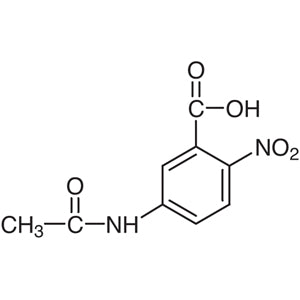
5-Acetamido-2-nitrobenzoicAcid TCI A2156
Regular price Rp 4.611.600,00Regular priceRp 3.240.300,00Sale price Rp 4.611.600,00 -
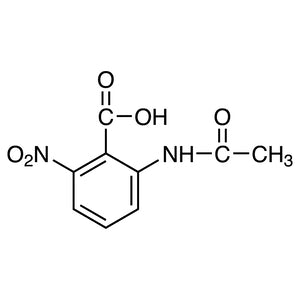
2-Acetamido-6-nitrobenzoicAcid TCI A1841
Regular price From Rp 822.150,00Regular priceRp 590.100,00Sale price From Rp 822.150,00