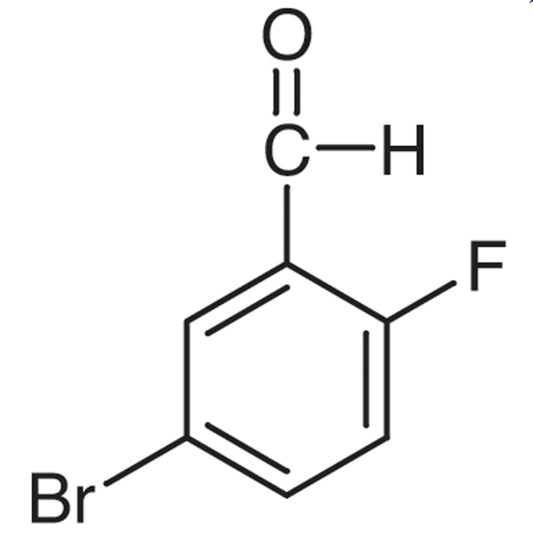
2-Bromo-4-fluorobenzaldehyde is a versatile organic compound used in various chemical reactions for the synthesis of complex molecules. As a key building block in the field of fluorinated chemistry, it plays a crucial role in laboratories where the development of new compounds is essential. This compound is widely utilized in both academic and industrial research settings due to its reactivity and structural versatility. Its presence in the chemical supply chain ensures that researchers have access to a reliable source for their synthetic needs.
The compound's unique combination of bromo and fluoro functional groups contributes to its high reactivity and makes it an ideal candidate for a wide range of chemical transformations. These groups influence the molecule’s electronic properties, enabling it to participate in substitution, reduction, and electrophilic reactions. Its chemical stability, combined with its ability to act as an electron donor in specific reactions, makes it a preferred choice for chemists working on advanced synthetic routes. The physical and chemical characteristics of this compound make it a valuable tool for those seeking to develop new materials or pharmaceutical compounds.
In Indonesian laboratories, 2-Bromo-4-fluorobenzaldehyde is commonly used in scientific research and the development of chemical products. Educational and research institutions rely on this compound to expand their understanding of organic synthesis. Its availability ensures that it remains a key component in the chemical toolkit of Indonesian laboratories, supporting both basic and applied research in chemistry, pharmacology, and materials science.
TCI brochures (PDF)
- Fluorination Reagents, Fluorinated Building Blocks 2026-03-18 · p. 24
Related TCI products
- Organic synthesis applications benefit from this compound's reactivity and structural versatility, enabling the creation of complex molecules.
- Pharmaceutical research utilizes its electron-donating properties for the development of new drug compounds and therapeutic agents.
- Material science projects employ it as a building block for the synthesis of advanced polymers and functional materials.
- Analytical chemistry laboratories use it as a reference standard for spectroscopic and chromatographic analyses.
- Educational institutions incorporate it into teaching labs to demonstrate key organic reaction mechanisms and synthetic strategies.
| Brand | TCI |
|---|---|
| CAS number | 59142-68-6 |
| Molecular formula | — |
| Purity | — |
| Category | Chemistry > Building Blocks > Fluorinated Building Blocks |
| Pack sizes | Available in various quantities as per supplier specifications |
| Physical form | Solid or liquid, depending on the specific product variant |
| Storage | Store in a cool, dry place away from light and incompatible substances |
This compound should be stored in a cool, dry environment, away from direct sunlight and sources of heat. It is recommended to use airtight containers made of materials compatible with its chemical properties, such as glass or high-density polyethylene. Due to its reactivity, it should be kept separate from strong oxidizers and incompatible substances to prevent unwanted reactions. In laboratory settings, proper personal protective equipment, including gloves and safety goggles, should always be worn when handling this material. Regular monitoring of storage conditions is advised to ensure the compound remains stable and safe for use.
—
Produk Terkait
-
3-Bromo-2-fluorobenzaldehyde TCI B5363
Regular price From Rp 1.590.750,00Regular priceRp 1.111.950,00Sale price From Rp 1.590.750,00 -
4-Bromo-3-fluorobenzaldehyde TCI B4319
Regular price From Rp 1.644.300,00Regular priceRp 1.149.750,00Sale price From Rp 1.644.300,00 -
2-Bromo-5-fluorobenzaldehyde TCI B2353
Regular price From Rp 664.650,00Regular priceRp 464.100,00Sale price From Rp 664.650,00 -
3-Bromo-4-fluorobenzaldehyde TCI B2143
Regular price From Rp 477.750,00Regular priceRp 333.900,00Sale price From Rp 477.750,00 -
4-Bromo-2-fluorobenzaldehyde TCI B2002
Regular price From Rp 1.035.300,00Regular priceRp 723.450,00Sale price From Rp 1.035.300,00 -
5-Bromo-2-fluorobenzaldehyde TCI B1789
Regular price From Rp 848.400,00Regular priceRp 593.250,00Sale price From Rp 848.400,00 -
4-FluorobenzaldehydeOxime TCI F1367
Regular price From Rp 1.696.800,00Regular priceRp 1.202.250,00Sale price From Rp 1.696.800,00 -
4-Fluorobenzaldehyde TCI F0191
Regular price From Rp 1.035.300,00Regular priceRp 723.450,00Sale price From Rp 1.035.300,00