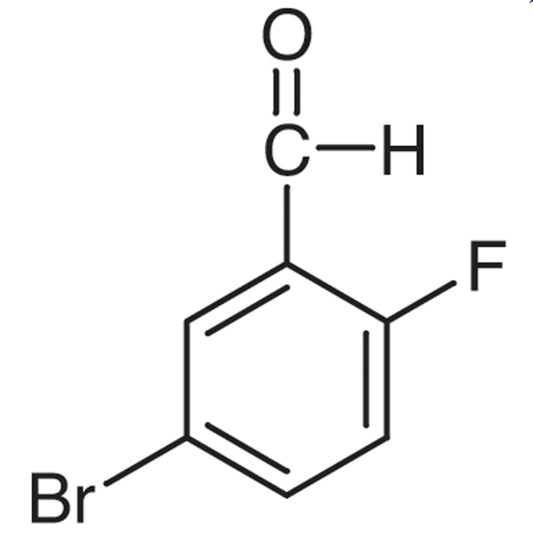
3-Bromo-2-fluorobenzaldehyde is a chemical compound widely used as a building block in the synthesis of complex organic molecules. Its molecular structure includes an aldehyde group, a bromo substituent, and a fluoro group, enabling participation in a variety of chemical reactions. In the laboratory, this compound plays a crucial role in the development of new materials, pharmaceuticals, and functional chemicals. Due to its reactivity and versatility, it is a key component in synthetic pathways that require precise functional group manipulation.
The compound’s chemical stability and reactivity make it a preferred choice for researchers. It can undergo nucleophilic and electrophilic substitution reactions, which are essential in organic synthesis. Its volatility also influences reaction conditions, particularly in heating and separation processes. These properties make it suitable for use in advanced chemical research, where controlled reactivity and functional group compatibility are essential.
In Indonesian laboratories, 3-Bromo-2-fluorobenzaldehyde is commonly used in scientific research and chemical product development. It is frequently found in projects related to drug synthesis, industrial raw materials, and environmental research. Its presence supports innovation in chemistry and technology, contributing to the advancement of scientific knowledge and practical applications.
Related TCI products
- Drug synthesis projects benefit from this compound’s reactivity and functional group versatility, enabling the creation of complex pharmaceutical molecules.
- Industrial chemical development relies on its ability to participate in various synthetic pathways, providing a foundation for new material production.
- Environmental research utilizes its chemical stability and reactivity to study the behavior of fluorinated compounds in different conditions.
- Organic chemistry experiments use it as a key building block for exploring reaction mechanisms and functional group transformations.
- Academic research in chemical engineering leverages its properties to develop new synthetic methodologies and chemical processes.
| Brand | TCI |
|---|---|
| CAS number | 149947-15-9 |
| Molecular formula | — |
| Purity | — |
| Category | Chemistry > Building Blocks > Fluorinated Building Blocks |
| Pack sizes | Available in standard laboratory quantities |
| Physical form | Liquid |
| Storage | Store in a cool, dry place away from light and incompatible substances |
This compound should be stored in a cool, dry environment, away from direct light and incompatible materials such as strong oxidizers or reactive metals. It is recommended to use sealed containers made of glass or high-density polyethylene to prevent contamination and evaporation. Due to its volatility, proper ventilation should be maintained in the laboratory workspace. Personal protective equipment, including gloves and safety goggles, should be worn during handling to ensure safety. The compound should not be exposed to heat or open flames, as it may pose a fire hazard. Always follow standard laboratory safety protocols when working with reactive or volatile chemicals.
—
Produk Terkait
-
4-Bromo-3-fluorobenzaldehyde TCI B4319
Regular price From Rp 1.644.300,00Regular priceRp 1.149.750,00Sale price From Rp 1.644.300,00 -
2-Bromo-4-fluorobenzaldehyde TCI B3498
Regular price Rp 1.035.300,00Regular priceRp 723.450,00Sale price Rp 1.035.300,00 -
2-Bromo-5-fluorobenzaldehyde TCI B2353
Regular price From Rp 664.650,00Regular priceRp 464.100,00Sale price From Rp 664.650,00 -
3-Bromo-4-fluorobenzaldehyde TCI B2143
Regular price From Rp 477.750,00Regular priceRp 333.900,00Sale price From Rp 477.750,00 -
4-Bromo-2-fluorobenzaldehyde TCI B2002
Regular price From Rp 1.035.300,00Regular priceRp 723.450,00Sale price From Rp 1.035.300,00 -
5-Bromo-2-fluorobenzaldehyde TCI B1789
Regular price From Rp 848.400,00Regular priceRp 593.250,00Sale price From Rp 848.400,00 -
4-FluorobenzaldehydeOxime TCI F1367
Regular price From Rp 1.696.800,00Regular priceRp 1.202.250,00Sale price From Rp 1.696.800,00 -
4-Fluorobenzaldehyde TCI F0191
Regular price From Rp 1.035.300,00Regular priceRp 723.450,00Sale price From Rp 1.035.300,00